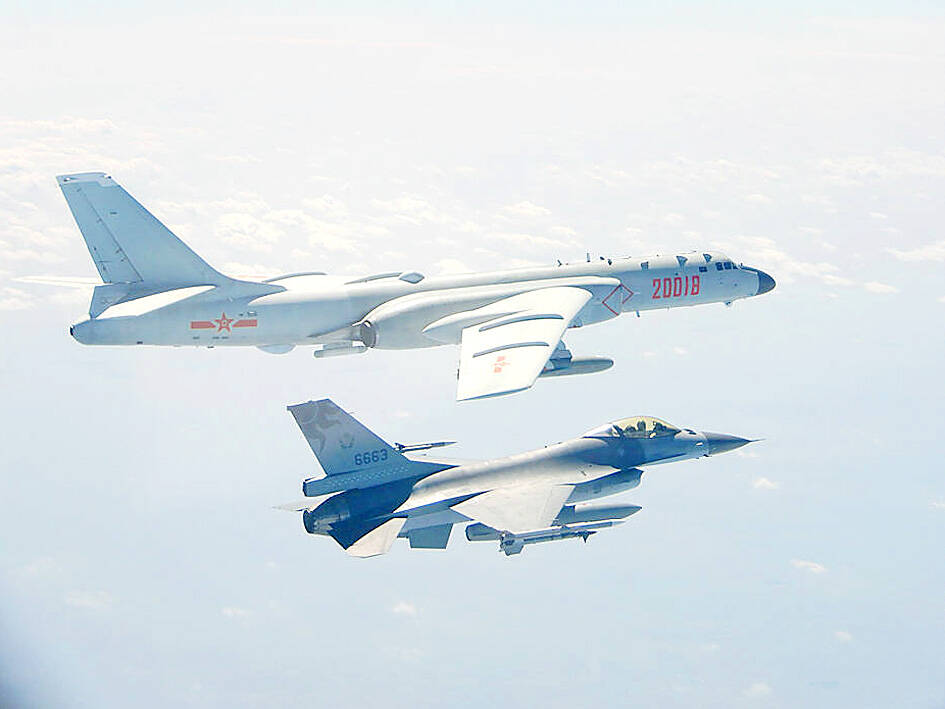
A DPP Department of China Affairs report documents a near 15-fold surge in Chinese military aircraft sorties around Taiwan over five years, rising from 380 in 2020 to 5,709 most recently, and characterizes the Taiwan Strait as a core theater for China’s gray-zone operations. Beijing’s large-scale drills last year approached Taiwan’s 12-nautical-mile baselines and were accompanied by lists of roughly 1,900 Chinese vessels now monitored for suspicious activity; Taiwan has passed port- and ship-related legal amendments and is lengthening conscript training and integrating HIMARS-capable units. These developments raise sustained regional security risks with potential knock-on effects for defense spending, shipping lanes and undersea-cable vulnerability, making Taiwan-stress scenarios material for investors with Asia exposure or supply-chain/transportation risk.
Market structure: Persistent PLA gray-zone pressure benefits aerospace & defense OEMs (Lockheed LMT, Northrop NOC, RTX) and specialized suppliers (radar, EW, missile makers) via higher order-confidence and margin expansion; expect defense-sector revenue upgrade potential of ~5-10% CAGR over 12–36 months. Shipping, marine insurance and undersea-cable security providers will see higher pricing power (war-risk surcharges +10–30% on contested routes) while Taiwan-focused equities (EWT, TSM) and regional logistics names face demand shocks and rerouting costs.
Risk assessment: Tail risks include an accidental kinetic encounter or blockade that removes >10% of global advanced node wafer supply for 1–3 months, spiking foundry utilizations and prices; that event is low-probability (<15% annual) but high-impact (semiconductor revenue shock). Near-term (days–weeks) volatility will cluster around PLA drills and key diplomatic/calendar events; medium-term (3–12 months) risk is sustained capex reallocation and onshoring; long-term (years) is structural supply-chain bifurcation.
Trade implications: Bias risk-off in Asia equities and FX (short EWT/TWD) while long-duration US Treasuries (TLT) and gold (GLD) as 3–6 month hedge. Direct plays: establish modest 2–4% long positions in ITA or LMT with 6–18 month horizon; hedge via 3-month 25-delta puts on EWT sized to 50–75% of equity exposure. Expect options IV spikes around PLA exercises; use calendar spreads to sell near-term and buy 3–6 month protection.
Contrarian angles: Markets may overprice permanent decoupling — a temporary supply shock will lift ASML/TSM margins when restored; defense equities are already partially priced-in, so look for mid-cap subsystem suppliers (Huntington Ingalls-type or small-cap C4ISR) where earnings upside is underappreciated. If sorties plateau under +5% q/q, rotate back into semiconductor capex beneficiaries (ASML, LRCX) within 3 months.
AI-powered research, real-time alerts, and portfolio analytics for institutional investors.
Request DemoOverall Sentiment
moderately negative
Sentiment Score
-0.60
