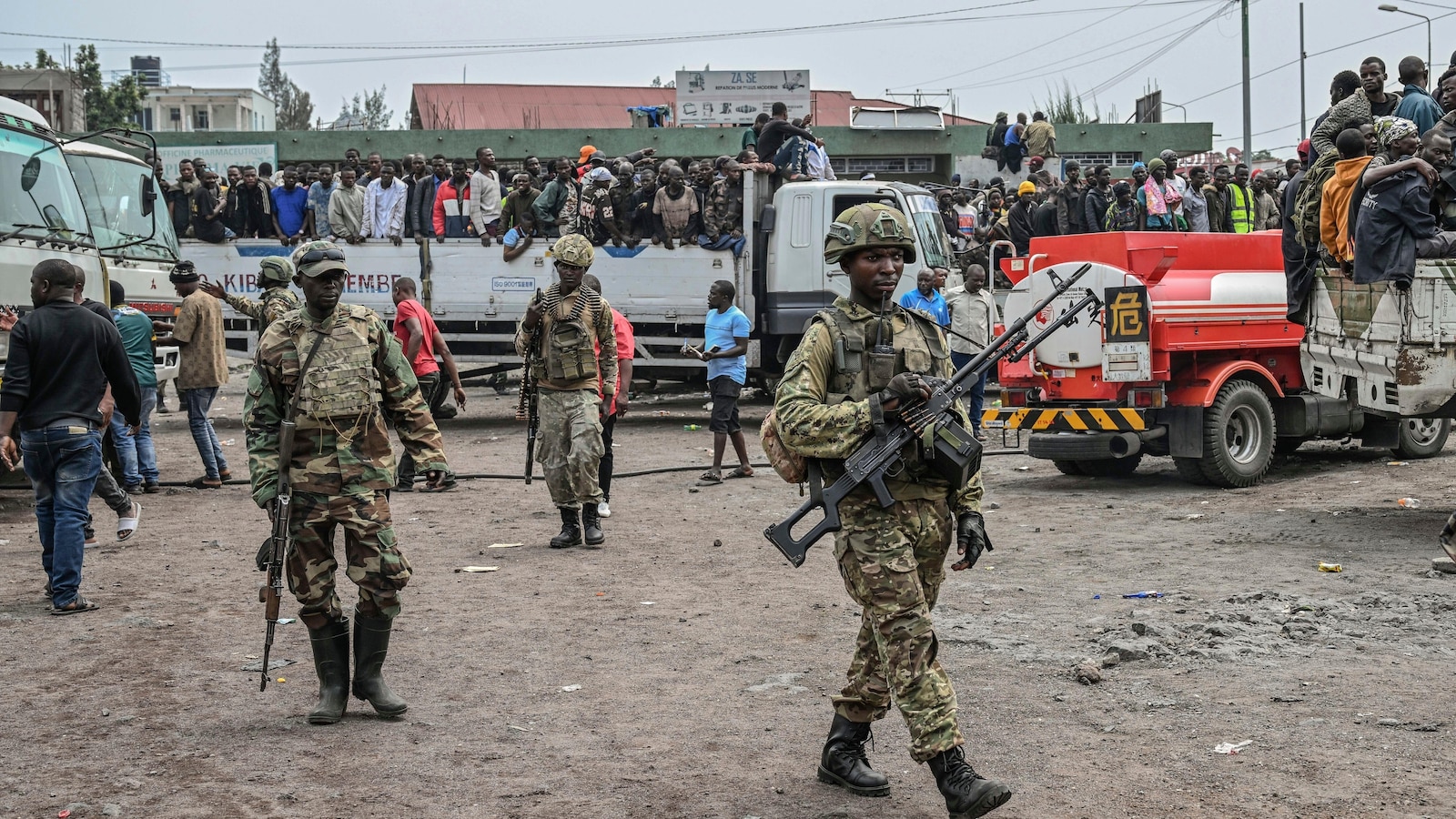
Rwanda-backed M23 fighters captured the strategic Lake Tanganyika port city of Uvira in eastern Democratic Republic of Congo amid a rapid offensive that regional officials say has killed more than 413 civilians and involves Rwandan special forces, an escalation that comes despite a U.S.-mediated peace deal between Kinshasa and Kigali that did not include the rebel group. The U.N. estimates M23 now numbers roughly 6,500 fighters and U.N. experts put Rwandan forces in Congo at up to 4,000; the U.S. has urged a halt to offensive operations while Rwanda denies culpability and blames Congolese forces for ceasefire violations. The offensive has intensified a major humanitarian and regional-risk dynamic—local U.N. partners report over 200,000 displaced in the province since Dec. 2 and governments have recorded tens of thousands of refugees in days—raising prospects of cross-border spillover into Burundi and heightened security and economic disruption around key trade nodes on Lake Tanganyika, with implications for regional stability and investor risk exposure.
M23 announced capture of the strategic Lake Tanganyika port city of Uvira amid a rapid offensive that regional officials say has killed more than 413 civilians, with Rwandan special forces reportedly present in the city. The offensive comes despite a U.S.-mediated peace agreement signed last week between the Congolese and Rwandan presidents that did not include M23; the accord obliges Rwanda to halt support for armed groups but the rebel grouping is negotiating separately and both sides accuse each other of ceasefire violations.
U.N. estimates put M23’s strength at roughly 6,500 fighters and U.N. experts estimate up to 4,000 Rwandan forces operating in eastern Congo, while local U.N. partners report more than 200,000 displaced in the province since Dec. 2 and the broader conflict has produced over 7 million displaced people. Burundian officials reported more than 30,000 refugees in three days and shells have landed in Rugombo, raising credible risk of cross-border spillover that could affect regional stability.
Uvira’s role as a port on Lake Tanganyika and the presence of more than 100 armed groups in mineral-rich eastern Congo imply heightened operational and supply-chain risk for resource and logistics exposures in the region. U.S. diplomatic pressure and Rwandan denials suggest a stalemate risk that would sustain a higher geopolitical risk premium, disrupt trade routes, and amplify sovereign and operational risk for investors with DRC/Burundi exposure.
AI-powered research, real-time alerts, and portfolio analytics for institutional investors.
Request DemoOverall Sentiment
strongly negative
Sentiment Score
-0.80
