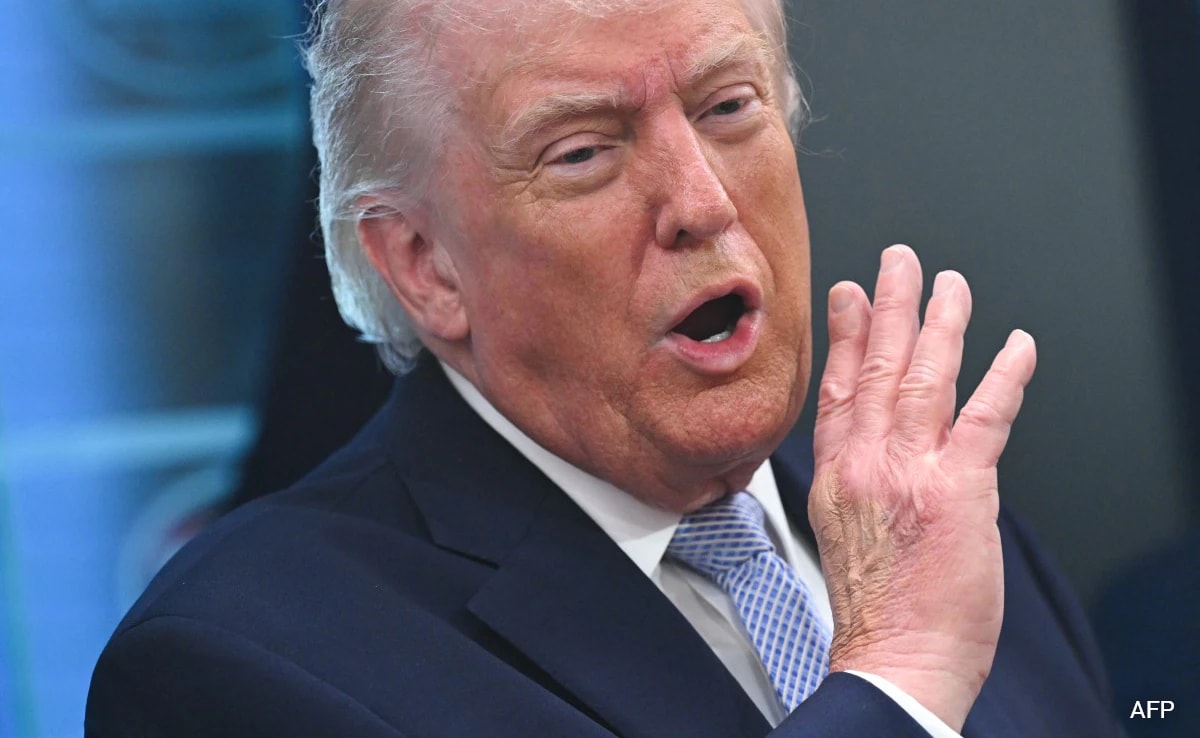
President Trump said the US could seize Iranian oil as an outcome of the conflict, arguing military success should yield economic spoils and citing 'over 100 million barrels' taken from Venezuela. The proposal is likely to raise legal and diplomatic risks, increase oil-price volatility and a geopolitical risk premium, and warrants monitoring of Brent/WTI moves and energy and defense sector exposures.
Markets will re-price an elevated “resource-seizure” tail risk into energy and transport premiums immediately — expect crude to gap higher by a few dollars/bbl within days and oceangoing tanker time-charter-equivalent (TCE) rates to spike materially as cargo owners scramble to re-route or insure barrels. The transmission mechanism is two-fold: near-term physical disruption risk (insurance/war premiums, slower loadings through the Strait of Hormuz) and a persistent political-risk premium that tightens available export capacity even if physical flows are only intermittently affected.
Over 3–12 months the second-order effects matter more. US onshore producers can add barrels but not instantly; realistic incremental US shale supply is in the low hundreds of kb/d over a 6–12 month window absent a dramatic capex reset, leaving a structural window for higher prices. Conversely, long-term legal/diplomatic barriers to outright asset acquisition make “permanent” control unlikely; the more plausible durable outcome is segmented trade patterns (Western buyers vs non-Western buyers) and formal or informal corridors that raise transaction costs and margins for freight and security providers.
Defensive and services sectors will capture disproportionate benefits: maritime security, naval logistics, and defense prime backlog re-rate if governments commit to longer deployments; meanwhile commodity traders and storage owners stand to profit from longer carrying trades and higher contango. Key catalysts that would reverse the premium are rapid multilateral diplomatic containment (30–90 days) or decisive physical proof that exports remain unimpaired, at which point much of the elevated premium can unwind quickly, pressuring the more levered thematic trades.
AI-powered research, real-time alerts, and portfolio analytics for institutional investors.
Overall Sentiment
mildly negative
Sentiment Score
-0.35
