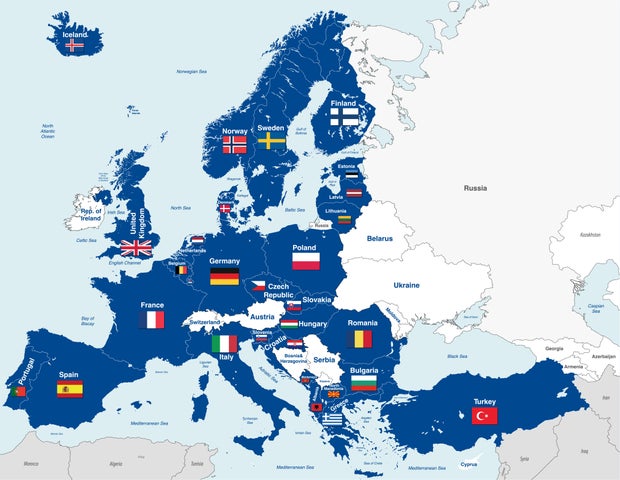
The U.K. Ministry of Defence reported a rise in reported uncrewed aerial vehicle incidents to 266 in 2025 from 126 in 2024 and is proposing legislation to let authorized military personnel shoot down drones threatening defense sites without police involvement. The government says it has quadrupled counter-UAS spending since taking office, allocating over £200 million (~$274 million) this year and deploying new drones, surveillance, integrated monitoring and a tested RF directed-energy system (RapidDestroyer) to counter swarm attacks. The moves come amid broader European reports of mysterious airspace incursions attributed by some NATO states to escalating Russian hybrid activity, increasing operational and geopolitical security risks around military and civilian infrastructure.
Market structure: The immediate winners are prime defense contractors (Lockheed Martin LMT, Raytheon RTX, Northrop NOC, BAE Systems BA.L, Thales HO.PA) and niche C‑UAS/sensor suppliers (Teledyne TDY, Palantir PLTR) as governments shift procurement from police to military control; airports and regional carriers (eg IAG.L, EZJ.L) are near‑term losers from operational disruption. The UK’s quadrupling to >£200m and reported incidents (266 v 126) signal sustained procurement demand that should lift order books by mid‑2025 and keep A&D capex elevated 5–10% annually across NATO over 1–3 years. Increased government buying power will favor incumbents on large system contracts but open premium margins for small specialists offering RF, EO/IR and DEW modules.
Risk assessment: Tail risks include misattribution of incursions prompting escalation or sanctions, legal liability for “shoot‑down” policies, and semiconductor or RF component shortages delaying delivery — each could cause 10–30% program slippage. Timing: news/sightings drive immediate (days) volatility; legislation and forced procurement decisions matter over weeks–months (90 days to bill passage); multi‑year structural demand persists for 3+ years. Hidden dependencies: NATO coordination, export controls, and testing/qualification cycles for DEWs; catalyst watchlist: UK Armed Forces Bill vote (next 30–90 days), NATO procurement announcements, any high‑profile airport closure.
Trade implications: Tactical: establish modest overweight in LMT and RTX (2–3% NAV each) with 9–18 month horizons; hedge execution risk with 12‑month 10% OTM call spreads (buy 10% OTM, sell 30% OTM). Relative value: pair long RTX (3% NAV) / short IAG.L (2% NAV) to capture defense vs. European travel exposure over 6–12 months. Options: buy 9–12 month calls on NOC or BA.L (10% OTM) if incidents >300/year or bill passes; take profits on 20–30% move or after awarded contracts.
Contrarian angles: Consensus focuses on primes, but high‑growth private/small‑cap C‑UAS/sensor suppliers (and integrators) could deliver outsized revenue growth — consider scouting M&A targets or convertible note exposure. Reaction may be underdone in small‑cap C‑UAS valuations and overdone in airlines; however, wider adoption could commoditize basic RF jammers in 3–5 years, compressing margins — limit position sizes and insist on contract‑win evidence before scaling beyond initial positions.
AI-powered research, real-time alerts, and portfolio analytics for institutional investors.
Request DemoOverall Sentiment
mildly negative
Sentiment Score
-0.25
