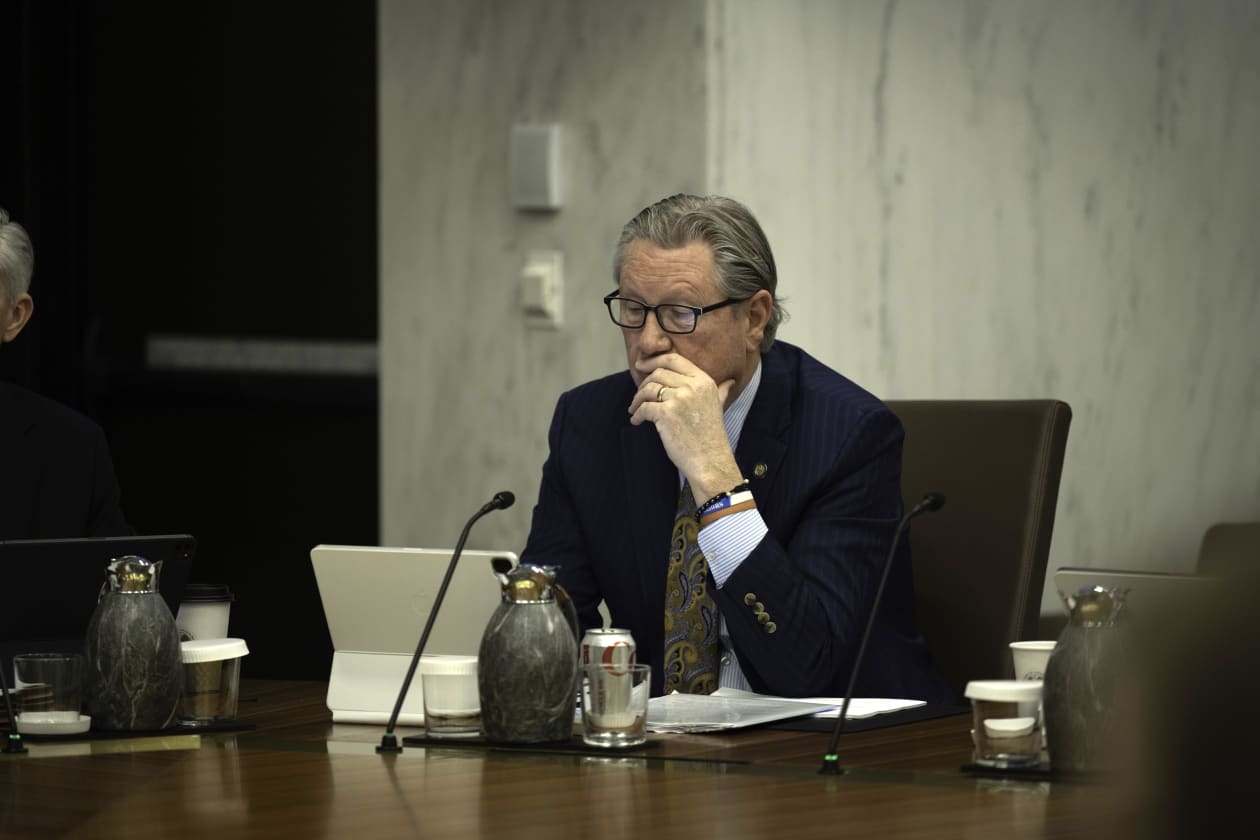
Two Federal Reserve officials, Kansas City Fed President Jeff Schmid (a voting FOMC member) and Richmond Fed President Thomas Barkin, indicated they do not foresee a need for a September interest rate cut. They cited the economy's resilience and a robust labor market, with Schmid specifically noting that recent consumer-price index data does not justify immediate easing, suggesting a potentially more hawkish internal Fed stance on the timing of rate reductions.
Recent commentary from Federal Reserve officials indicates a hawkish tilt, casting doubt on the likelihood of a September interest rate cut. Kansas City Fed President Jeff Schmid, a voting member of this year's interest-rate committee, and Richmond Fed President Thomas Barkin both expressed confidence in the economy's resilience and the labor market's strength. Schmid explicitly stated that the latest consumer-price index data does not provide sufficient justification for monetary easing in September. This stance from a voting FOMC member is particularly significant, suggesting that the internal bar for initiating rate cuts is high and that the central bank may maintain its restrictive policy stance for longer than some market participants anticipate, prioritizing inflation control over preemptive economic stimulus.
AI-powered research, real-time alerts, and portfolio analytics for institutional investors.
Request DemoOverall Sentiment
mildly negative
Sentiment Score
-0.20
