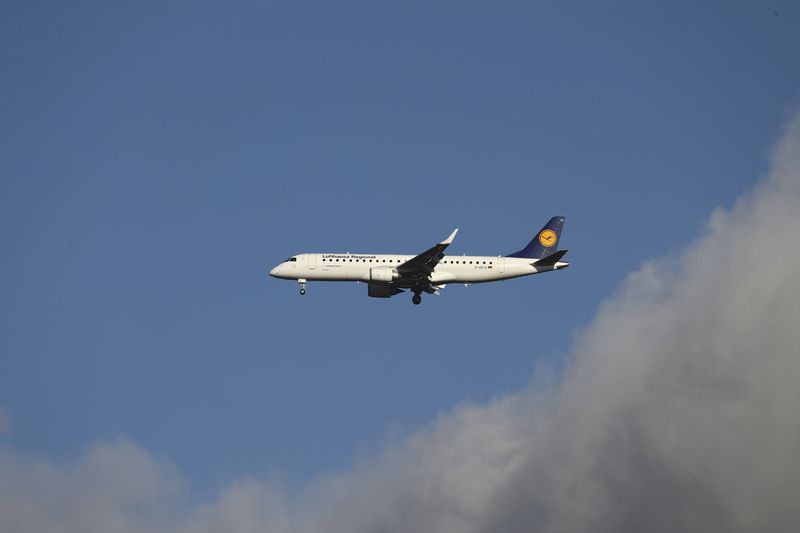
Morgan Stanley downgraded Deutsche Lufthansa (LHAG) to equal-weight from overweight and cut its 2026 EBITDA estimate by ~17%, citing less attractive fuel hedging and higher jet-fuel assumptions. The bank estimates a €1.6bn fuel cost impact driving roughly an €800m FY26 EBITDA reduction; load factors seen down ~2% y/y from 3Q26 and capacity growth trimmed to 2.5% (vs prior 4%). Lufthansa shares fell ~3.8% intraday and are down ~9% YTD (versus ~16% YTD declines for IAG and Air France-KLM); Morgan Stanley also cut sector EBITDA ~11% for flag carriers and ~16% for low-cost carriers.
The immediate market reaction understates the structural shock when fuel remains elevated and hedges are asymmetric across the sector. Under-hedged carriers do not just lose margin — they are forced into capacity and network adjustments that depress unit revenue months later as customers reprice and leisure demand shifts to lower-cost alternatives. Refiners and integrated energy names capture much of the upside from a structurally tighter jet fuel complex; that creates a durable source of relative outperformance versus transportation names rather than a one-off commodity windfall.
Second-order winners include aircraft lessors and cargo-focused operators that can reallocate metal from unprofitable passenger routes to more profitable freight or ACMI contracts; conversely, OEM aftermarket parts suppliers face longer-term demand deterioration if airlines defer mid-life maintenance or stall fleet growth. Currency and sovereign risk matter: carriers with revenues in weak local currencies but fuel costs in dollars (many non-US carriers) face amplified real cost shocks and are likelier to tap capital markets, creating credit dislocation opportunities.
Key catalysts and timeframes: short-term (days–weeks) risk is geopolitically driven swings in crude and product spreads; medium-term (3–9 months) drivers are hedge-roll windows and upcoming quarterly earnings that will force mark-to-market revisions; long-term (12–24 months) outcomes hinge on refinery throughput recovery, SAF uptake, and capacity discipline. A flattening of the jet-crack curve or aggressive fuel hedging programs from airlines would quickly reverse the premium investors are pricing into the sector.
Given the asymmetry, the highest-conviction frameworks are relative-value and optionality-rich structures that isolate fuel exposure or credit stress while capping downside. Avoid binary single-stock directional exposure without hedging the jet-crack or crude base; instead prefer pairs, credit plays, and product-derivative exposure that monetize persistent jet tightness while protecting against headline-driven reversals.
AI-powered research, real-time alerts, and portfolio analytics for institutional investors.
Request DemoOverall Sentiment
strongly negative
Sentiment Score
-0.60
Ticker Sentiment
