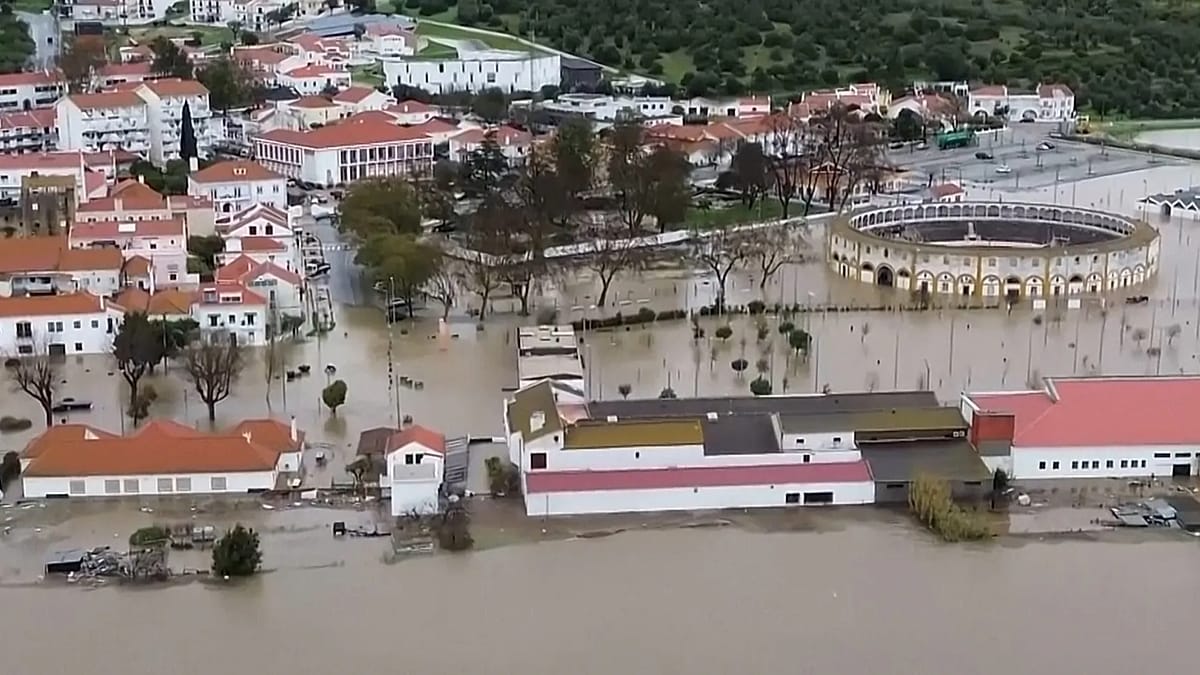
Portugal has been struck by two severe storms in one week, prompting an extended state of emergency, widespread evacuations by motor boat and road closures after rivers including the Sado, Lis and Tagus overflowed; downtown Alcácer do Sal saw water up to 2 metres and Storm Kristin killed at least six in Leiria. The government is pausing several major public projects to redeploy workers for flood protection and recovery, signaling near-term fiscal and infrastructure spending reprioritization, while authorities insist a presidential vote scheduled for Sunday will proceed despite local calls to postpone. These developments imply localized economic disruption, potential claims for insurers, short-term hits to transport and construction activity, and added fiscal pressure from emergency response and rebuilding costs.
Market structure: Immediate winners are builders/engineering contractors and global reinsurers—demand for civil works and flood defenses will likely rise by an incremental €200–500m in affected regions over the next 3–12 months, benefiting large contractors (CRH, VINCI) and materials suppliers. Losers are local insurers, small utilities and toll-road/port operators with concentrated Portuguese exposure; expect near-term P&L strain and localized revenue loss (days–weeks) and potential claims rising into the next quarter. Liquidity in regional credit (Portuguese sovereign and corporate bonds) will be tested; expect 10y PT-GER spread widening of +10–50bps depending on fiscal backstops.
Risk assessment: Tail risks include prolonged infrastructure disruption (weeks) and political fallout (election legitimacy debates) that could trigger stimulus or capital controls—low prob but high impact for sovereign credit (90–180 days). Hidden dependencies: halted public projects redirect labor to recovery, boosting construction margins but pressuring other public capex; insurance losses may be reinsured internationally, shifting losses to global reinsurers. Catalysts: official disaster aid announcements, EU solidarity funds, and a spike in sovereign spread >25–30bps will accelerate market repricing.
Trade implications: Favor tactical long positions in large contractors (CRH.L, DG.PA) and selective reinsurers (SREN.SW, MUV2.DE) for 3–12 month recovery stories; hedge sovereign/FX risk. Short/trim exposures: Portuguese domestic insurers and small-cap tourism/transport operators; underweight travel names with >20% Iberian revenue for 1–3 months. Use FX/options to hedge EUR downside and buy sovereign protection if PT spreads move past stated thresholds.
Contrarian angles: Consensus will focus on humanitarian damage; the market may underprice reconstruction demand and pricing power for contractors—this is a 6–12 month cashflow positive event for large contractors with balance-sheet capacity. Conversely, reinsurers may be oversold after headline losses but face near-term reserve hits; prefer buying on volatility spikes (>30% IV increase) rather than before. Historical parallels: Iberian floods in prior cycles saw 6–18 month outperformance of building materials vs insurers.
AI-powered research, real-time alerts, and portfolio analytics for institutional investors.
Request DemoOverall Sentiment
strongly negative
Sentiment Score
-0.60
