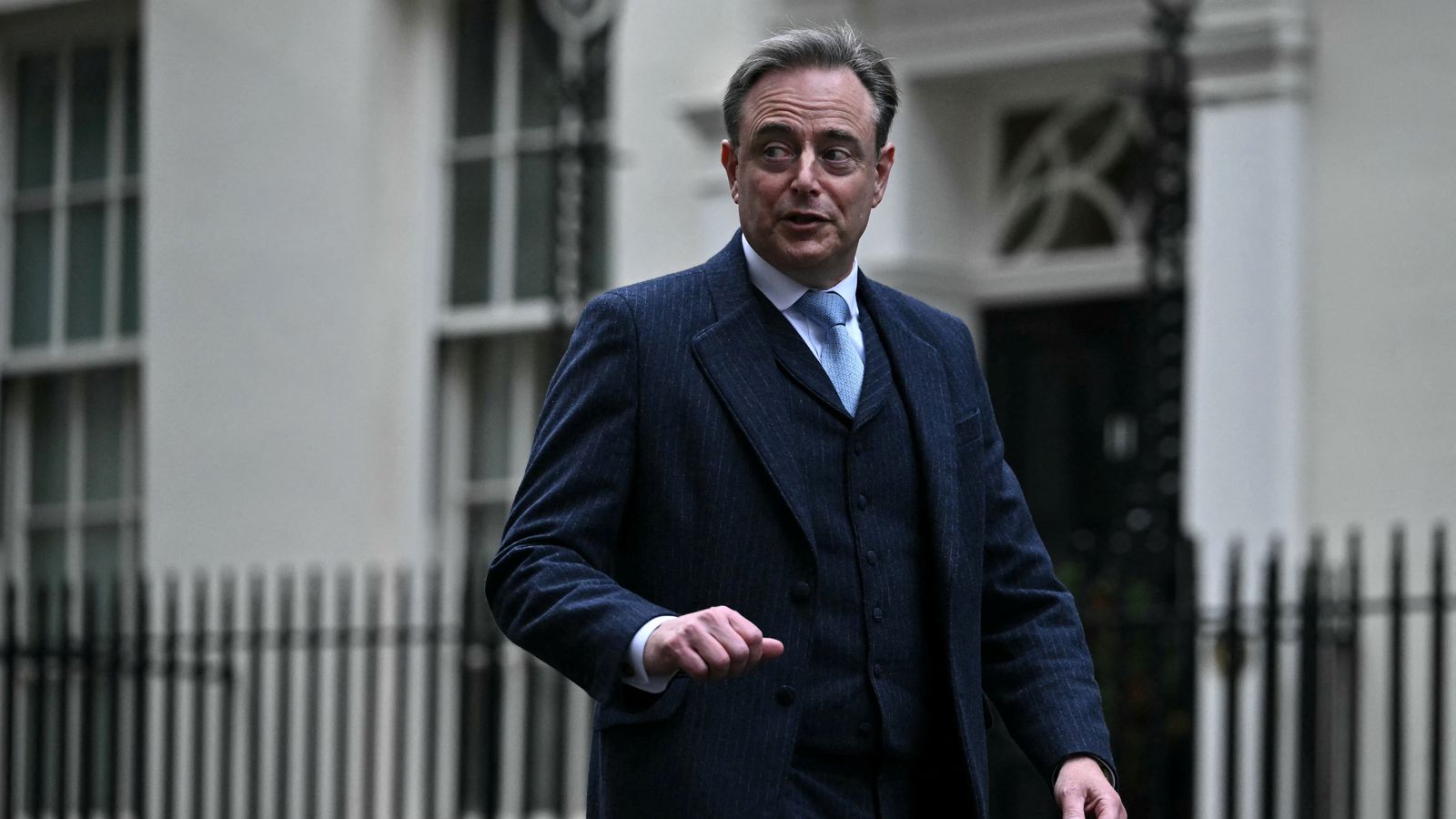
Belgian prime minister Bart De Wever said he is sceptical about using frozen Russian sovereign assets to fund Ukraine, arguing any loan must be undertaken jointly to mutualise liability — Belgium holds around €190bn of immobilised Russian assets (vs €8bn in the UK) and he warned exposure could include decades of litigation and damages. De Wever described talks with UK leader Keir Starmer as constructive but left open legal action if the EU moves to confiscate assets; the EU has indefinitely frozen Russian assets, Moscow calls any confiscation illegal, and political opposition from leaders such as Viktor Orban and Robert Fico increases the risk of delays or complications, a development with material implications for sovereign-asset seizure precedent and Ukraine’s near-term financing prospects.
Belgian prime minister Bart De Wever publicly rejected a unilateral loan to Ukraine financed by frozen Russian sovereign assets, saying any operation must mutualise liability across European partners; he noted Belgium holds approximately €190bn of immobilised Russian assets versus €8bn in the UK and warned exposure could include “€190bn plus damages” and litigation that may last decades. De Wever described talks with UK Labour leader Keir Starmer as constructive but left open the prospect of legal action against the EU if the bloc proceeds to confiscate assets, while a Downing Street statement confirmed continued coordination with European partners on the complex proposal.
The legal and political environment is fragmented: the EU has indefinitely frozen Russian assets using emergency procedures, Russia’s central bank called confiscation “illegal,” and leaders such as Viktor Orban and Robert Fico have publicly opposed moves that fund Ukraine’s military, increasing the likelihood of delays or court challenges. De Wever’s insistence on a shared umbrella for risk underscores the core obstacle — sovereign-level liability and precedent risk — which directly constrains near-term funding pathways for Kyiv.
Urgency for financing is heightened by the security situation cited by Ukraine’s deputy energy minister — 1,800 missiles, 50,000 drones and 4,500 attacks on energy infrastructure this year — amplifying the policy trade-off between rapid funding and legal/financial exposure for asset-holding states. For investors, the combination of legal uncertainty, EU political divisions and acute Ukrainian financing needs implies elevated event risk around EU policy announcements and potential market volatility in affected sovereign and sector exposures.
AI-powered research, real-time alerts, and portfolio analytics for institutional investors.
Request DemoOverall Sentiment
mixed
Sentiment Score
0.00
