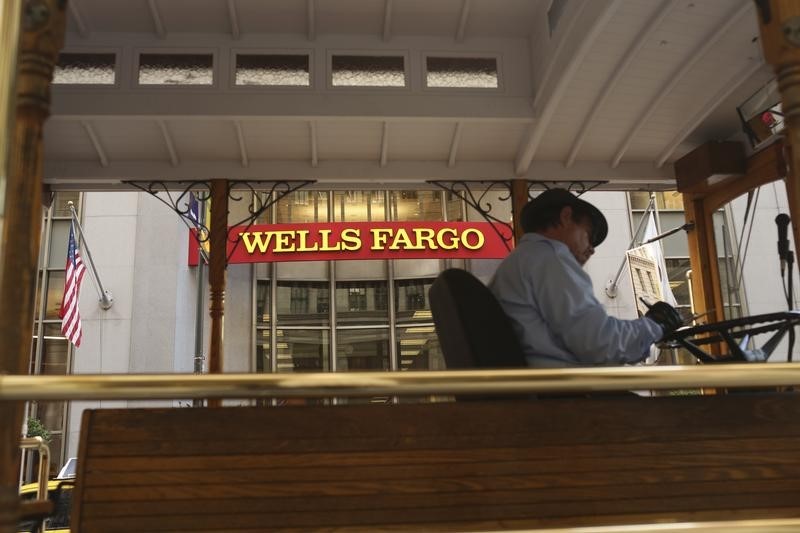
At the Morgan Stanley US Financials, Payments & CRE Conference 2025, Wells Fargo CFO Mike Centimisimo discussed the bank's strategic outlook following the removal of its asset cap, targeting a long-term ROTCE improvement from 14% in 2024 to over 15%. While the asset cap removal provides increased capital flexibility, loan growth is expected to remain limited due to economic uncertainty; however, the bank aims to enhance efficiency through AI and other initiatives. Wells Fargo's CET1 ratio is currently 11.1%, exceeding the regulatory minimum, and the company anticipates growth across all sectors except mortgage, while also monitoring the regulatory environment and adjusting strategies accordingly.
Wells Fargo (WFC), at the Morgan Stanley US Financials, Payments & CRE Conference 2025, detailed its strategic outlook following the pivotal removal of its asset cap, an event CFO Mike Centimisimo emphasized as the result of extensive multi-year efforts. The bank targets an improvement in its Return on Tangible Common Equity (ROTCE) from an achieved 14% in 2024 to over 15% in the long term, leveraging increased capital flexibility. Despite this positive development, WFC anticipates that loan growth will remain limited for the rest of the year due to prevailing economic uncertainties, though Net Interest Income (NII) is guided to grow by 1% to 3% year-on-year. Operationally, WFC is pursuing growth through several initiatives: upgrading 1,500-2,000 branches with 750 more refurbishments planned this year, replatforming its card business and launching 11 new products since February, operationalizing a new auto business agreement with Volkswagen and Audi, and strengthening its wealth management, commercial bank, and corporate investment bank through strategic hires and acquisitions. The markets business, previously the most constrained by the asset cap, is now poised for greater capital allocation. WFC maintains a robust CET1 ratio of 11.1%, significantly above regulatory minimums. Expense management remains a priority, with a 2024 expense ratio of 64% targeted for reduction, partly through the deployment of AI, although efficiencies in risk and control functions are viewed as a longer-term project. Current credit trends are reported as positive with no significant deterioration, and potential tariff risks are incorporated into the bank's reserving models. The asset cap removal is expected to primarily enhance flexibility in the markets business and deposit gathering capabilities, though the CFO stressed that resultant growth will be methodical and not immediate.
AI-powered research, real-time alerts, and portfolio analytics for institutional investors.
Request DemoOverall Sentiment
strongly positive
Sentiment Score
0.70
Ticker Sentiment
