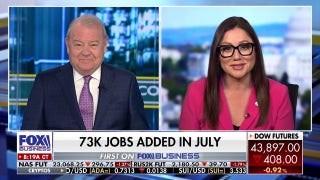
Former President Trump escalated his attacks on Fed Chair Jerome Powell, urging the Board of Governors to assume control and cut interest rates immediately, following the FOMC's fifth consecutive decision to hold rates steady. This political pressure coincides with conflicting economic data: June PCE inflation rose to 2.6%, exceeding the Fed's 2% target, yet the July jobs report significantly underperformed expectations, adding only 74,000 jobs, coupled with substantial downward revisions totaling 258,000 past job gains. This weaker labor market data, despite persistent inflation, has reignited market speculation for potential rate cuts, challenging the Fed's recent stance on economic stability.
The Federal Reserve is navigating an increasingly complex environment marked by escalating political pressure and contradictory economic data. Former President Trump's public call for Chairman Powell's replacement and immediate rate cuts introduces significant political noise, though the FOMC's collective decision-making process makes a politically forced emergency cut unlikely. The Fed's recent decision to hold rates steady was underpinned by Powell's assessment of a solid economy and persistent inflation, a view supported by the June Personal Consumption Expenditures (PCE) index, which rose to 2.6% and remains well above the 2% target. However, this narrative is now directly challenged by a substantially weaker-than-expected July jobs report, which showed only 74,000 jobs added and, more critically, featured a 'larger than normal' downward revision of 258,000 jobs for the preceding two months. This sharp deterioration in the labor market creates a significant policy dilemma, pitting clear evidence of economic slowing against still-elevated inflation, and has revived market expectations for a rate cut at the September meeting.
AI-powered research, real-time alerts, and portfolio analytics for institutional investors.
Overall Sentiment
moderately negative
Sentiment Score
-0.40
