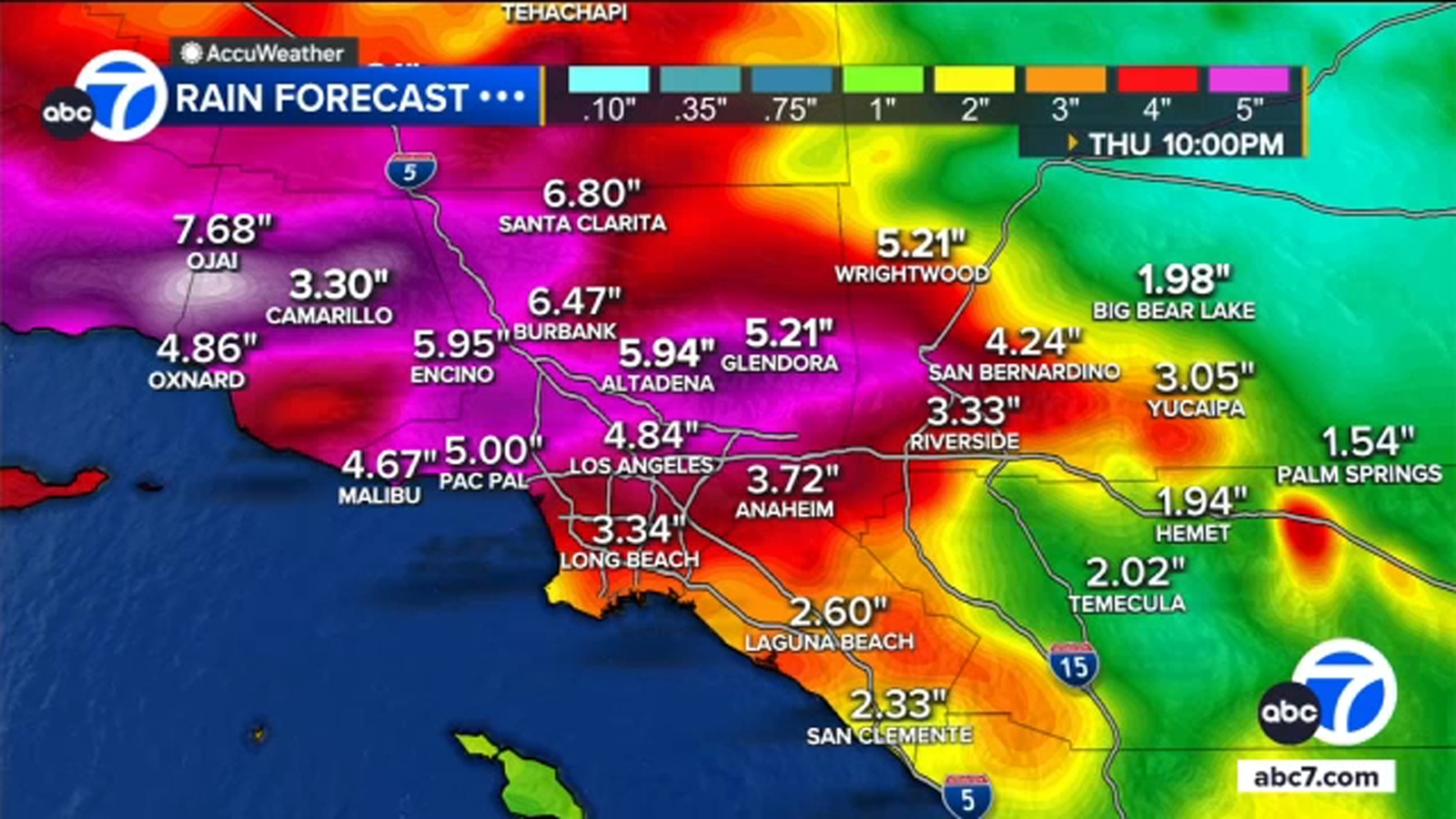
An atmospheric river is forecast to shift into Southern California beginning Tuesday afternoon, with scattered light rain intensifying overnight into Wednesday and the heaviest precipitation after midnight into Wednesday and peaking on Christmas Eve; less than a half-inch is expected Tuesday evening and wet conditions are forecast through Friday. Snow levels will drop to around 7,000 feet Thursday and Friday; the event could cause short-term travel and logistics disruption and localized flooding risk during the holiday period, though overall rainfall amounts are modest.
Market structure: Near-term winners are local e-commerce/last-mile (AMZN, FDX, UPS) and home-improvement retailers (HD, LOW) from prep and delivery demand; clear near-term losers are regionally exposed passenger airlines (LUV, AAL, UAL) and car rental (CAR) because Christmas-week cancellations reduce revenues by an estimated 1–3% regionally over 3–5 days. Pricing power shifts are transient — logistics capacity tightness can push short-term freight/delivery premiums up 5–15% if delays cascade, but inventory/port constraints are the real lever for multi-week effects.
Risk assessment: Tail risk is a port/terminal shutdown or multi-day LAX ground-stop (<5% probability) that would materially impact West Coast holiday imports and push spot ocean rates +20–50% and FDX/UPS overtime costs +5–10% for 1–3 weeks. Immediate risk horizon (days): flight interruptions and local retail footfall declines; short-term (weeks): delivery backlogs and customer-service costs; long-term (quarters): negligible structural impact unless repeated atmospheric rivers increase.
Trade implications: Tactical trades should be short-dated and size-constrained. Prefer 2–4 week protective/ directional option plays: buy 0.5–1.5% portfolio exposure in Jan-expiry (≈1–2 week) puts on LUV/AAL (5–10% OTM) to capture cancellations; take 0.5–1% overweight long in AMZN and 0.5% in HD to capture e-commerce + prep retail; consider a 0.25–0.5% long in FDX to capture higher last-mile pricing if ports slow.
Contrarian angle: Market headlines will overstate impact — rainfall totals reported are modest (<1" typical) so implied airline volatility may be overpriced. If 30‑day IV for LUV/AAL >45% for front-week expiries, consider selling calendar spreads (sell near-week, buy 2–3 week) to collect premium while limiting tail risk; monitor FAA ground-stop and Port LAPier alerts — if none within 24 hours, unwind exposure.
AI-powered research, real-time alerts, and portfolio analytics for institutional investors.
Request DemoOverall Sentiment
neutral
Sentiment Score
0.00
