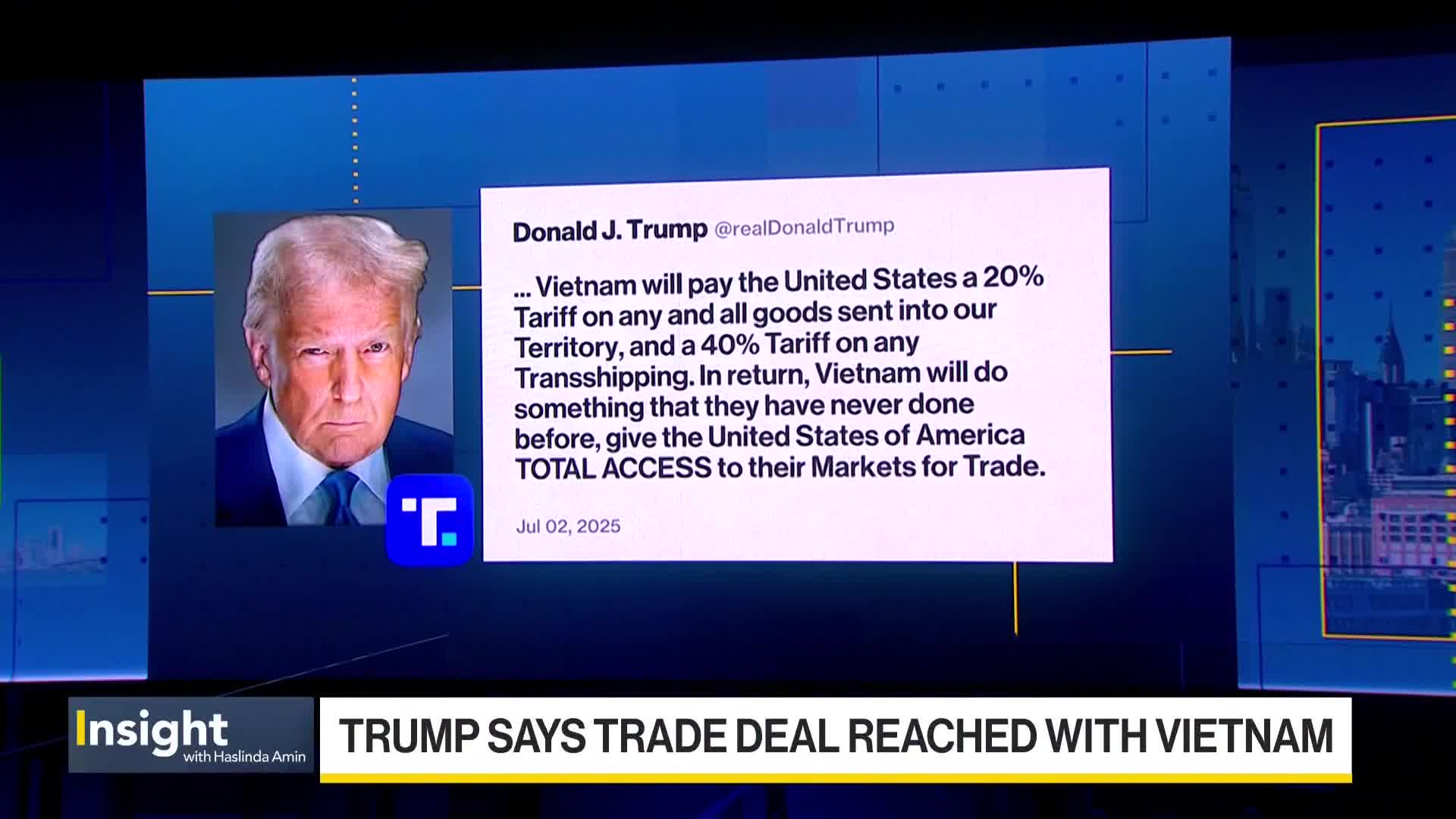
President Trump announced a trade deal with Vietnam, imposing a 20% tariff on Vietnamese exports to the US and a 40% levy on goods transshipped through the country. This significant tariff action on a key Asian manufacturing hub introduces new trade barriers and signals potential shifts in regional supply chains, with broader implications for other Asian economies.
The United States has formalized a new trade agreement with Vietnam, imposing a significant 20% tariff on Vietnamese exports and a punitive 40% levy on goods identified as being transshipped through the country. This development marks a material escalation in trade protectionism, directly targeting a key beneficiary of recent supply chain diversification away from China. The 40% transshipment tariff, in particular, signals a more aggressive US stance on closing trade loopholes and could severely disrupt manufacturing operations that relocated to Vietnam to circumvent existing tariffs on Chinese goods. Given Vietnam's role as a rapidly growing manufacturing hub in Asia, these measures introduce substantial uncertainty and will likely erode the cost competitiveness of its exports, with potential negative repercussions for its economic outlook. The broader implications for other Asian economies are significant, as this action could serve as a precedent, creating a climate of unpredictability for regional trade and investment flows.
AI-powered research, real-time alerts, and portfolio analytics for institutional investors.
Request DemoOverall Sentiment
strongly negative
Sentiment Score
-0.60
