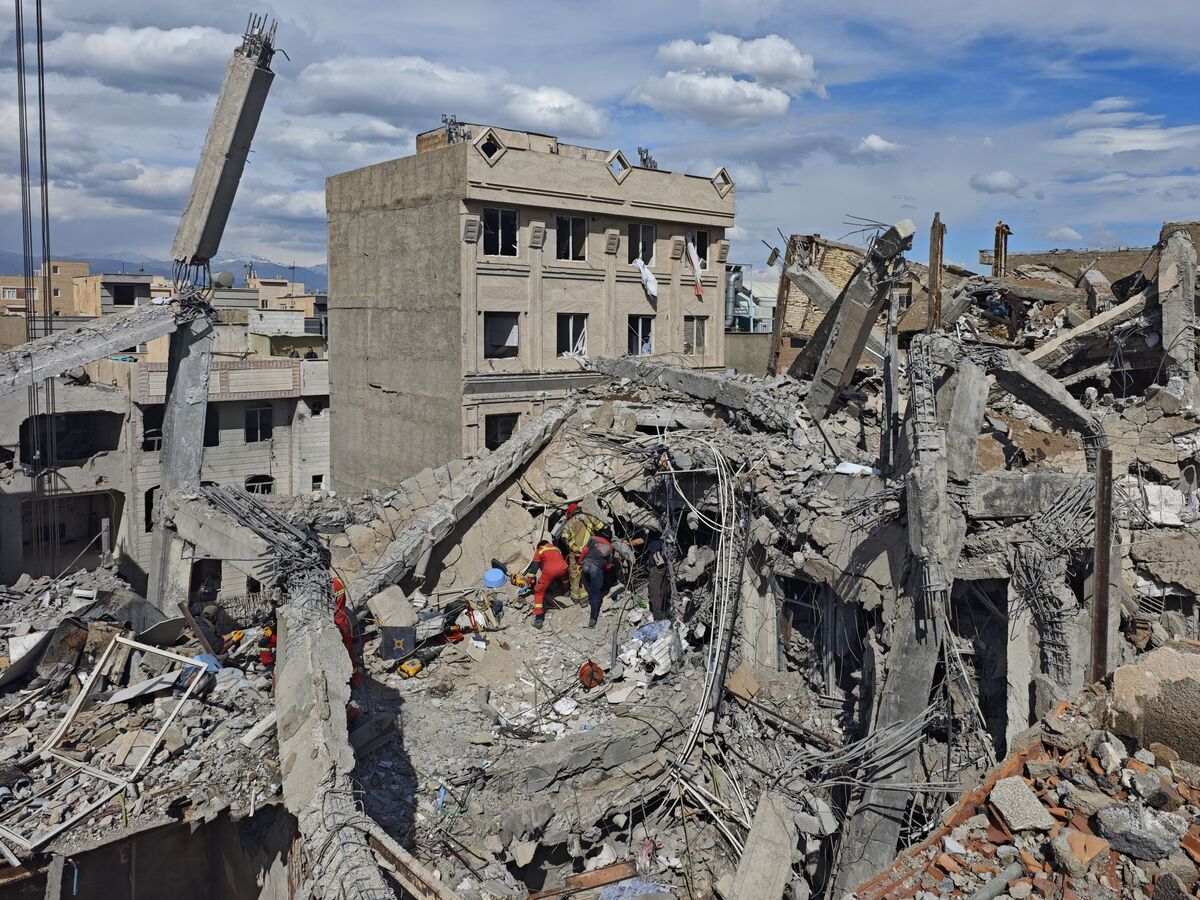
US and Israel struck multiple Iranian nuclear and steel facilities, including the Arak heavy-water reactor, a yellowcake production plant in Yazd, and two of Iran's largest steelmakers. Tehran continued launching strikes across the Persian Gulf and has rebuffed US demands to end the conflict, heightening regional escalation risk. Expect near-term risk-off flows, potential upward pressure on oil and commodity prices, and increased volatility in EM and regional assets.
Immediate winners are defense prime contractors, specialty insurers and gold — assets that reprice on geopolitical convexity rather than fundamentals. Expect a 5–15% re-rating in large-cap defense names over 3–12 months if kinetic actions continue, driven by expedited procurement cycles and higher margin classified programs; insurers will raise war-risk premia, effectively taxing seaborne trade flows and widening freight/insurance spreads by +100–300 bps in the near-term.
Commodity knock-on effects will be nonlinear: a sustained disruption to Gulf shipping for even 1–4 weeks tightens seaborne crude and LNG availability regionally and can widen Brent/WTI by $3–8 for the season, while localized steel output losses shift regional export flows to Turkey/China and support finished-steel spreads for exporters for 2–6 months. Uranium and nuclear services are a longer-latency beneficiary — outages or perceived supply risk can move spot uranium +20–40% inside 6–12 months because of inelastic conversion and enrichment lead times.
Key risks and reversal catalysts are binary and front-loaded: diplomatic de-escalation, coordinated SPR releases or a decisive OPEC spare-capacity response can compress premiums within days–weeks. Conversely, escalation that threatens the Strait of Hormuz or hits major export nodes is a tail risk that can cause >$20 moves in Brent and trigger a rapid global growth repricing; position sizing should reflect this asymmetric event risk.
AI-powered research, real-time alerts, and portfolio analytics for institutional investors.
Overall Sentiment
strongly negative
Sentiment Score
-0.80
