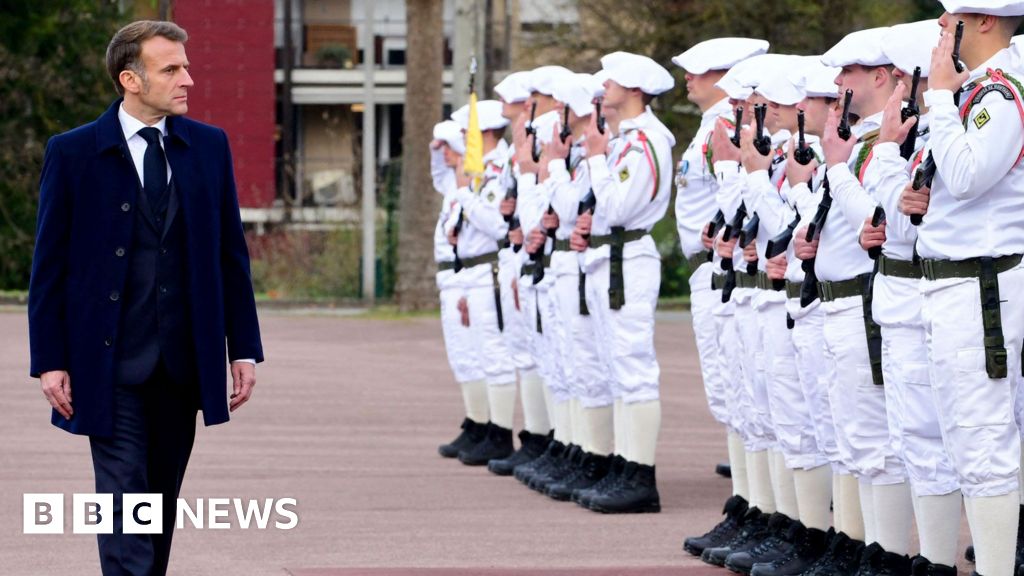
France will reintroduce a limited voluntary national military service from next summer aimed mainly at 18- and 19-year-olds, offering paid 10‑month training at at least €800/month; participation is capped at 3,000 next year and targeted to rise to 50,000 by 2035. The move, framed as preparation for a potential confrontation with Russia, complements France’s ~200,000 professional personnel and 47,000 reservists but raises fiscal questions amid a looming debt crisis and an unapproved 2026 budget, implying potential pressure on public finances and defense-related sectors.
Market structure: The policy is a net positive for large defense primes with export and training-service exposure (Thales HO.PA, Safran SAF.PA, Dassault AVMD.PA, Airbus AIR.PA, Rheinmetall RHM.DE) because demand shifts to training, cyber, logistics and equipment over a multi-year window (3k recruits in 2026 → 50k by 2035). Domestic fiscal pressure makes French sovereign bonds and broad French cyclicals relatively vulnerable; I expect a 10–50bp widening of 10y OAT vs Bund over 12 months if parliament scales costs. Commodities and FX: modest upside for oil (+1–3%) on geopolitics and 1–3% downside risk to EUR vs USD in 3–12 months as Francophone fiscal risk reprices.
Risk assessment: Tail risks include an acute Russia-related incident or full mobilization that forces additional defense spending of €3–10bn/year (high‑impact, low probability) and a sovereign-rating action that could push 10y OAT yields +50–150bp. Immediate (days) — sentiment/FX moves; short-term (weeks–months) — equity rerating of defense names and bond spread moves; long-term (years) — marginal structural increase in defence budgets conditional on continued geopolitical tension. Hidden dependency: parliamentary 2026 budget approval is binary; unfunded promises could flip sentiment quickly.
trade implications: Tactical: overweight large defense primes and cybersecurity/training suppliers via equities or call spreads with 6–12m horizons; underweight French sovereigns and broad France equity exposure (EWQ) as a hedge. Pair trades: long HO.PA / short EWQ or long RHM.DE vs short smaller French SMEs; option strategies: buy 6–12m call spreads 10–20% OTM on RHM.DE or HO.PA and buy 3–6m EURUSD put spreads (2–3% OTM). Entry on pullbacks; target 20–30% upside on defense names within 12 months, stop-loss ~12%.
contrarian angle: Markets may overreact to political signalling — recruits are small initially (3k → 50k by 2035) and direct procurement cost is modest (~€0.5bn–€1bn/year at scale), so near-term revenue upside for suppliers is limited. Opportunity: short small/mid-cap French defence suppliers that lack export pipelines and go long large, diversified primes with proven export contracts. Historical parallel: 2014 Crimea produced a front-loaded 20–40% rally in defense stocks that mean‑reverted after order cycles; watch for similar fade if no concrete procurement escalates.
AI-powered research, real-time alerts, and portfolio analytics for institutional investors.
Request DemoOverall Sentiment
moderately negative
Sentiment Score
-0.25
