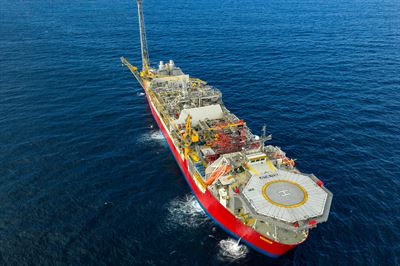
Vår Energi delivered transformational 2025 results with record production (Q4 397 kboepd; FY 332 kboepd), strong post-tax cash flow from operations (USD 1.3bn in Q4; USD 4.6bn FY), available liquidity of USD 3.5bn and a leverage ratio of 0.8x. Management started nine projects adding ~180 kboepd peak, increased net reserves/resources to ~2.2 billion boe with a 2P reserve replacement ratio of 185%, and raised the long-term production target to >400 kboepd while guiding 2026 production at 390–410 kboepd. The company reiterates a shareholder distribution focus (USD 1.2bn distributed in 2025; Q4 dividend USD 300m and Q1 2026 guidance USD 300m), 2026 capex of USD 2.5–2.7bn, project breakevens around USD 30/boe and an expected USD 5–10bn free cash flow over 2026–2032, underpinning a robust returns outlook.
Market structure: Vår Energi (OSE: VAR) is an outright winner—doubling production in two years and adding ~180 kboepd at peak tightens VAR's cost curve (unit op. cost ~USD10/boe, breakeven ~USD30/boe) and increases cash-flow optionality. Winners also include Norwegian service suppliers and regional peers (EQNR, AKRBP) who benefit from cluster activity; losers are higher‑cost marginal producers (US shale names like EOG, PXD) that compete on marginal barrels. Net global supply impact is modest (~0.18 mbpd) but the structural increase in low‑cost NCS barrels raises competitive pressure on higher‑cost supply and supports tighter spare‑capacity dynamics if demand holds.
Risk assessment: Key tail risks are a sharp oil price shock <USD40/bbl (blows through VAR's FCF breakeven), Norwegian political/windfall tax changes, or operational setbacks in FPSO/Johan Castberg ramp‑up. Immediate catalyst: Q1 dividend payment (12 Feb) and 2026 production guidance; medium term (3–12 months) risk centers on execution of 13 projects and 12 planned exploration wells; longer term (2026–2032) depends on sustaining capex (~USD2.5bn pa) and commodity cycles. Hidden dependency: heavy reliance on continual sanctioning of new projects (up to 8 in 2026) to meet >400 kboepd target.
Trade implications: Tactical: establish modest long exposure to VAR to play re‑rating and dividend (see actions below), hedge oil beta via short high‑cost shale (EOG or PXD). Options: use 6‑9 month call spreads on VAR to capture upside while limiting premium, and buy protective puts if Brent <USD55. Cross‑asset: expect Norwegian krona appreciation on continued large NOK/dividend flows, tightening VAR credit spreads; rotate portfolio toward NCS upstream and away from marginal US shale and higher‑cost LNG exposures.
Contrarian angles: Consensus underestimates tax/regulatory risk and sustaining capex needs—market may be underpricing downside if oil falls to mid‑USD40s while VAR keeps high capex to sustain >400 kboepd. Historical parallels (post‑ramp Equinor/Aker BP cycles) show operational hiccups and reserve revisions can trim near‑term FCF despite strong initial guidance. If exploration disappoints (12 wells in 2026), the equity rerate could reverse quickly; conversely successful high‑value discoveries would be a convex upside given low unit costs.
AI-powered research, real-time alerts, and portfolio analytics for institutional investors.
Request DemoOverall Sentiment
strongly positive
Sentiment Score
0.70
