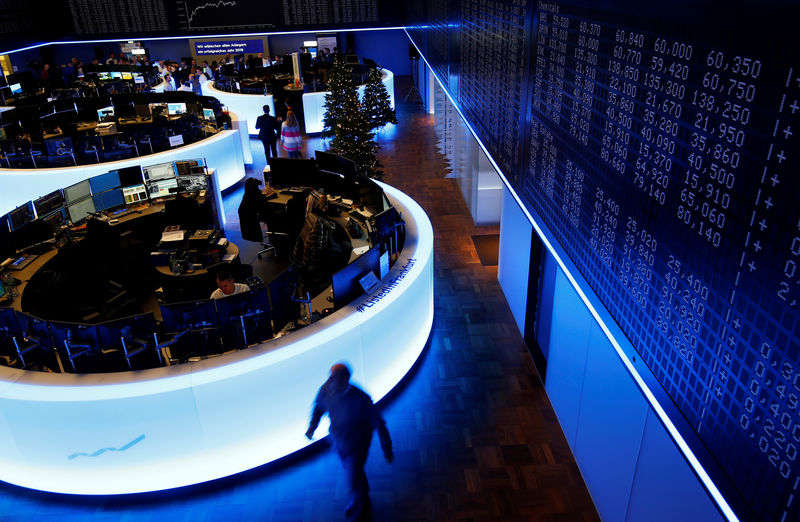
U.S.-Iran ceasefire/negotiation hopes and reports of renewed strikes kept markets on edge, with European equities falling 1% on the Stoxx 600, Germany’s Dax down 1%, the FTSE 100 down 1.6%, and France’s CAC 40 down 1.2%. Brent crude fell 2.4% to $98.83 a barrel as traders priced in a possible reopening of Strait of Hormuz tanker traffic. Company news was mixed: Shell fell after quarterly profit beat estimates but share buybacks were cut, while Arm Holdings issued a first-quarter revenue outlook above consensus, lifting European chip stocks.
The market is pricing a ceasefire as if it were a binary event, but the more important variable is the persistence of a partial reopening premium in energy. Even if talks advance, the first-order hit to crude is already visible; the second-order risk is a violent snapback if negotiations stall on verification, enrichment, or sanctions sequencing. That makes the near-term setup less about direction and more about volatility compression followed by gap risk, which favors optionality over outright direction.
SHEL looks tactically vulnerable because it is being forced to bridge two opposing narratives: lower realized prices would help downstream and trading, but the equity tends to de-rate when upstream cash flow expectations get repriced faster than buybacks can absorb it. The cut to capital returns matters because buyback support is often what stabilizes integrated energy names during geopolitical drawdowns; if oil stays soft for several sessions, the market will start marking down terminal cash generation rather than just the spot quarter.
The bigger second-order beneficiary is not the obvious “risk-on” basket but industrials and transports with high fuel sensitivity, where margin relief can show up before earnings revisions. Conversely, any relief rally in European cyclicals is fragile because it depends on energy disinflation lasting long enough to improve PMIs and consumer sentiment; that requires weeks, not days. If the diplomatic path fails, the move higher in Brent can be faster than the equity market’s ability to re-risk, especially in names with high beta to oil and inflation expectations.
The contrarian read is that the market may be underestimating how much of the conflict premium was already unwound before a durable agreement exists. That means chasing downside in crude here is low-conviction unless you expect a credible implementation timeline; otherwise, the asymmetric trade is to buy cheap upside exposure into headline risk and fade over-owned beneficiaries of lower energy. In short: the easy money is likely gone, but the return of tail-risk is not.
AI-powered research, real-time alerts, and portfolio analytics for institutional investors.
Request DemoOverall Sentiment
neutral
Sentiment Score
0.05
Ticker Sentiment
