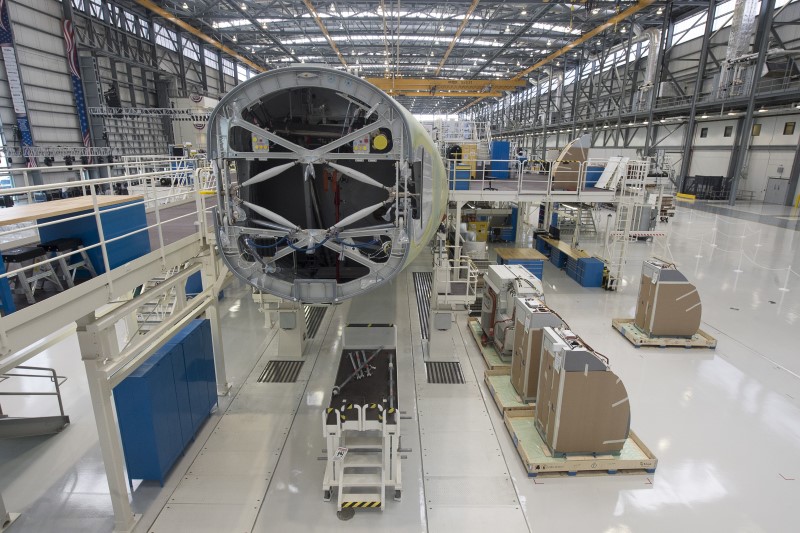
Airbus is telling thousands of employees to cut non-industrial spending by 10% as global uncertainty and supply chain problems continue to pressure its jetliner business. The spending restraint is separate from the two-year-old LEAD cost-saving program and also targets outside contractors. The update points to ongoing margin pressure and a cautious operating backdrop, but it is unlikely to be a major market mover on its own.
This is less a margin story than a signal that management sees the next 2-3 quarters as structurally noisier on cash conversion. Cutting discretionary spend and contractor usage usually protects near-term EBIT, but it also telegraphs that the company is choosing flexibility over throughput, which tends to show up later in slower engineering iteration, longer turnaround times, and more friction in ramping delivery schedules if supply conditions improve unexpectedly. Second-order, the biggest beneficiaries are likely suppliers with the most pricing power and the least reliance on Airbus-specific volume. Lower outsourcing and tighter internal budgets can compress demand for engineering services, consulting, and non-core contractors across the aerospace ecosystem, while pushing more work onto captive teams that are already capacity constrained. That can be mildly negative for smaller Tier-2/Tier-3 vendors with Airbus exposure, but potentially positive for the strongest narrow-body peers if customers interpret this as a sign of relative execution stress. The contrarian view is that the market may be underestimating how quickly these cuts can convert into free-cash-flow support if supply-chain normalization stalls. If the company can preserve deliveries while shaving non-industrial expense, this is one of the few levers that improves cash without needing a macro rebound. The risk is that the savings are cosmetic if they simply mask operating inefficiency; if contractor reductions slow certification, software, or cabin work, the benefit can reverse over 6-12 months through deferred revenue recognition and higher rework costs.
AI-powered research, real-time alerts, and portfolio analytics for institutional investors.
Overall Sentiment
mildly negative
Sentiment Score
-0.25
