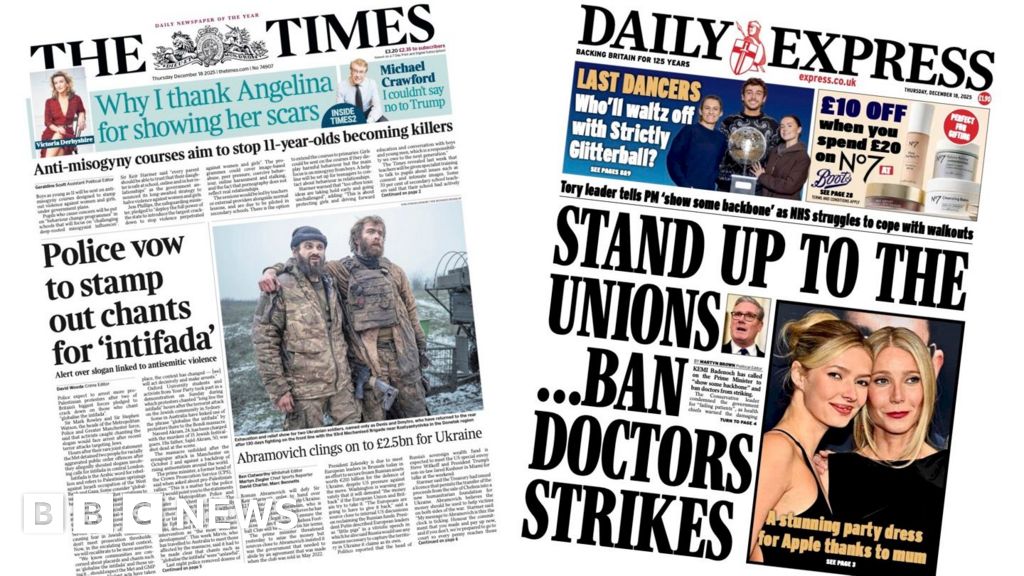
The UK government is threatening legal action to force Roman Abramovich to release approximately £2.5bn (funds from his 2022 Chelsea sale) currently frozen in a British bank to aid victims of the war in Ukraine, while Abramovich asserts he has a strong legal case to dictate the terms of any donation. Separately, Warner Bros Discovery sits at the center of a high-stakes takeover battle, with Paramount's $108bn bid criticized by WBD's board as inferior to Netflix's agreed terms, creating potential volatility in media M&A; other domestic items include an estimated >£8bn cost to rejoin Erasmus and continued NHS industrial action. These developments raise legal and geopolitical risk considerations for investors with exposure to UK-Russian sanctions, large-cap media assets and UK fiscal/political policy.
Market structure: The headline M&A fight between Netflix and Paramount over Warner Bros. Discovery (WBD) creates a classic bidder/target dynamic: short-term winners are WBD shareholders (potential takeover premium) and Netflix (scale/synergy optionality), while rival bidders/financiers face dilution and execution risk. Expect equity volatility to rise 25–40% for NFLX/WBD in the next 30–90 days; M&A-related debt issuance can widen WBD credit spreads by 50–150bp if financed with high-yield. Content-asset pricing power will concentrate with the eventual consolidator, pressuring smaller streaming players for 6–24 months.
Risk assessment: Tail risks include antitrust/regulatory blocks (US/EU/UK reviews extending to 9–18 months) and bidding escalation pushing acquirer equity dilution >10% EPS hit. Immediate (days) risk is volatility and rumors; short-term (weeks–months) is financing/leak-driven repricing; long-term (quarters–years) is integration and content-cost inflation reducing margin by 300–700bp. Hidden dependencies: leverage covenants on WBD debt and break-fee size (if >$1bn) materially change arb math.
Trade implications: Favor option-driven, size-controlled exposure to NFLX upside and arb trades into WBD if a firm offer is announced. Target capture windows of 3–12 months; trade volatility (buy spreads, not naked calls) and use event thresholds (arb spread >3% annualized; IV spike >30%) to enter. Rotate modestly out of smaller streaming/entertainment equities into larger-cap beneficiaries of scale.
Contrarian angles: The market underestimates integration drag and subscriber fatigue — if Netflix overpays, downside could be 15–30% over 12–18 months as content spending rises. The consensus buy-the-bid narrative may be overdone; asymmetric option structures and short-dated hedges can exploit post-announcement mean reversion. Historical parallels (Disney/Fox integration) show 6–18 month underperformance post-close before synergies materialize.
AI-powered research, real-time alerts, and portfolio analytics for institutional investors.
Request DemoOverall Sentiment
neutral
Sentiment Score
-0.05
Ticker Sentiment
