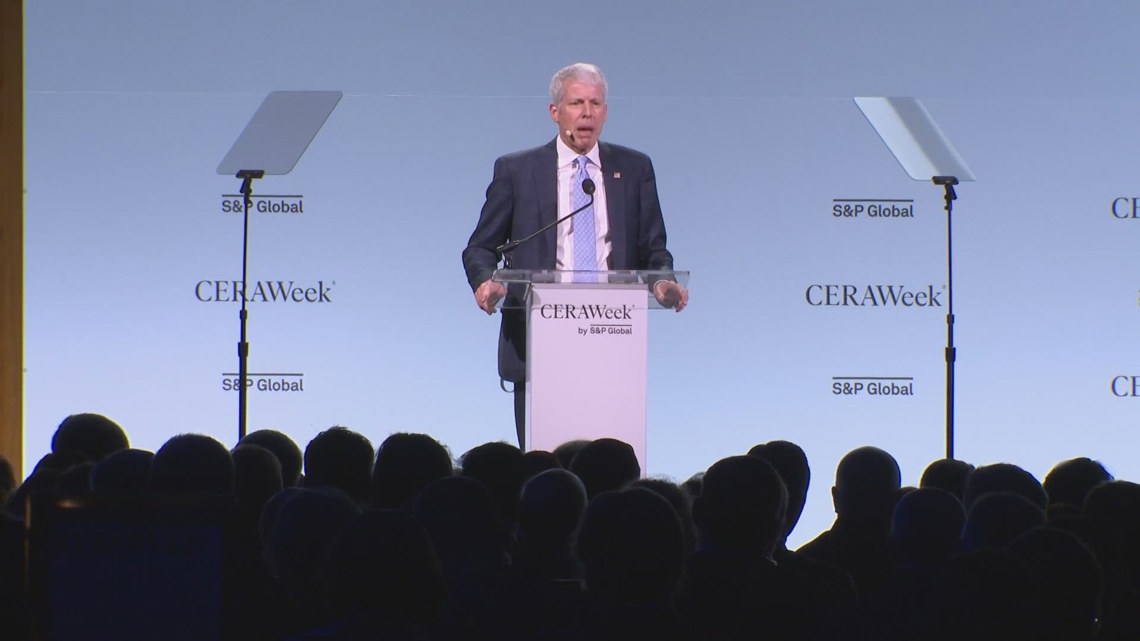
CERAWeek (44th annual) is convening ~10,000 attendees from 85 countries in Houston amid rising oil and U.S. gasoline prices and heightened geopolitical risk from the Iran conflict and Venezuela unrest. U.S. Energy Secretary Chris Wright and Interior Secretary Doug Burgum are headliners; Burgum signed an agreement with TotalEnergies that reverses some Biden-era wind power arrangements. The gathering highlights potential sector volatility and policy shifts that could affect oil & gas pricing and renewable project approvals, warranting monitoring of energy sector positioning.
The policy and commercial signaling we're seeing is shifting near-term capital and permitting risk back toward hydrocarbon and LNG projects while increasing execution uncertainty for onshore wind buildouts. Expect a 12–24 month rerouting of marginal capital: developers with integrated upstream portfolios and global off-takers (large integrated energy companies) can accelerate sanctioned projects, capturing incremental cashflow within 6–18 months while pure-play renewable developers face pushed-out revenue curves and higher cost-of-capital.
Supply-chain winners are not just producers but specific industrial suppliers — compressors, pipeline contractors, and EPC contractors with backlog convertability will see utilization lift and pricing power in the 6–18 month window; turbine OEMs and balance-of-plant vendors see order deferrals and working-cap pressure, creating dispersion within the broader ‘energy transition’ cohort. This bifurcation widens credit- and equity-spread dispersion: expect ~200–400bps higher funding costs for late-stage renewable developers versus majors over the next year.
Key catalysts that will flip this trade are geopolitics (a de-escalation can drop risk premia in days–weeks), OPEC+ production decisions (1–3 months lead), and pipeline permitting outcomes (6–24 months). Tail risks include rapid demand destruction if fuel costs spike >15% vs current levels over 3–9 months, and legal/regulatory reversals that could re-open renewable permitting — both could compress the premium on integrated producers quickly.
AI-powered research, real-time alerts, and portfolio analytics for institutional investors.
Overall Sentiment
neutral
Sentiment Score
0.00
Ticker Sentiment
