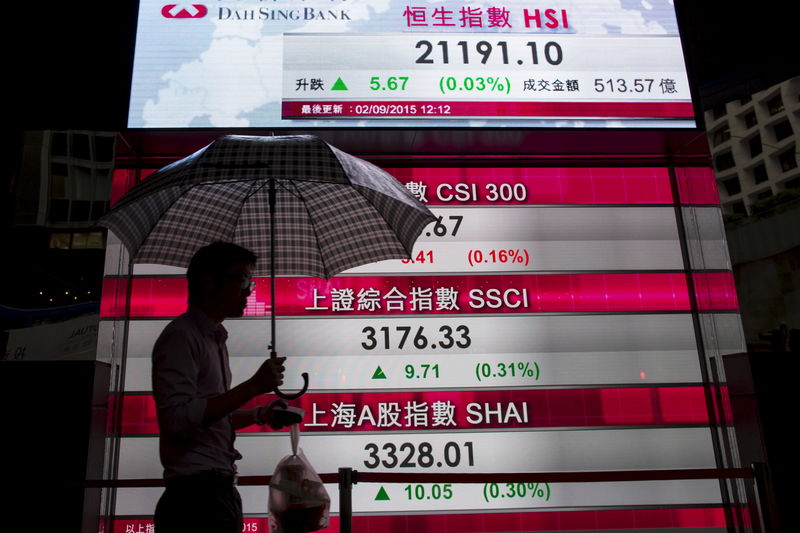
U.S. forces seized an Iranian-flagged cargo ship in the Gulf of Oman as tensions with Iran escalated, lifting oil prices and pressuring risk appetite across Asian markets. Japan's Nikkei 225 rose 1%, South Korea's KOSPI gained 1.1%, and China's Shanghai Composite added 0.8%, but India’s Nifty 50 futures fell 1% amid higher energy costs and geopolitical risk. China's one-year LPR stayed at 3.00% and the five-year rate at 3.50% for an 11th straight month, while tech stocks, including SK Hynix, provided some support.
The immediate winner is the oil complex, but the more interesting read-through is not simple crude beta; it is a volatility regime shift. When the market starts pricing Gulf shipping risk, the first-order move is energy inflation, but the second-order effect is a widening dispersion between upstream beneficiaries and downstream margin takers, especially in Asia where import dependence is highest. That creates a relative-value setup rather than a broad risk-off tape: energy exporters, tanker owners with pricing power, and select defense/cyber names should outperform while airlines, chemicals, and Indian/ASEAN importers likely underperform over the next 1-3 weeks. For semis, the geopolitical impulse is mildly bullish for Nvidia-adjacent supply chain names, but only at the margin. The real support is structural: AI capex remains the dominant driver, and any dip from macro nerves is likely to be bought unless crude stays elevated long enough to hit real rates and consumer demand. If energy stays bid for several sessions, the market may rotate away from long-duration growth into cash-generative tech hardware, making the Taiwan/Korea supply chain more resilient than U.S. software, which is more exposed to multiple compression. The underappreciated risk is policy whiplash. The market is treating the geopolitical headline as a trading event, but a sustained shipping disruption would force higher inflation prints within weeks, which could push Treasury yields up and tighten financial conditions even if the Fed does nothing. Conversely, if there is a quick de-escalation or a clearly contained maritime standoff, the entire move in oil likely retraces fast because positioning is still likely underhedged for a true supply shock. The contrarian view is that the move may be too small for the tail risk embedded in shipping lanes, but too large for a one-day tactical headline if the U.S. is signaling deterrence rather than escalation. That favors buying convexity rather than outright beta: the market is not paying much for a jump-risk scenario, yet a genuine block on Hormuz-style flows would be a multi-week repricing event, not a two-day trade.
AI-powered research, real-time alerts, and portfolio analytics for institutional investors.
Request DemoOverall Sentiment
mildly negative
Sentiment Score
-0.18
Ticker Sentiment
