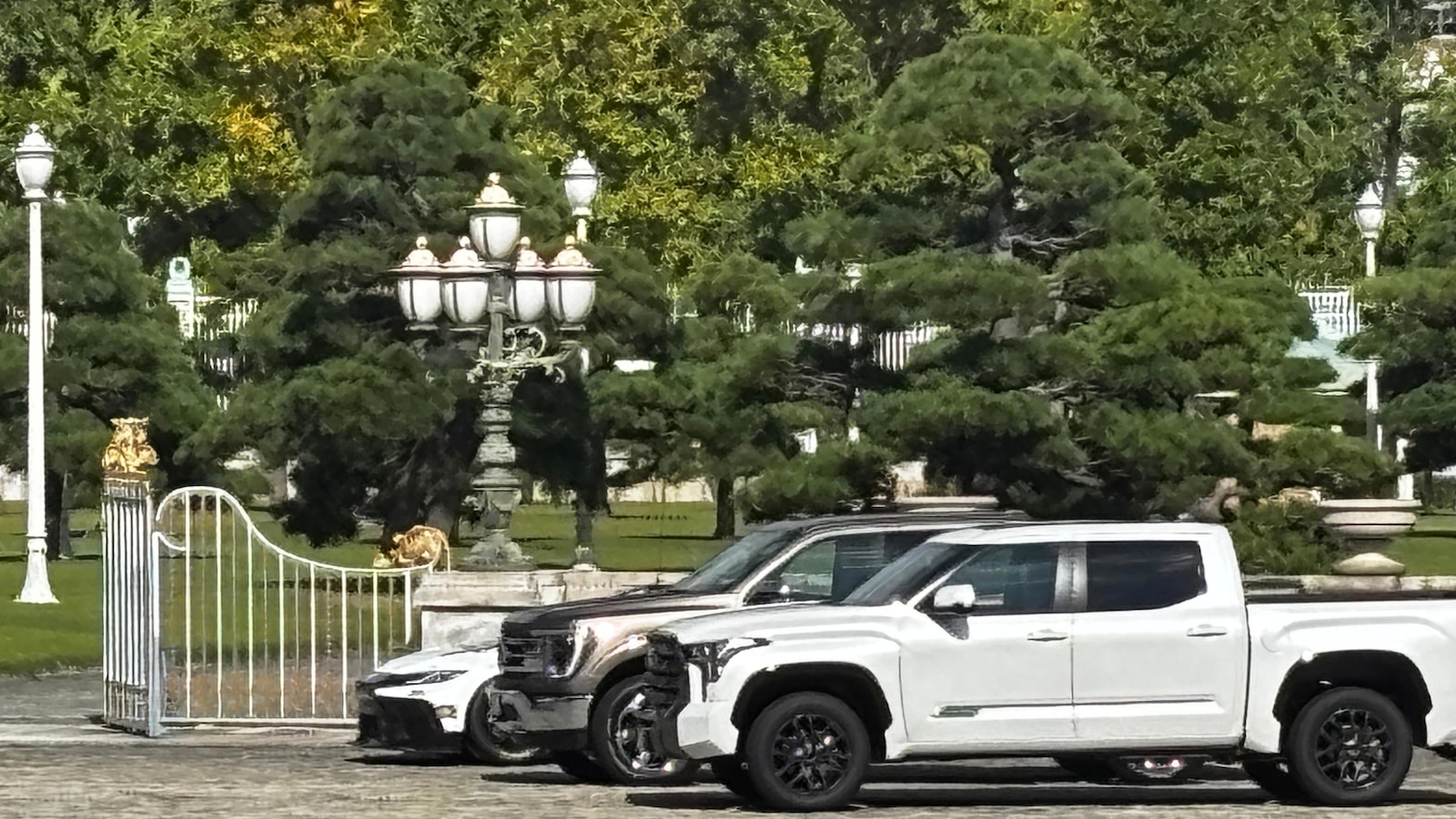
Japanese Prime Minister Takaichi strategically showcased a Ford F-150 to President Trump, signaling an effort to improve economic ties and navigate complex trade relations, particularly concerning U.S. auto imports. This diplomatic gesture follows Japan's prior commitment of $550 billion in U.S. investments, which prompted a reduction in threatened tariffs from 25% to 15%. While Trump responded positively to potential F-150 purchases, the article highlights persistent practical challenges for American car sales in Japan, including local tastes, road infrastructure, and right-hand drive preferences, underscoring the political nature of these trade discussions despite underlying market realities.
Japanese Prime Minister Sanae Takaichi strategically showcased a Ford F-150 to U.S. President Donald Trump, aiming to improve economic ties and navigate complex trade relations. This gesture follows Japan's prior commitment of $550 billion in U.S. investments, which led to a reduction in threatened tariffs on Japanese goods from 25% to 15%. President Trump responded enthusiastically to the prospect of Japan considering purchases of dozens of F-150 pickups, signaling a positive diplomatic reception.
Despite the positive political signaling, significant practical challenges persist for American car sales in Japan. Local consumer preferences favor compact or mini cars due to narrow roads, limited parking, and urban conditions, contrasting with the large F-150. Furthermore, issues like left-hand drive configurations, lower mileage, and insufficient maintenance networks for American brands (excluding Jeep and American-produced Japanese brands like Honda) hinder broader market penetration.
While the article indicates a positive sentiment for Ford (F: 0.6) due to potential government purchases, the broader market impact for U.S. automakers in Japan remains constrained by deep-seated market realities and consumer tastes. The diplomatic overture primarily serves to ease trade tensions and secure U.S. investments, rather than fundamentally altering the competitive landscape for American vehicle imports.
AI-powered research, real-time alerts, and portfolio analytics for institutional investors.
Overall Sentiment
moderately positive
Sentiment Score
0.40
Ticker Sentiment
