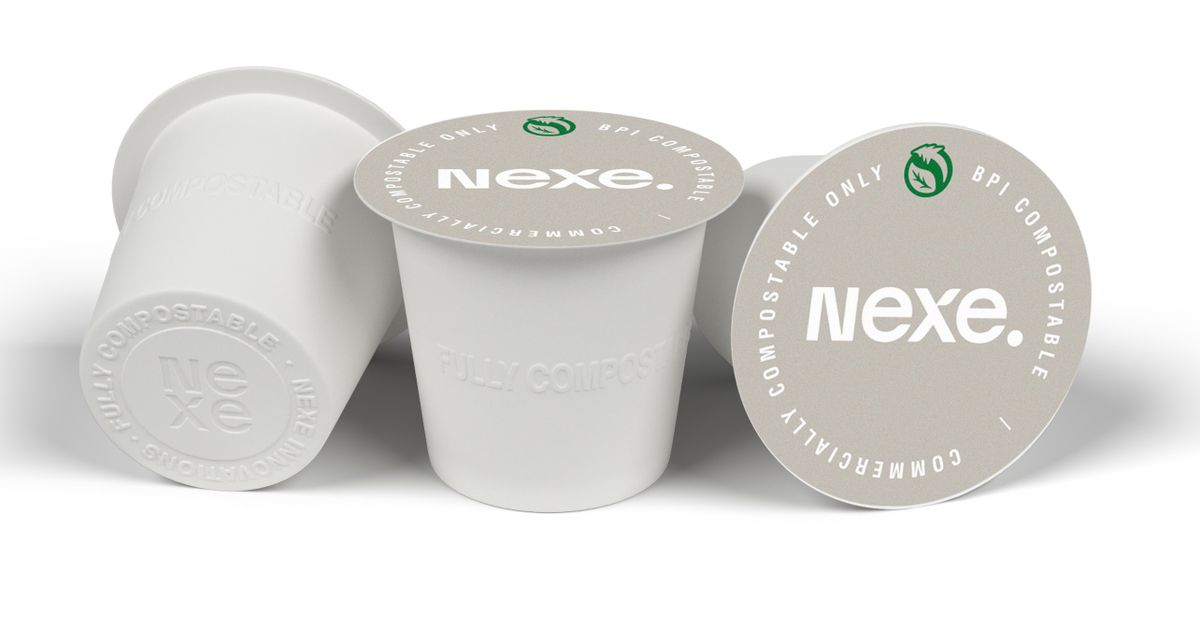
NEXE Innovations reported Q2 fiscal 2026 revenue of approximately $199,000 (vs. ~$71,000 a year earlier) and H1 revenue of ~$319,000, already exceeding FY2025 revenue of ~$308,000, driven by uptake of a compostable coffee pod and a new big-box retail customer. Gross margins remained slightly negative due to one-time setup costs, but unit costs improved 25% QoQ and SG&A fell 42.6% YoY to about $520,000; the company ended the quarter with cash and GICs of $10.6 million and minimal debt. Management is pursuing partnerships, licensing and selective acquisitions to accelerate commercialization, noting onboarding with large coffee brands can take 9 months to 2 years and that distribution partnerships could speed scale.
Market structure: NEXNF is an early-stage beneficiary of rising demand for compostable single-serve pods and licensing of compostable resins — winners include large retailers who can market greener SKUs and third-party resin licensors who scale faster via partnerships. Losers are incumbent petroleum-based pod suppliers (long-term margin pressure) and certain recycling processors facing contamination complexity. Pricing power for NEXE is limited today given tiny volumes (Q2 revenue ~$199k) but improving unit costs (−25% QoQ) create optionality to reach positive gross margin as volumes hit scale; cross-asset impact is marginal but could modestly pressure petrochemical names (e.g., LYB) if adoption grows materially over years, while credit markets see no immediate impact.
Risk assessment: Key tail risks are (1) 9–24 month onboarding timelines stretching cash runway, (2) certification/regulatory setbacks on compostability standards, (3) customer-concentration blowups (large-box order reversal), and (4) equity dilution. Immediate (days) risk = illiquidity/volatility in OTC; short-term (3–12 months) = whether NEXE lands a licensing/retail partnership; long-term (12–36 months) = scalable licensing revenue or M&A payoff. Hidden dependencies include feedstock pricing, third-party manufacturing scale, and retailer quality-control requirements; catalysts are licensing deals, major retailer rollouts, third-party certifications, or acquisition interest.
Trade implications: For nimble allocators, a small, milestone-driven long makes sense: current balance sheet ($10.6M cash) supports opportunistic stakes but not large exposure. Use staged sizing tied to metrics: add if quarterly revenue >$300k or two consecutive quarters of positive gross margin; protect with a 35–40% stop or dilution-exit triggers. Sector tilt: overweight ESG/bioplastics packaging names and underweight legacy petrochemical packaging exposure as a thematic reallocation over 12–36 months.
Contrarian angles: The market underweights licensing as a rapid scale path — partnerships could compress onboarding from 9–24 months to 3–9 months if a large CPG signs, producing outsized upside versus current valuation. Conversely, consensus may underprice dilution risk — small-cap OTC issuers commonly raise equity; treat any >20% raise without strategic partner as a negative catalyst. Historical parallels: compostable packaging adoption in Europe took 3–7 years; expect non-linear adoption and binary M&A outcomes rather than smooth revenue ramps.
AI-powered research, real-time alerts, and portfolio analytics for institutional investors.
Request DemoOverall Sentiment
mildly positive
Sentiment Score
0.35
Ticker Sentiment
