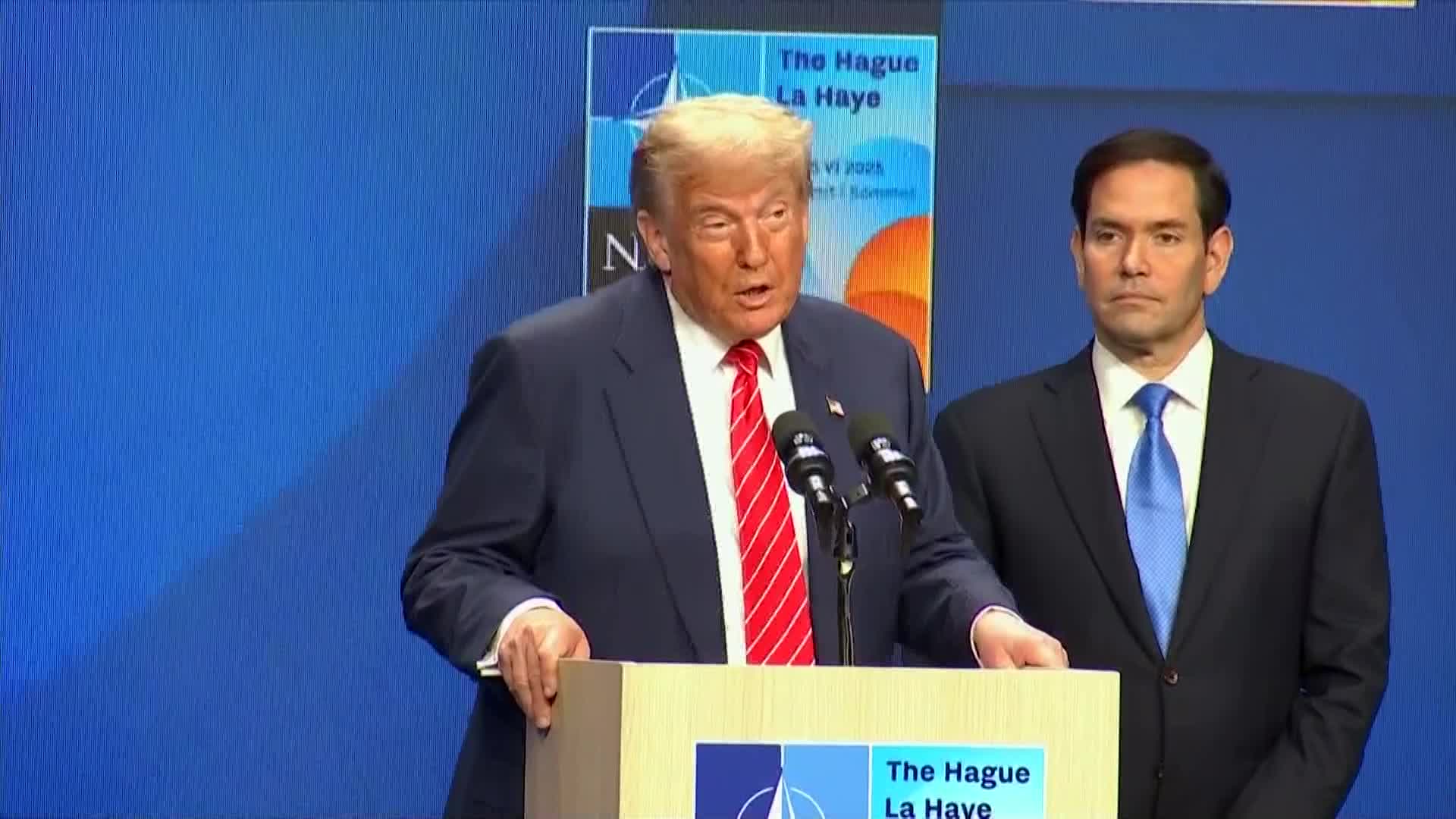
President Trump asserted credit for NATO members' increased defense spending, stating at a summit press conference that 'almost all' allies would now contribute '5%,' a figure he deemed necessary despite its surprising nature. This declaration, significantly above NATO's long-standing 2% GDP target, signals the U.S. administration's continued pressure on allies and could influence defense sector investment strategies.
President Trump's assertion that NATO members will increase defense contributions to 5% of GDP represents a significant escalation in US pressure on its allies, substantially exceeding the long-standing 2% target. While the claim of near-unanimous agreement on this 'surprising' figure is likely aspirational and serves a domestic political narrative, it reinforces a key geopolitical theme: a persistent US demand for greater burden-sharing from European partners. This rhetoric, regardless of the final percentage achieved, creates a favorable tailwind for the defense sector, as it signals a continued political impetus for increased military budgets across the alliance. The market's moderate reaction, reflected in the low impact score, suggests investors may be pricing in a gradual move towards the 2% goal rather than the stated 5%, viewing the announcement as political posturing more than a firm, immediate policy shift.
AI-powered research, real-time alerts, and portfolio analytics for institutional investors.
Request DemoOverall Sentiment
moderately positive
Sentiment Score
0.50
