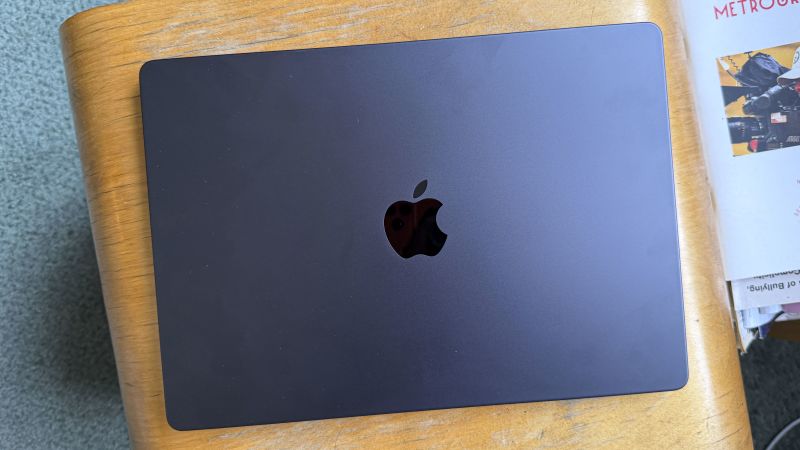
Holiday Cyber Monday promotions have pushed deep, broad discounts across major laptop and desktop lines — including sub-$600 older MacBook Airs at Walmart, lowest-ever pricing on MacBook Air M4 and steep cuts on newly launched MacBook Pro M5 models — alongside marked markdowns on Windows laptops (Surface, Asus Zenbook), Chromebooks, gaming PCs (Alienware Aurora) and accessories. The scale and breadth of price reductions suggest aggressive retailer discounting to drive unit sales and clear inventory ahead of year-end, which could boost near-term volumes but pressure average selling prices and margins for PC vendors and retailers.
Market structure: Cyber Monday discounting is a win for high-margin consumer tech winners (AAPL) that can clear older SKUs without destroying brand pricing; expect a short-term unit uplift of mid-single-digit percent for Apple models on promotion and a 50–150bp transitory margin hit for mass retailers (WMT) as they subsidize traffic. OEMs focused on budget (Chromebooks, Lenovo siblings) pick up share as price-sensitive demand consolidates, while mid-cycle gaming/desktop makers (DELL) see modest volume boosts but face promotional mix that compresses ASPs.
Risk assessment: Tail risks include a broader-than-expected demand slump forcing deeper markdowns (stress scenario: another 10–20% off deeper cuts into 1H24 guidance), or a supply-shock (China lockdowns, freight) raising costs. Near-term (days–weeks) effects are traffic and inventory turns; short-term (months) guidance and holiday sales prints matter; long-term (quarters) depends on product cycles and whether discounts pull demand forward. Watch retail sales (US Dec release), Apple unit sell-through data and Dell/Walmart guidance as catalysts.
Trade implications: Favor long AAPL exposure and avoid/leverage short exposure to mass retailers with thin holiday margins (WMT); consider capped upside via call spreads to limit premium paid and protect against a post-sale pullback. Relative-value: long AAPL vs short WMT notional-neutral to capture margin resilience; add small tactical long-DELL exposure if trading at >10% discount to peer PC-cycle premium and guidance confirms enterprise demand.
Contrarian angles: Consensus underestimates Apple’s ability to preserve pricing — discounts appear focused on prior-generation SKUs, not core M4/M5 ASPs, implying upside to services attachment and gross margins after inventory clears. The crowd may overprice margin risk for OEMs; if holiday pull-forward occurs, expect weaker comps in 1H followed by restocking-led rebound — a 2–3 quarter pattern similar to post-inventory-correction cycles in 2020–21.
AI-powered research, real-time alerts, and portfolio analytics for institutional investors.
Request DemoOverall Sentiment
mildly positive
Sentiment Score
0.35
Ticker Sentiment
