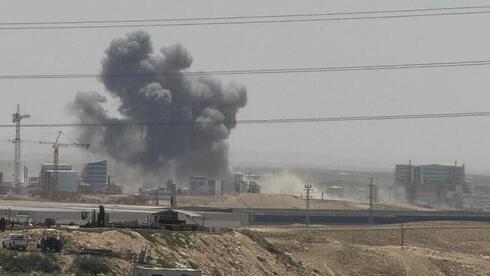
Third strike in a week: missiles fired from Iran again struck the Neot Hovav industrial zone (one impact and one interception), causing minor damage but no new injuries; last week a missile hit an Adama chemical plant causing extensive damage and six people lightly wounded. Emergency services deployed multiple firefighting teams and bomb-disposal units, and authorities report no hazardous materials leak after searches and containment. This raises localized operational and supply-chain risk for chemical/industrial firms in the area and increases regional geopolitical escalation risk for investors.
Repeated precision strikes on a single industrial cluster create concentrated counterparty risk that is rarely priced transparently: suppliers, toll manufacturers, and buyers who rely on single-site chemical or specialty-ingredient production face outsized outage probability. Over a 1–6 month horizon expect buyers to accelerate inventory builds (raising working capital needs) and to shift orders to geographies with higher transport costs, which compresses margins for downstream processors while advantaging geographically diversified producers.
Insurance and reinsurance markets will reprice property/cat limits for Middle East industrial risks within days; that ripples into higher premiums for energy/chemical offtakers and could trigger collateral calls for captive insurance programs over the next quarter. For defense OEMs the revenue impact is lumpy but faster: even modest procurement accelerations or urgent supply contracts typically show up in order books and margins within 3–9 months.
Market consensus will likely treat these as isolated tactical events; the more consequential pathway is a routinization of targeted strikes forcing multinational firms to redesign supply chains over 6–24 months, benefiting logistics, diversified chemical producers and certain defense suppliers. The immediate market swing is risk-off, but a tactically calibrated escalation (limited, high-value targets) is more bullish for specialized defense electronics than for broad-based defense cyclicals over the next 3–12 months.
AI-powered research, real-time alerts, and portfolio analytics for institutional investors.
Overall Sentiment
strongly negative
Sentiment Score
-0.60
