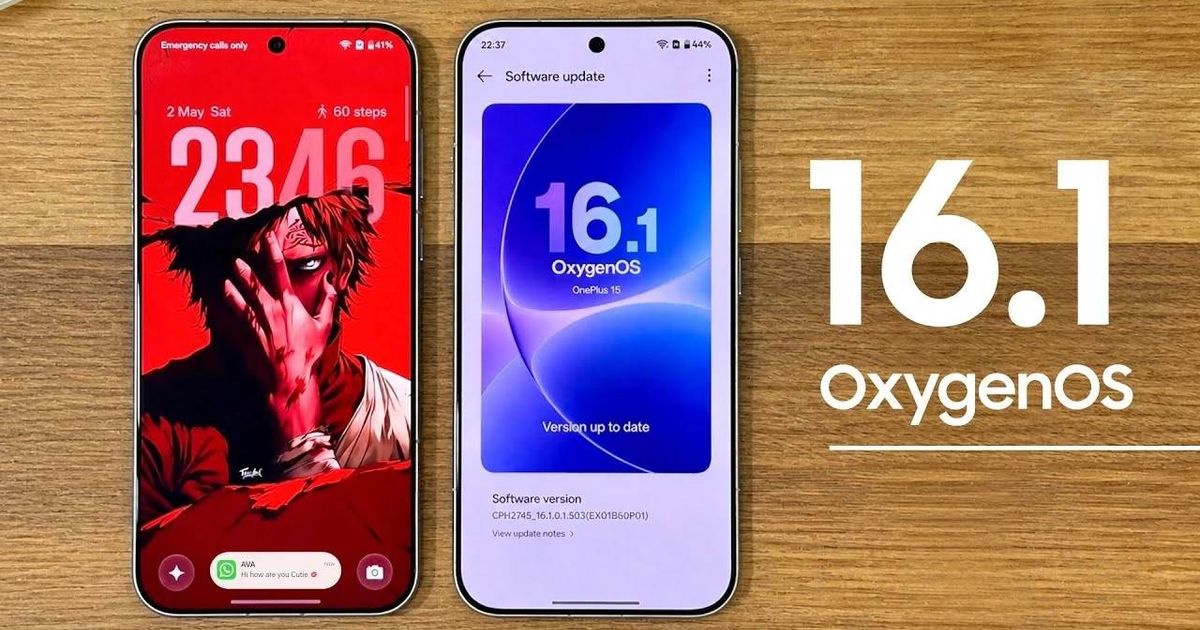
OnePlus has begun the OxygenOS 16.1 stable rollout for the OnePlus 15 in India, with a 2.1GB update on firmware CPH2745_16.0.7.201(EX01) and wider regional availability expected soon. The update introduces Live Space, expands Live Activities to calls, screen recording, timers, flashlight status, and maps navigation, and adds AI processing improvements across photos, documents, and translation. The release is a routine product/software upgrade with limited near-term market impact.
This update matters less as a single-device software drop and more as evidence that the lock-screen “live context” layer is becoming a standard battleground across ecosystems. That is a mild positive for Apple because it validates the interaction paradigm it already helped normalize, but the bigger second-order effect is pressure on Android OEMs and their app partners to support a more persistent, API-driven surface that increases engagement without opening the phone. Over the next 6-18 months, the winner is the platform that gets third-party depth fastest; the loser is any OEM whose live surface feels shallow or inconsistent, because users will quickly classify it as cosmetic rather than sticky.
The real commercial implication is not user delight, it is retention and notification capture. A persistent live activity surface can reduce unlock frequency, which sounds like a UX win but also shifts attention away from Google’s and app vendors’ own notification pathways toward the OEM shell layer. That creates a subtle distribution tax on app developers and, over time, could raise the value of OEM-level AI/UX differentiation for premium Android phones while pressuring mid-tier brands that lack software polish.
The AI commentary is more interesting for what it implies than what it states: on-device processing gains are a margin and latency story, not a headline feature story. If the workload is truly shifting locally, handset BOM pressure rises modestly in the short run, but cloud dependency and inference cost decline, which is structurally favorable for high-end device ASPs and for buyers who can monetize premium software experiences. The contrarian risk is that this remains a feature-clone cycle with limited willingness to pay; if consumers treat Live Space as interchangeable with Apple/Samsung equivalents, the update is ultimately defensible but not monetizable.
Catalyst path: 1-3 months for initial rollout sentiment, 3-9 months for third-party app support and real usage data, 12+ months for any measurable upgrade-cycle impact. The main reversal risk is that the feature drives no sustained engagement lift, at which point the market re-rates it as a marketing layer rather than a product moat. For Apple specifically, this is mildly supportive but not incremental enough to move the stock alone; the investable angle is broader Android premiumization and software-differentiation winners versus generic handset assemblers.
AI-powered research, real-time alerts, and portfolio analytics for institutional investors.
Request DemoOverall Sentiment
mildly positive
Sentiment Score
0.15
Ticker Sentiment
