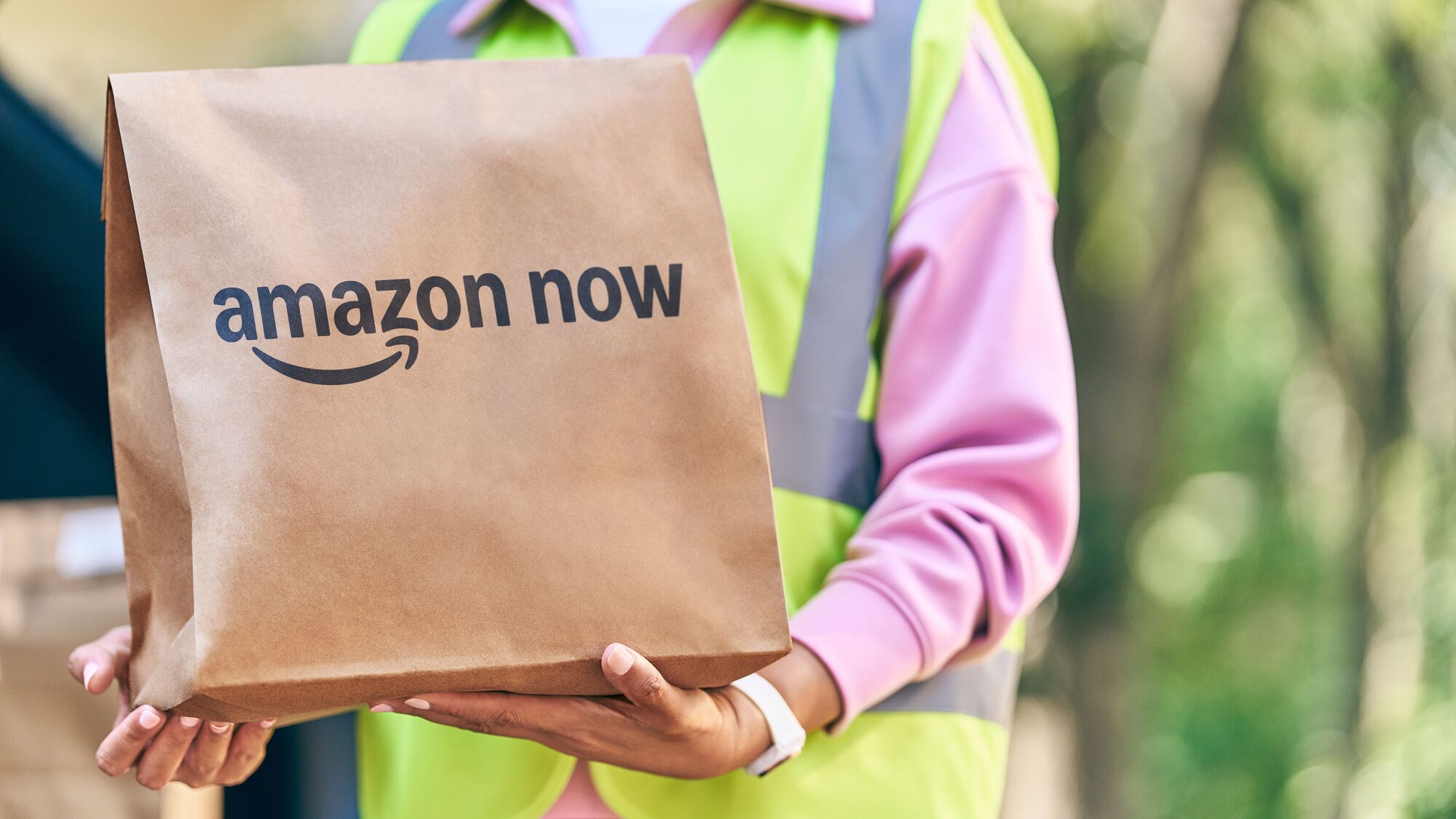
Amazon launched Amazon Now, a new ultra-fast delivery service offering thousands of items in 30 minutes or less across Atlanta, Dallas–Fort Worth, Philadelphia, Seattle, and dozens of additional U.S. cities. Prime members pay $3.99 per order versus $13.99 for non-members, with small-order fees starting at $1.99 for Prime. The rollout expands Amazon’s delivery network and could support engagement and Prime adoption, but the article is primarily a service update rather than a material financial catalyst.
This is less about a new delivery feature and more about Amazon monetizing urgency as a premium service layer. The important second-order effect is that Amazon is training high-frequency, low-basket customer behavior into its ecosystem, which should lift order frequency, widen Prime value perception, and improve retention even if near-term unit economics are mediocre. The real margin opportunity is not the fee itself, but the downstream increase in Prime stickiness, ad inventory, and share-of-wallet across groceries and convenience categories.
Competitive pressure lands hardest on third-party quick-commerce operators, regional grocers, and pharmacy/convenience chains that were relying on 15-45 minute fulfillment as a moat. Amazon can afford to use a lower-priced speed product to pressure the category because it can cross-subsidize from retail, ads, and membership, which makes it structurally harder for pure-play delivery apps to defend contribution margins. The smaller-node distribution model also implies a later-stage real estate and labor advantage: once density builds, Amazon can push last-mile economics toward break-even faster than peers.
The key risk is that this becomes a convenience habit without meaningful margin expansion, especially if basket sizes stay below threshold and labor/transport costs rise faster than fees. Over the next 1-2 quarters, watch for customer adoption, repeat usage, and whether the service shifts mix from incremental to cannibalized same-day orders; if it does, the headline growth may mask weaker profitability. A reversal would likely come from execution issues in dense urban fulfillment, partner capacity strain, or local regulatory friction around alcohol/grocery delivery.
Contrarian angle: the market may be underestimating how defensible this is once density thresholds are reached. The product is not just competing with Instacart-style delivery; it is also a funnel into higher-value Prime cohorts and a data engine for local demand forecasting, which should improve inventory turns over 6-12 months. That makes the strategic value more durable than the immediate 30-minute headline suggests.
AI-powered research, real-time alerts, and portfolio analytics for institutional investors.
Request DemoOverall Sentiment
mildly positive
Sentiment Score
0.35
Ticker Sentiment
