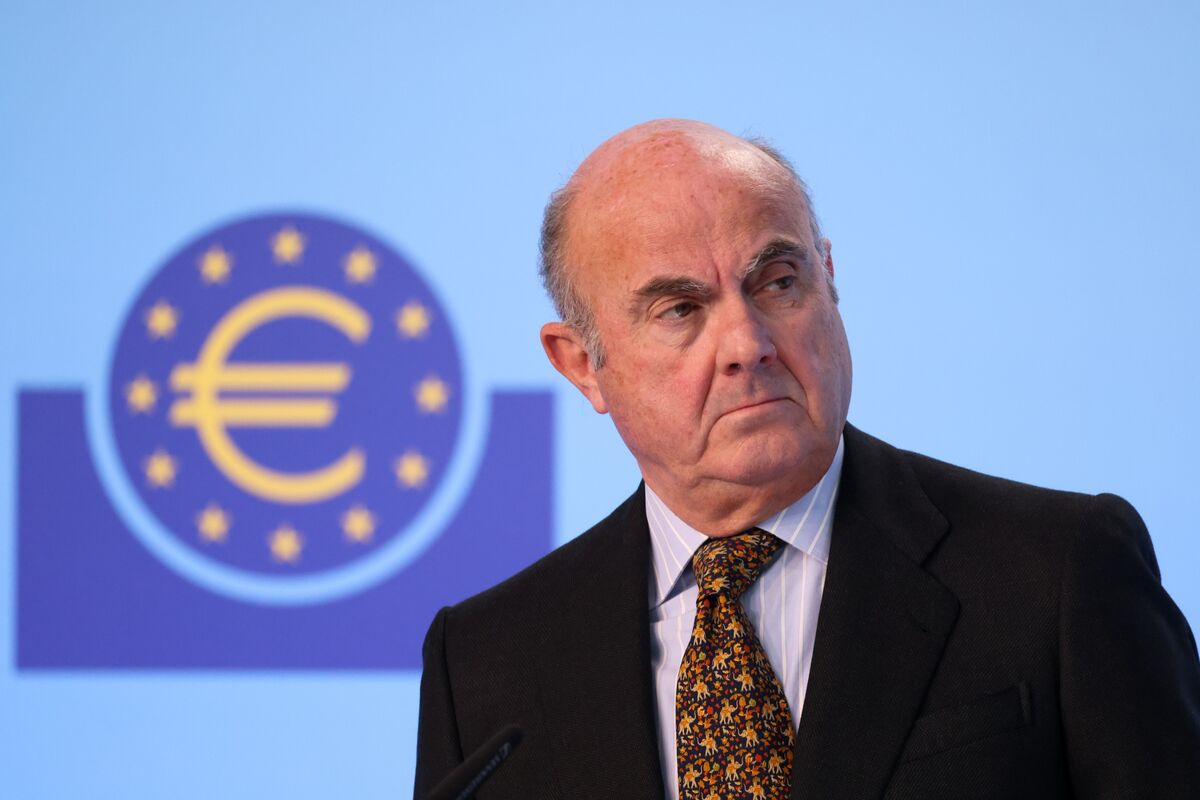
ECB Vice President Luis de Guindos indicated that while the euro's current exchange rate is not concerning, an appreciation beyond $1.20 would complicate policy, emphasizing that the speed of its ascent is a greater worry than its absolute level. This rare official commentary signals the ECB's sensitivity to rapid currency appreciation, potentially indicating a soft ceiling for the euro's strength before it impacts monetary policy considerations.
European Central Bank Vice President Luis de Guindos has introduced a significant, albeit informal, threshold for the euro, signaling that an appreciation beyond the $1.20 level against the U.S. dollar would present complications for monetary policy. These rare official remarks on the currency's exchange rate emphasize that the primary concern is the velocity of the euro's ascent rather than its absolute level, indicating a sensitivity to rapid market movements. This verbal intervention serves as a soft ceiling, suggesting that a swift move past $1.20 could trigger a more dovish policy response from the ECB to counteract the disinflationary pressures and export headwinds associated with a stronger currency. The cautious tone implies the ECB is actively monitoring the FX market as a key variable in its policy-setting framework.
AI-powered research, real-time alerts, and portfolio analytics for institutional investors.
Request DemoOverall Sentiment
mildly negative
Sentiment Score
-0.20
