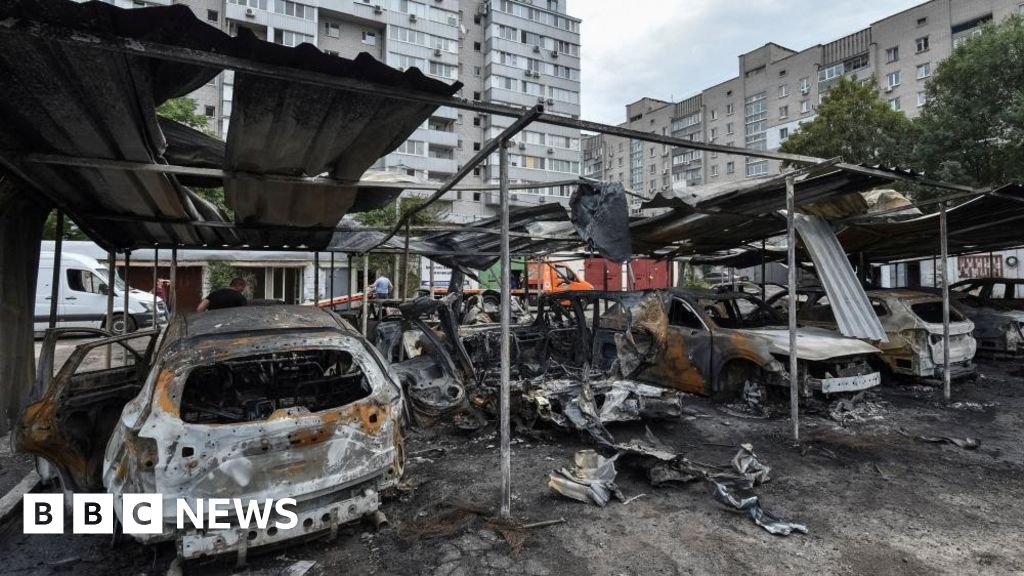
The Russia-Ukraine conflict saw an intensification of mutual drone attacks overnight, resulting in five fatalities—three in Ukraine's Dnipropetrovsk region and two in Russia's Rostov. While Ukraine reported extensive Russian strikes and President Zelensky vowed continued retaliatory long-range drone attacks on Russian military sites, recent ceasefire talks in Istanbul failed. This ongoing escalation and diplomatic deadlock signal persistent geopolitical instability and an evolving operational landscape, particularly in drone warfare.
The Russia-Ukraine conflict has entered a phase of intensified reciprocal escalation, characterized by large-scale drone and missile exchanges. Russia's recent barrage, involving over 200 drones and nearly 30 missiles primarily targeting Ukraine's Dnipropetrovsk region, was met with Ukrainian long-range drone strikes on Russian territory, notably in Rostov. This direct retaliation, affirmed by President Zelensky's statement on hitting Russian military sites to bring the war's consequences back to Russia, signals a strategic shift towards more symmetrical warfare. The military developments, including Russia's claimed capture of two villages and Ukraine's reported counter-offensives in the Sumy region, occur against a backdrop of diplomatic failure. The inability of the third round of ceasefire talks in Istanbul to produce any progress underscores the deeply entrenched positions of both sides, reinforcing the negative sentiment and a pessimistic outlook for a near-term resolution. This combination of escalating military action and stalled negotiations points to sustained geopolitical instability and an evolving operational landscape, validating the high market impact score.
AI-powered research, real-time alerts, and portfolio analytics for institutional investors.
Request DemoOverall Sentiment
strongly negative
Sentiment Score
-0.75
