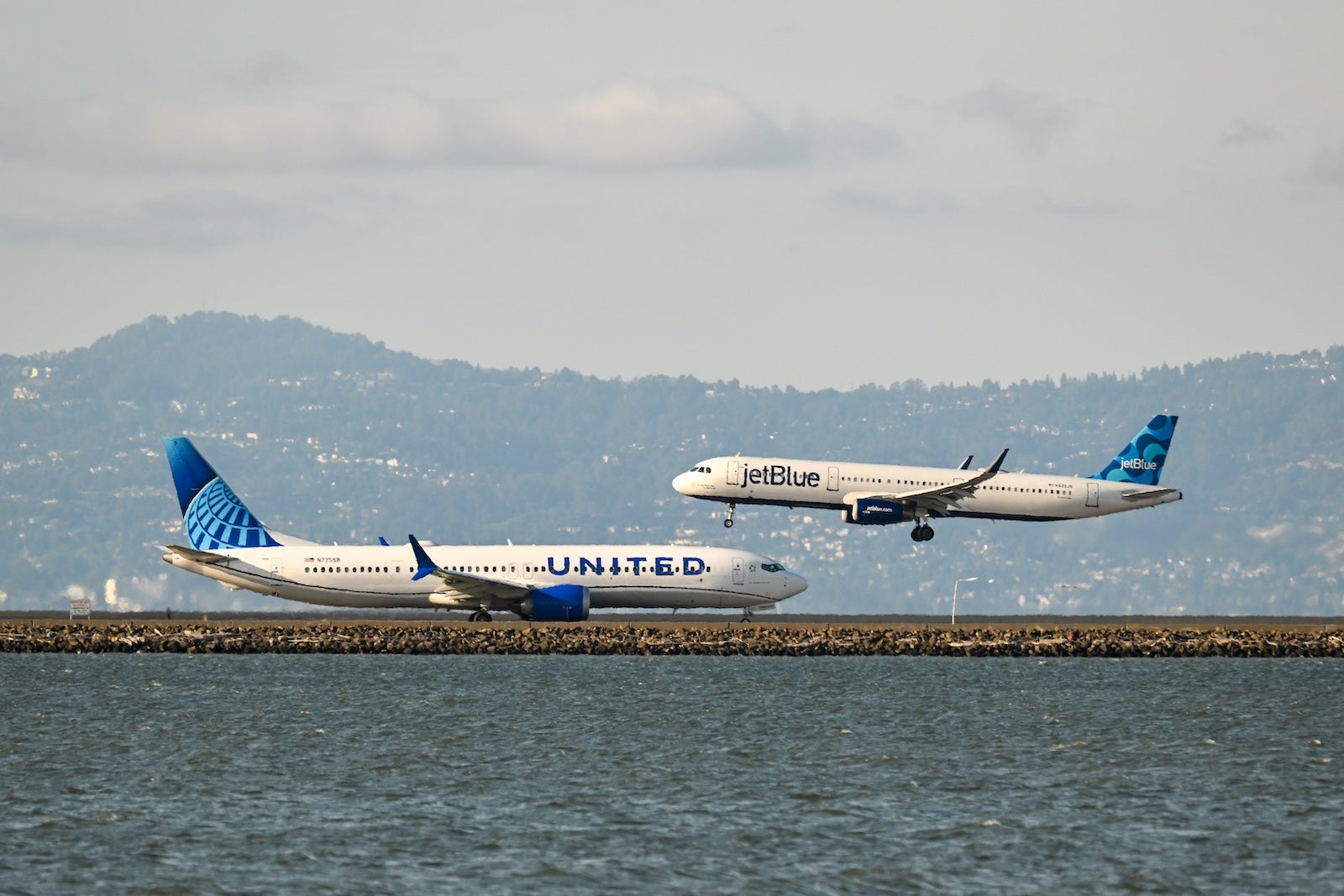
The FAA has cut arrivals at SFO by roughly one-third to 36 flights per hour during north-south runway construction and safety reviews, rising to 45/hour in October versus 54/hour previously allowed. The airport expects ~25% of arrivals this summer to be delayed 30+ minutes, with over a quarter of arrivals already delayed on a recent day (154 flights). Major carriers that use SFO as a hub/base — notably United and Alaska Airlines — may need schedule changes, and similar FAA capacity limits at ORD and EWR suggest broader operational constraints for the U.S. airline sector.
A capacity shock at a major West Coast hub will force airlines to re-optimize schedules around robustness rather than maximum daily cycles, which favors carriers with fleet flexibility and strong point-to-point demand. Expect airlines that rely on dense banked connections to incur higher re-accommodation costs and cascading OTP (on-time performance) deterioration across their networks; those with lighter connection footprints can redeploy aircraft to preserve yield.
Secondary effects will show up in the broader travel supply chain: ground handlers, regional feeders and cargo operators facing irregular windows will see margin pressure from suboptimal turns and deadhead flying. Gate and slot scarcity at nearby airports will become a short-term bargaining chip in carrier negotiations, pushing smaller carriers into alternative airports and increasing trip time friction for passengers who value convenience over price.
Near-term catalysts that could reverse the pain are procedural relief from regulators, sudden favorable weather patterns, or unilateral schedule pruning by dominant carriers to stabilize operations; conversely, prolonged regulatory conservatism or compounding capacity actions at other congested hubs would deepen the hit. The market tends to overshoot on headline operational shocks, creating concentrated windows where option-implied volatility is rich relative to longer-term fundamentals.
The consensus view focuses on immediate disruption but underprices the possibility that a deliberately smaller, more reliable schedule lifts realized yields and reduces cancellation-driven compensation; over a medium horizon this can partially offset volume losses. That makes tactical volatility plays and asymmetric option structures preferable to outright multi-quarter directional equity bets unless exposure to the affected hub is large and persistent.
AI-powered research, real-time alerts, and portfolio analytics for institutional investors.
Request DemoOverall Sentiment
mildly negative
Sentiment Score
-0.25
Ticker Sentiment
