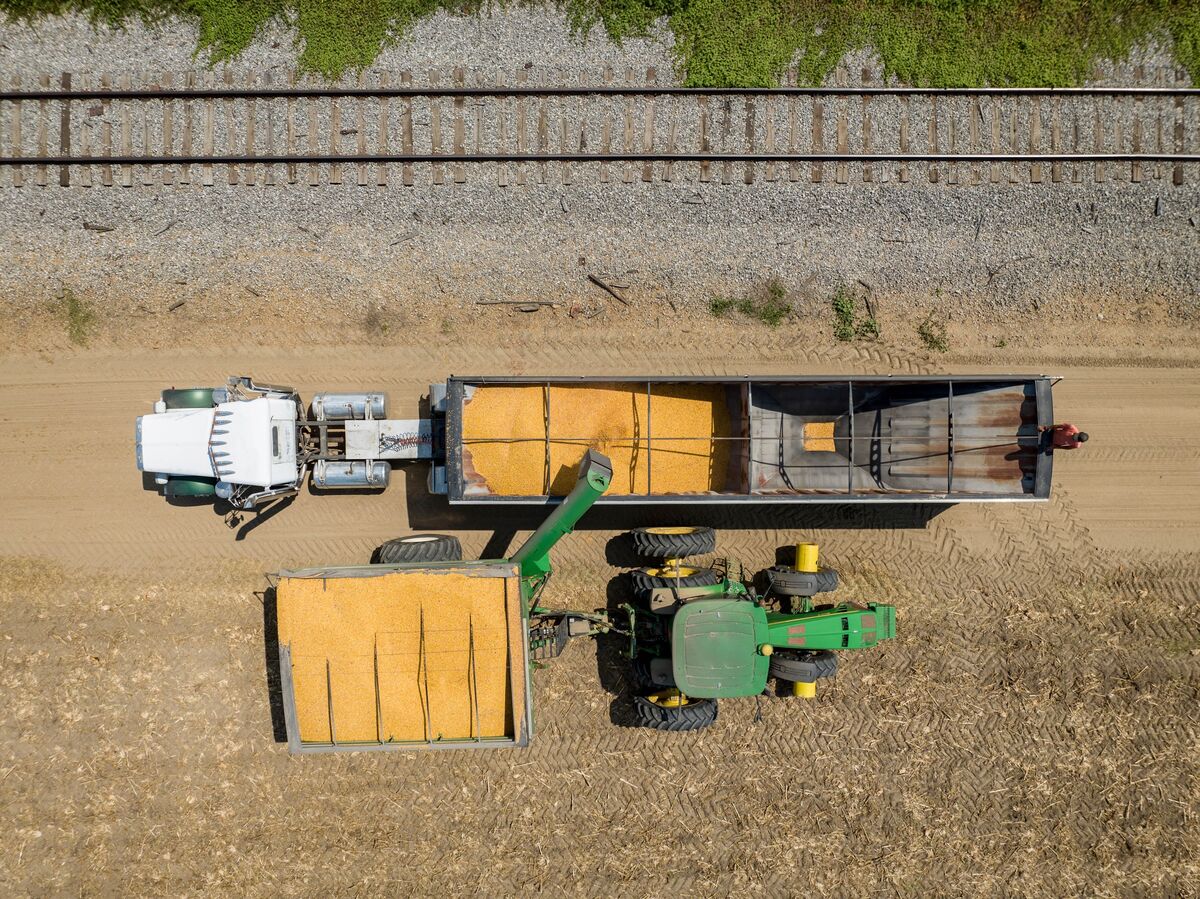
The US agricultural trade deficit reached a record $28.6 billion in the first half of 2025, with the June deficit alone hitting $4.1 billion, a 14% increase year-over-year. This unprecedented deficit, attributed to the continued impact of President Donald Trump's trade wars, underscores a deepening historical shift and a significant decline in American farmers' long-dominant role in global exports.
The US agricultural sector has registered a record trade deficit of $28.6 billion for the first half of 2025, signaling a significant deepening of a historical shift away from its long-held dominance in global exports. The trend accelerated in June, with the monthly deficit widening by 14% year-over-year to $4.1 billion, according to data from the US Department of Agriculture. This deterioration is explicitly attributed to the continued impact of President Donald Trump's trade wars, indicating that past protectionist policies have created lasting structural damage to the sector's competitiveness. The data points to a fundamental, rather than cyclical, challenge for the US agricultural economy, with significant implications for commodity pricing, farmer incomes, and the reordering of global food supply chains.
AI-powered research, real-time alerts, and portfolio analytics for institutional investors.
Request DemoOverall Sentiment
strongly negative
Sentiment Score
-0.75
