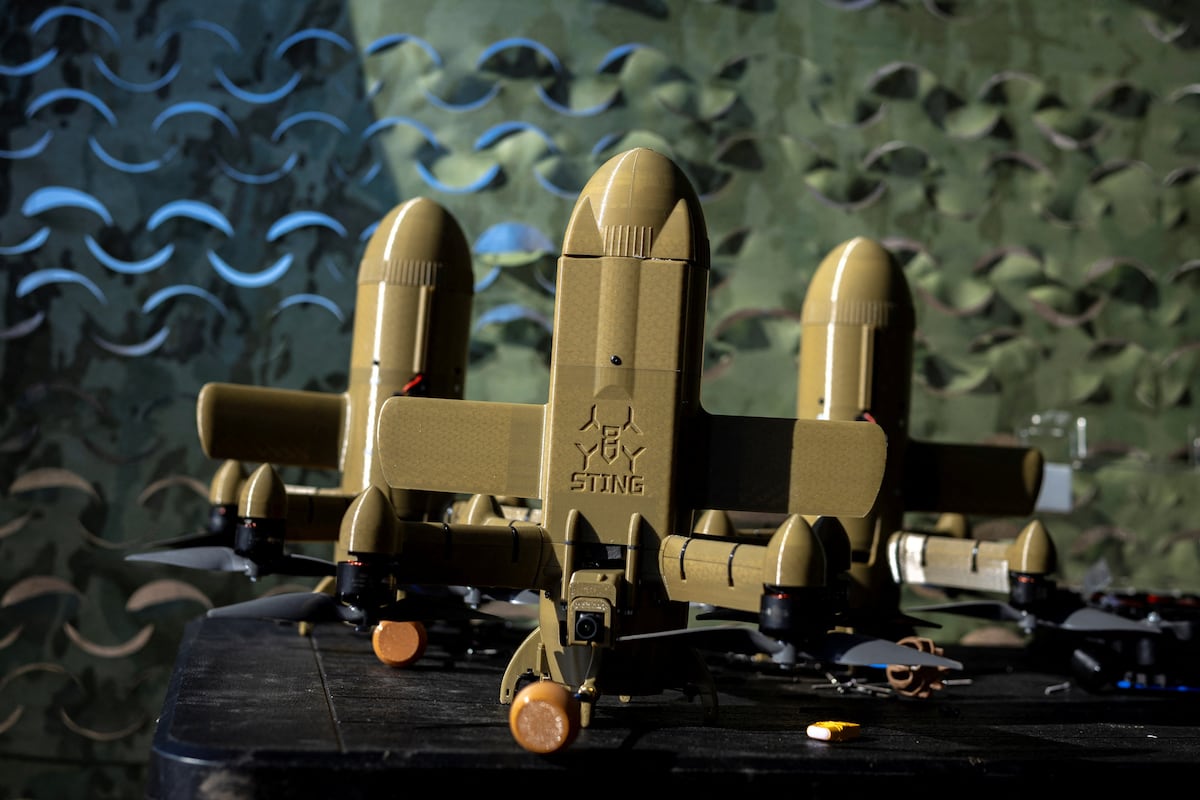
Ukraine reported the first successful interception of a Shahed drone using a Sting interceptor launched from an unmanned seaborne vehicle, a new air-defense tactic that could strengthen protection for cities such as Odesa. The development may improve Ukraine’s ability to counter low-cost drone attacks over the Black Sea and reduce Russia’s leverage in future peace negotiations. The article also highlights the growing role of inexpensive drones in modern warfare and the U.S. interest in adopting similar capabilities.
This is less about a single battlefield kill and more about a procurement inflection point: once airborne interceptors can be forward-deployed from maritime platforms, the economics of air defense shift from expensive, fixed, and politically exposed to cheap, distributed, and harder to map. That creates a scaling path for a layered defense network around ports and coastal cities, which is exactly where Russia’s coercive campaign is most efficient. The immediate market implication is not a direct revenue stream but a higher probability that Ukraine can preserve critical infrastructure uptime, which reduces the odds of a broader operational collapse and improves the case for sustained external financing.
The second-order winner set is wider than defense primes. Small UAVs, autonomy software, RF sensing, onboard guidance, and maritime unmanned systems all gain optionality because the demonstrated use case validates a new deployment architecture rather than a single interceptor platform. The loser is the “exquisite weapons” model: every successful cheap-intercept cycle raises pressure on Western planners to buy depth over performance, which should gradually compress demand for high-cost, low-rate air defense munitions in any conflict where saturation drones dominate.
The key risk is execution at scale. A one-off proof of concept can be tactically impressive but strategically irrelevant if sea-state reliability, command latency, or interceptor magazine depth limit repeated use over weeks, not days. The more important catalyst is whether allied procurement and doctrine shift within 1-2 quarters; if so, this becomes a reference architecture for NATO coastal defense, not just a Ukrainian workaround. The contrarian view is that this is bullish for defense budgets broadly, but bearish for margins in legacy missile-defense programs as buyers push for lower unit costs and higher volume, favoring firms with autonomous systems exposure over traditional missile houses.
AI-powered research, real-time alerts, and portfolio analytics for institutional investors.
Request TrialOverall Sentiment
mildly positive
Sentiment Score
0.25
