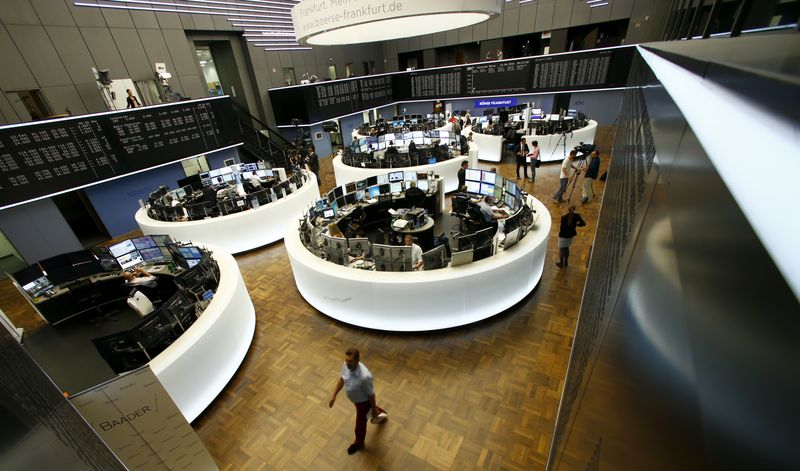
Brent crude jumped 5.2% to $95.04 a barrel as U.S.-Iran tensions escalated and the U.S. seized an Iranian cargo ship over the weekend. The renewed uncertainty around the Strait of Hormuz, which carries roughly one-fifth of global oil flows, pressured European equities, with the Stoxx 600 down 1.0%, the DAX off 1.3%, and the CAC 40 down 1.1%. Travel, leisure, and luxury stocks fell on fears of higher fuel costs and weaker demand amid the conflict.
The market is still underpricing the difference between a headline ceasefire and a durable maritime reopening. Even if tankers are intermittently moving, insurance premia, security escorts, and rerouting risk create a quasi-tax on global trade that supports crude, distillates, and defense-logistics budgets for weeks, not days. The first-order move is oil up; the second-order move is margin compression for any business with low pricing power and high fuel intensity, especially carriers, package delivery, and travel intermediaries. A key nuance is that a renewed flare-up can help the energy complex unevenly. Integrated majors and offshore/oilfield services should outperform refiners and airlines: the former gain from higher realized prices and capital discipline, while refiners can be squeezed if crude spikes faster than product spreads normalize. The biggest hidden beneficiary is not obvious energy beta but defense-adjacent logistics and marine-security providers, because elevated threat levels tend to persist longer than the physical disruption itself. The risk is that consensus is still treating this as a tactical event rather than a regime shift. If Washington and Tehran both signal de-escalation within 72 hours, Brent can mean-revert quickly given how crowded the geopolitical premium has become; but if shipping incidents continue for 2-4 weeks, macro growth expectations will start to roll over and cyclicals will de-rate beyond the oil complex. That creates a sharper asymmetry in short-duration hedges than in outright commodity longs. Contrarian view: the market may be too quick to extrapolate a full Strait shutdown because actual vessel counts can recover before official rhetoric does, and traders often buy the first headline then fade the second. The more interesting trade is not just long oil, but long volatility around the energy/cyclical spread—because even a partial reopening leaves enough uncertainty to keep cross-asset dispersion elevated.
AI-powered research, real-time alerts, and portfolio analytics for institutional investors.
Overall Sentiment
moderately negative
Sentiment Score
-0.45
