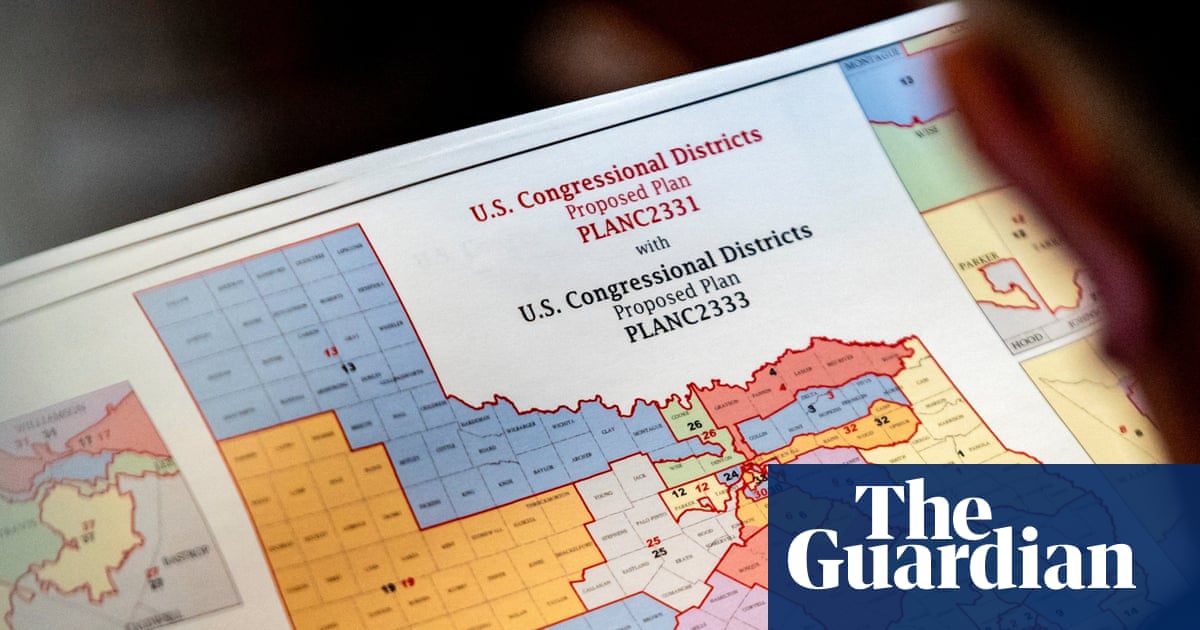
The U.S. Supreme Court on Friday temporarily stayed a lower-court ruling that found Texas’s 2026 congressional map likely discriminated on the basis of race, with Justice Samuel Alito signing an order that will remain in place for at least several days while the court decides whether the GOP-favored map can be used in next year’s elections amid approaching March primaries. The map, drawn to give Republicans five additional House seats as part of a broader effort tied to former President Trump, was ruled by a 2-1 federal panel in El Paso likely unlawful — a decision that, if upheld, could force Texas to revert to its 2021 plan — but the conservative court has increasingly blocked late-stage lower-court redistricting changes. The dispute is part of a national redistricting battle (with challenges in California, Missouri and North Carolina) and intersects with a separate Supreme Court case from Louisiana that could narrow the scope of race-based districts under Section 2 of the Voting Rights Act, leaving significant uncertainty about next year’s congressional map lines and partisan balance.
The U.S. Supreme Court on Friday issued a temporary stay of a lower-court ruling that found Texas’s 2026 congressional map likely discriminated on the basis of race, with Justice Samuel Alito signing an order that will remain in place for at least several days while the justices consider whether the GOP-favored map can be used in next year’s elections. The stay arrives about an hour after Texas asked the Court to intervene as March congressional primaries approach, and follows a 2-1 federal panel ruling in El Paso that civil-rights plaintiffs are likely to prevail.
Texas’s map was engineered to give Republicans five additional House seats; Missouri and North Carolina followed with maps adding one Republican seat each, while California voters approved an initiative to add five Democratic seats. These maps are being litigated in multiple states (California, Missouri, North Carolina) and the dispute forms part of a broader, national redistricting battle tied to efforts to preserve a slim GOP House majority.
The Supreme Court’s conservative majority has a recent pattern of blocking late-stage lower-court redistricting changes, and a separate Louisiana case on Section 2 of the Voting Rights Act could further constrain race-based districts—creating material uncertainty about next year’s congressional lines and partisan balance. Market-impact metrics provided show low near-term market sensitivity (market_impact_score 0.25) but the political and electoral uncertainty is a clear governance risk for election-sensitive strategies.
AI-powered research, real-time alerts, and portfolio analytics for institutional investors.
Request DemoOverall Sentiment
mixed
Sentiment Score
0.00
