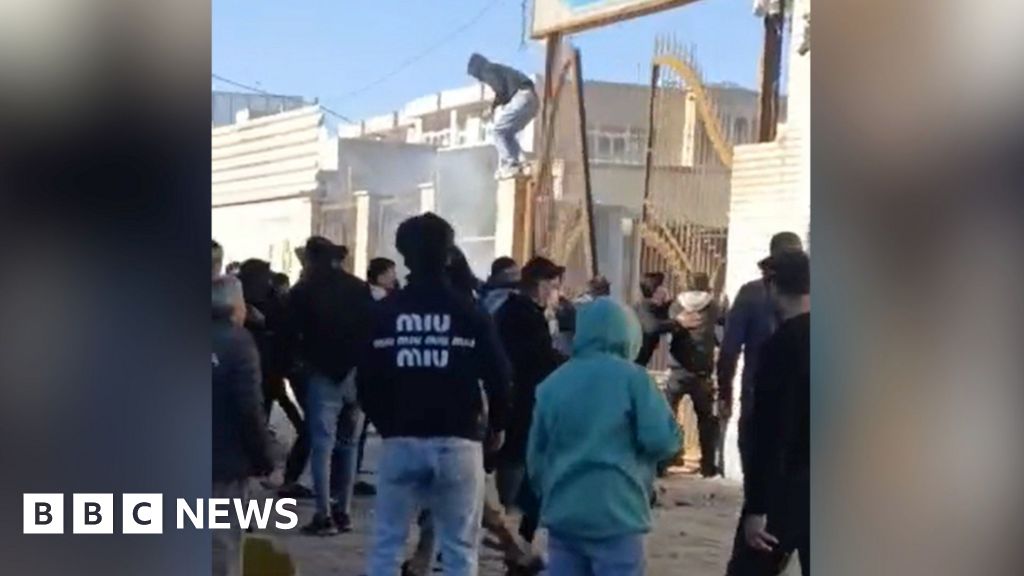
Widespread protests erupted across Iran after a sharp fall in the rial against the US dollar, with demonstrators attempting to break into a governor's office in Fasa and authorities reporting three police injured and four arrests. The government declared a last‑minute bank holiday, closed schools and public institutions, and signaled both willingness to hear "legitimate demands" (President Pezeshkian) and threats of a "decisive response" from the prosecutor, raising near‑term FX risk, local liquidity disruption and elevated political volatility for investors focused on Iran and regional emerging‑market exposure.
Market structure: Immediate winners are safe-haven instruments (USD, gold) and energy producers if a risk premium forms; losers are Iran-exposed domestic banks, importers and local‑currency creditors and wider EM risk assets as capital flight and capital controls are likely. Pricing power shifts toward producers of hard currency (oil exporters, global majors) while Iranian local businesses face real‑terms revenue collapse if the rial falls >20% over days.
Risk assessment: Tail scenarios include a Strait of Hormuz disruption (low probability, high impact) that could add $10–$20/bbl and spike oil volatility for 1–3 months, or fast-moving capital controls that freeze local assets within 72 hours. Near term (0–14 days) expect elevated FX/credit volatility and wider EM spreads (+100–300bp possible); medium term (1–6 months) depends on regime entrenchment or concessions which will determine credit recovery.
Trade implications: Tactical positions should hedge USD/commodity exposure and trim EM credit beta: favor 1–3% allocations to UUP/GLD and small, time‑limited oil call spreads sized 0.5–1% of NAV to capture risk‑premium spikes; underweight EM sovereign/local‑currency debt and consumer cyclicals with stop losses. Cross‑asset effects: buy protection in EMB/CDS if spreads widen >25bp and expect short-dated implied volatility in oil and gold to rise by 30–70% in the first two weeks.
Contrarian angles: Consensus may overprice a sustained oil shock absent military escalation — if protests stay domestic oil moves likely capped at $2–5/bbl; conversely EMB and EM local‑currency selloffs can overshoot, creating 5–15% buying opportunities after initial panic. Historic parallels (2019/2022 Iran unrest) show acute market stress for days–weeks then partial mean reversion; plan to re-enter on dispersion and realized-volatility mean reversion rather than headline calming alone.
AI-powered research, real-time alerts, and portfolio analytics for institutional investors.
Request DemoOverall Sentiment
strongly negative
Sentiment Score
-0.60
