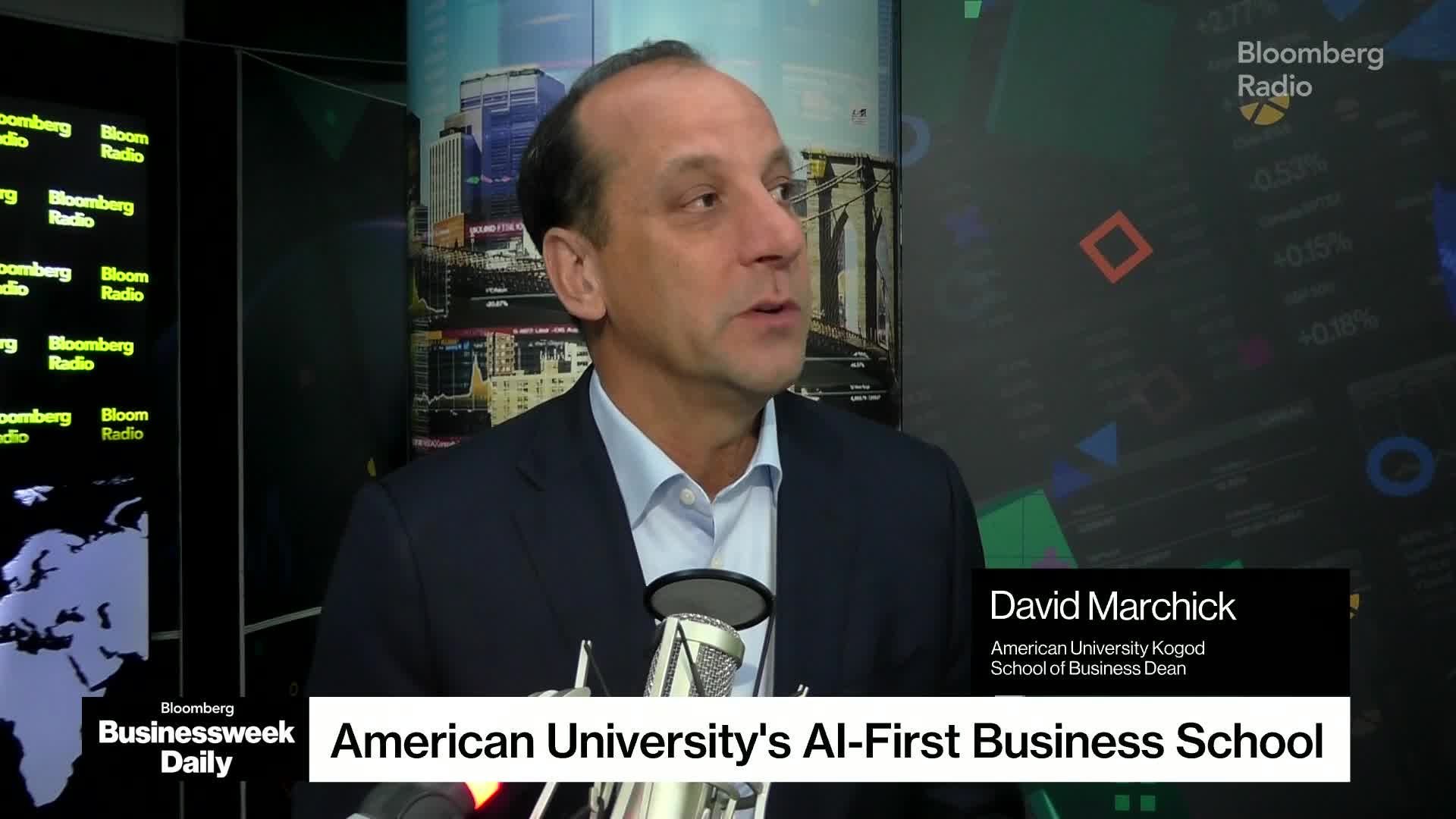
American University's Kogod School of Business is launching an 'AI-First' curriculum, as detailed by Dean David Marchick, to equip graduates for the evolving workforce. This initiative integrates traditional business fundamentals with specialized AI courses, including instruction on AI's limitations and its strategic application for post-graduate employment, signaling a proactive adaptation in business education to meet the demands of an AI-centric economy.
American University's Kogod School of Business is implementing an 'AI-First' curriculum, a strategic pivot indicating that higher education is beginning to formally integrate advanced AI skills into core business training. According to Dean David Marchick, the program is not merely about AI application but also includes critical evaluation of its limitations, signaling a mature approach to technology adoption. This initiative explicitly aims to bolster graduate employability by aligning academic training with the evolving demands of an AI-centric economy. The decision to retain traditional business fundamentals alongside specialized AI courses suggests a market recognition that foundational knowledge remains crucial but requires significant technological augmentation. While this announcement from a single institution has a negligible immediate market impact, it serves as a qualitative leading indicator of a broader shift in human capital development, highlighting a future labor market where AI literacy will be a standard, rather than a specialized, competency for business professionals.
AI-powered research, real-time alerts, and portfolio analytics for institutional investors.
Request DemoOverall Sentiment
moderately positive
Sentiment Score
0.55
