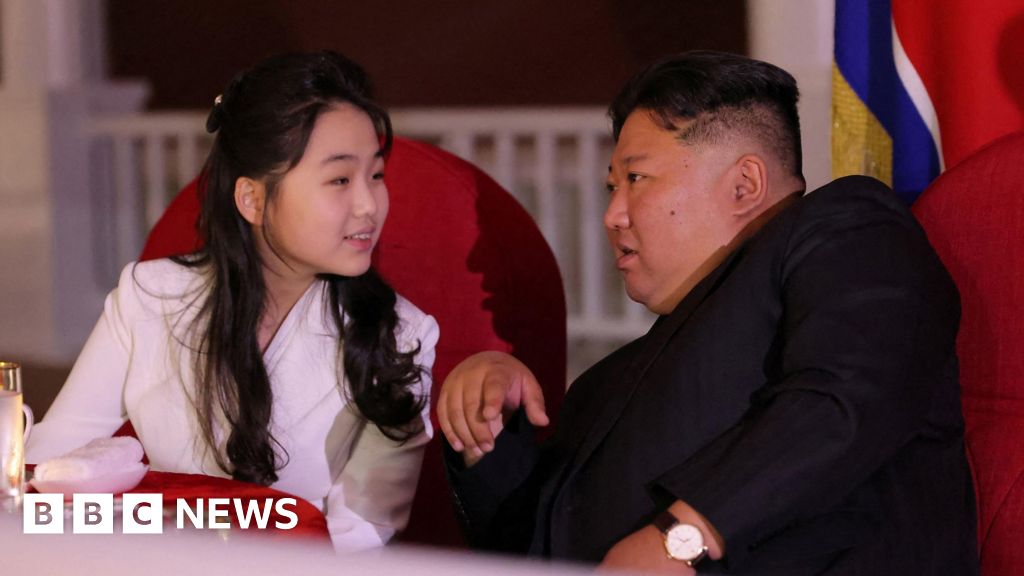
South Korea's National Intelligence Agency reports Kim Jong Un has designated his daughter, Kim Ju Ae (believed to be about 13), as his heir, after increasingly prominent appearances alongside him including an ICBM inspection and a high-profile visit to Beijing. The announcement, ahead of North Korea's upcoming five-year party congress where military and nuclear priorities are expected to be outlined, raises succession and stability uncertainties—including why a daughter was chosen over an unacknowledged elder son—and adds a layer of geopolitical risk for regional policy and security considerations.
Market structure: A designated heir in Pyongyang raises near-term geopolitical risk premium for Northeast Asia. Winners: large defense primes (LMT, RTX, NOC, GD) and safe-havens (GLD, UUP) could see 5–15% repricing if tensions spike; losers: Korean equities/financials and tourism-related names (EWY, regional airlines) face 3–10% downside risk. Procurement lead-times (6–18 months) imply defense order flows will matter for revenues over the next 1–3 years.
Risk assessment: Tail risks include a calibrated military provocation or targeted sanctions that disrupt shipping/ports and chip supply chains, producing >10% shocks to regional exporters within days. Immediate window (days): FX/equity volatility; short-term (weeks–months): tactical reallocation into defense/safe-haven; long-term (1–5 years): sustained higher defense budgets and capex shifts. Hidden dependencies: Beijing’s posture and elite military factions; catalysts: North Korea party congress (this month) and any tests within 0–30 days.
Trade implications: Direct plays favor 6–12 month bullish exposure to defense primes and 1–3% allocations to gold and USD; hedge with targeted Korean equity shorts or put spreads. Options: use call spreads on defense names to cap premium; buy 3-month put spreads on EWY to express Korea downside. Entry: scale in over next 2 weeks; add on confirmed missile test or >3% KRW weakening; exit/trim on +15–20% moves in defense names or if Korean indices stabilize for 60 days.
Contrarian angles: Consensus expects escalating hostilities; the market may underprice continuity/stability if the succession is staged and ceremonial—histor parallel: 2011 Kim transition caused brief volatility but no lasting regional supply-chain collapse. Therefore avoid leveraged one-way bets; prefer asymmetric option structures and tight stops (e.g., -10%) in case the event proves symbolic rather than kinetic.
AI-powered research, real-time alerts, and portfolio analytics for institutional investors.
Request DemoOverall Sentiment
mildly negative
Sentiment Score
-0.25
