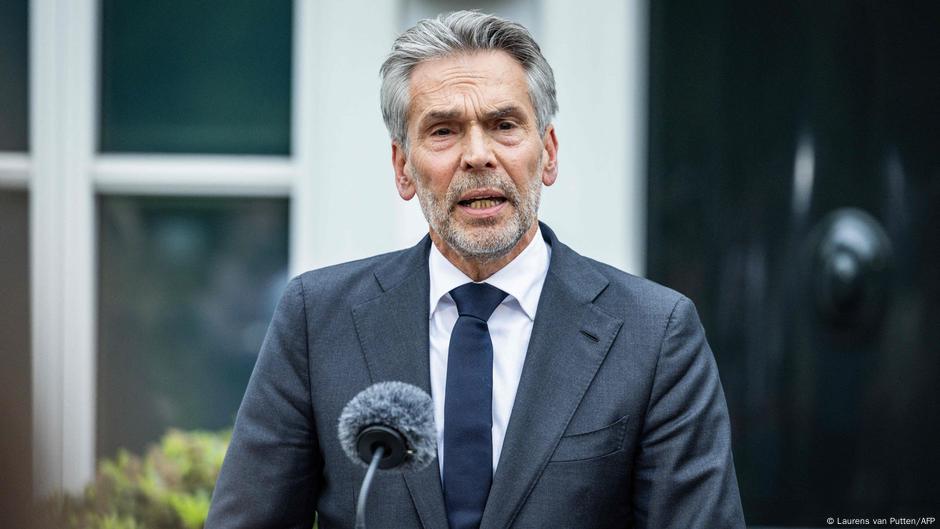
The Dutch government has collapsed, triggering a new election, after Geert Wilders withdrew his party over disagreements on immigration policy; Prime Minister Schoof will offer the coalition's resignation to the King. Wilders cited a lack of progress on curbing immigration as the reason for his withdrawal, while coalition partners criticized his irresponsibility amidst international challenges. The collapse raises uncertainty for the Netherlands, particularly regarding NATO spending commitments as the country prepares to host a NATO summit.
The Dutch coalition government, formed just six months after the November 2023 parliamentary elections, has collapsed, leading Prime Minister Dick Schoof to call for new elections. This political instability stems from the withdrawal of Geert Wilders' far-right Party for Freedom (PVV) over disagreements concerning immigration policy, specifically the perceived lack of progress on implementing his proposed stricter measures. Wilders cited frustration with coalition partners for not advancing his asylum plans, while other coalition members, including the VVD and NSC, condemned his decision as "irresponsible," particularly given significant national and international challenges, including an ongoing war on the continent. The collapse introduces considerable uncertainty, especially as the Netherlands, the Eurozone's fifth-largest economy, is scheduled to host a NATO summit shortly, potentially jeopardizing planned increases in NATO spending. While no date for a new election has been set, it is anticipated to be several months away, with current polling showing Wilders' PVV around 20%, on par with the opposition Labor/Green bloc, suggesting a potentially fragmented political landscape. This event carries a "moderately negative" sentiment and an "uncertain" tone, reflecting the potential for disruption.
AI-powered research, real-time alerts, and portfolio analytics for institutional investors.
Request DemoOverall Sentiment
moderately negative
Sentiment Score
-0.50
