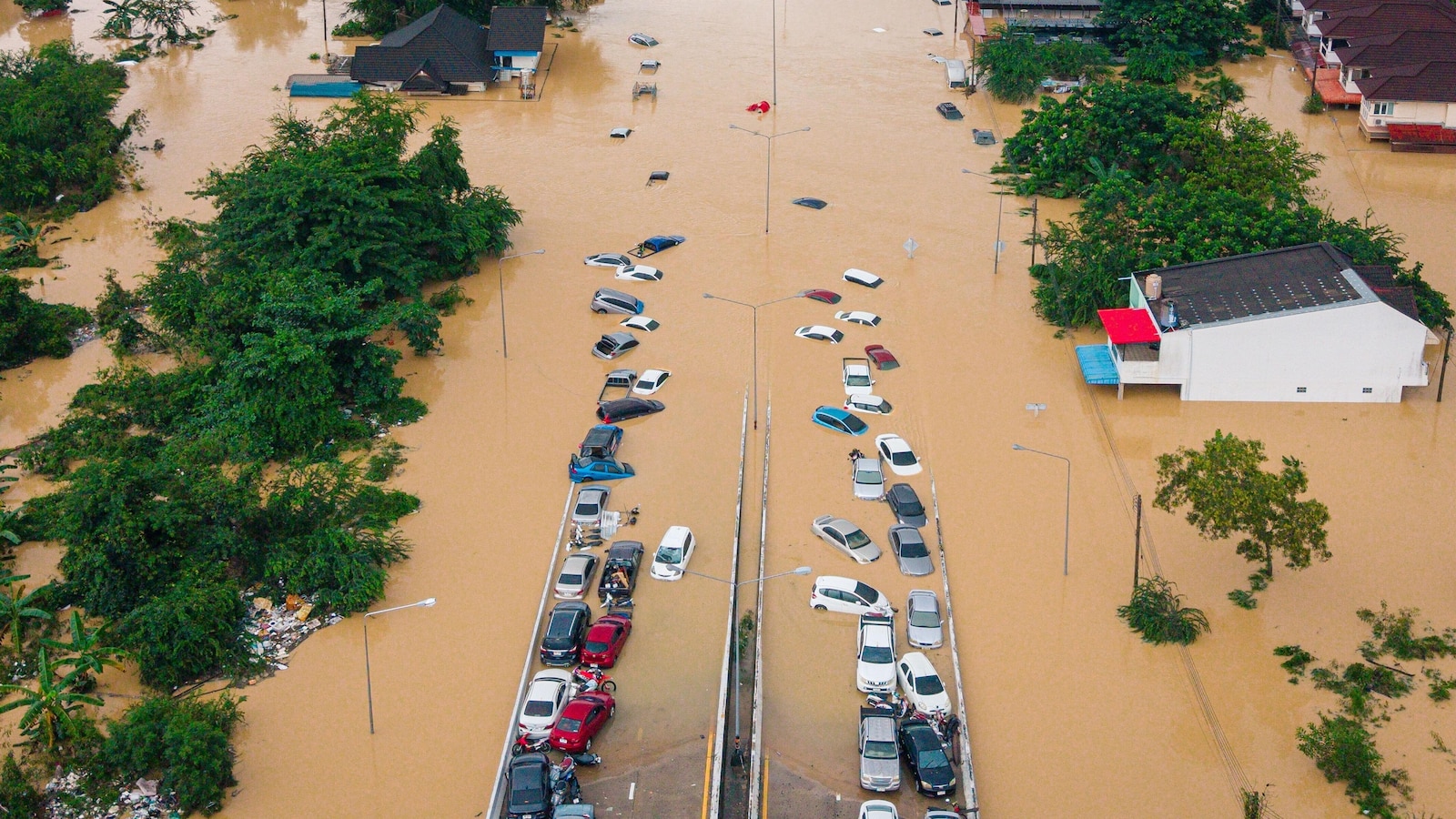
Devastating floods in southern Thailand have killed at least 145 people and affected more than 1.2 million households (about 3.6 million people), with Songkhla province alone reporting roughly 110 fatalities. Waters are receding in many areas, but extensive damage to roads, power poles, vehicles and low-rise buildings is disrupting transport, utilities and local economic activity, creating downside risks for regional supply chains, insurers and infrastructure recovery costs.
Market structure: Immediate winners are construction/materials suppliers, heavy-equipment OEMs, local logistics/port operators and global reinsurers — reconstruction demand will spike for 3–12 months while insured losses flow to reinsurance markets. Direct losers are Thai regional real estate/REITs, auto dealers, SMEs and local banks with concentrated exposure in the south; expect impaired consumer loans and vehicle write-offs that pressure earnings over the next 1–4 quarters. Damage footprint (1.2M households, 3.6M people) implies an economic shock likely in the low‑billions USD, concentrated regionally but meaningful for cyclical names and THB liquidity.
Risk assessment: Tail risks include prolonged port disruption that chokes exports (electronics/auto supply chains) for 1–3 months, a sovereign fiscal surprise (large reconstruction deficit) or Basel‑style loan‑loss provisioning forcing bank capital raises. Near term (days–weeks) operational risk dominates; short term (0–6 months) credit and insurance reserve shocks; long term (6–24 months) policy/fiscal response and reconstruction pivot. Hidden dependencies: southern commodities (rubber, palm) and tourism flows can transmit shocks to FX and export data.
Trade implications: Tactical plays — short Thailand equity exposure and THB in the next 1–6 weeks while initiating selective longs in reinsurers and construction/materials for a 3–12 month reconstruction cycle. Use options to buy cheap downside protection on Thai banks and to express convexity in reinsurers (calls or call spreads) if volatility spikes. Rebalance duration in Asia fixed income (trim Thai sovereign duration) and add exposure to ports/logistics companies with diversified networks.
Contrarian angles: Consensus will underprice reconstruction-derived revenue for regional materials and equipment OEMs — historical parallel: 2011 Thailand floods compressed regional supply chains then boosted materials suppliers over 3–12 months. Beware government fiscal support that could props THB and local equities (reversing short THB) and compressed reinsurance pricing if markets rapidly repriced; hedge all directional exposures with size limits and stop triggers.
AI-powered research, real-time alerts, and portfolio analytics for institutional investors.
Request DemoOverall Sentiment
moderately negative
Sentiment Score
-0.55
