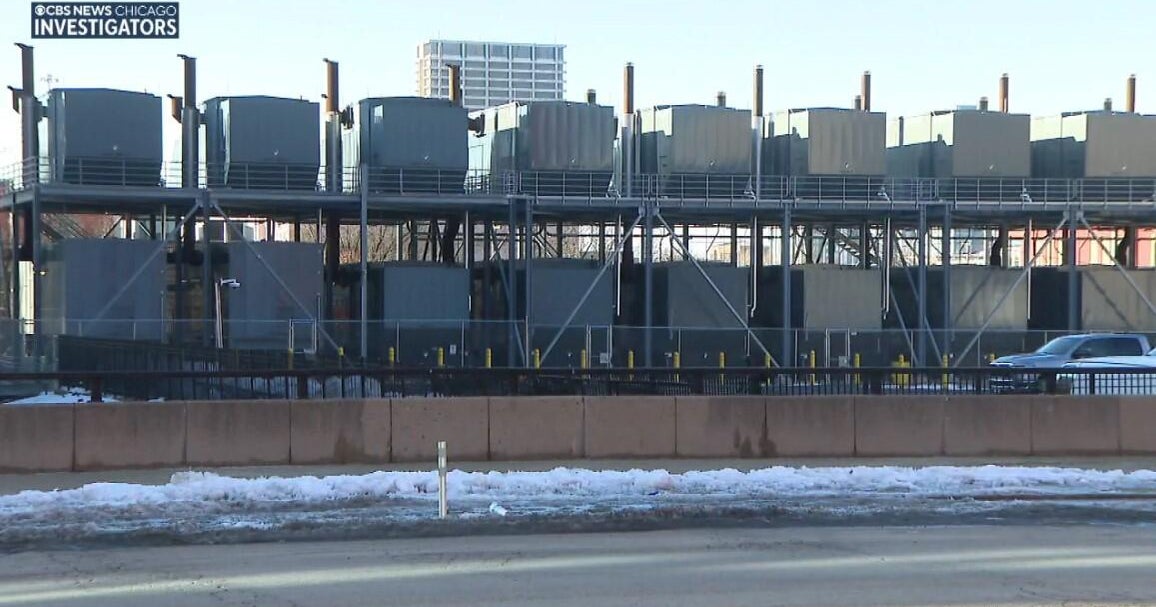
The Citizens Utility Board warns that growing data-center electricity demand could raise Chicago-area residential bills by as much as $70 by 2028, attributing recent ComEd summer bill spikes largely to data-center load. Municipal responses include a temporary moratorium in Aurora (ending in March) to study local impacts and organized opposition in Naperville over land‑use, health and utility-cost concerns. The story highlights a regulatory and infrastructure mismatch — rapid data-center buildouts driven by AI and cloud demand are stressing local grids, prompting calls for state and federal policy action.
Market structure: Local moratoria and higher grid charges transfer economic pain from utilities to customers and create winners among transmission/grid-capex suppliers (AEP, NEE, AES) and diesel/battery suppliers (CMI, AES) while pressuring data-center landlords concentrated in the Chicago MSA (EQIX, DLR, CONE) through higher interconnection costs and slower leasing. Expect modest pricing power for regulated utilities to the extent state commissions allow cost recovery, but commercial data-center developers face higher effective build costs, reducing IRRs by mid-single digits if new tariffs or demand charges are imposed.
Risk assessment: Tail risks include an Illinois-wide data-center surcharge or binding municipal moratoria that push projects out of state (low probability, high impact for localized REIT cashflows), a rapid utility rate-case rejection that forces ComEd/Exelon (EXC) to absorb costs (3–12 month horizon), or accelerated transmission approvals that alleviate constraints (12–36 months). Hidden dependencies: many data centers rely on PPAs, capacity market credits and backup diesel generators — changes to any of these (e.g., emissions regs) materially alter operating economics.
Trade implications: Short-duration (<6 months) hedges on Chicago-exposed data-centre REITs and buy-side of transmission/renewables contractors is attractive; relative-value: long AEP/NEE and AES (12–24 months) vs short EQIX/DLR (3–12 months). Options: use 3–6 month puts to hedge REIT exposure and 9–15 month call spreads on transmission/renewable names to play capital deployment with defined risk.
Contrarian angle: The market tends to view moratoria as existential for data centers but ignores relocation and contractual flexibility — national, diversified REITs may see minimal occupancy impact while regional players get hit; conversely, accelerating capex for on-site clean power creates a durable multi-year revenue stream for NEE/AES beyond a short-term regulatory scare.
AI-powered research, real-time alerts, and portfolio analytics for institutional investors.
Request DemoOverall Sentiment
moderately negative
Sentiment Score
-0.45
