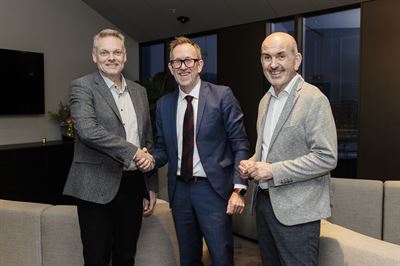
Caverion Denmark has agreed to acquire GK Danmark A/S’s Danish service operations (including a share purchase of subsidiary Vagns VVS A/S), adding roughly SEK 353 million of annual revenue and 184 technical employees across strategic hubs in Copenhagen, Odense, Aarhus, Kolding, Holeby and Nakskov. The deal, part of GK Group’s exit from Denmark, is expected to close April 30, 2026 and is subject to competition authority approval; an incoming GK director will join Caverion’s management, strengthening the company’s technical capacity in service, maintenance and advanced energy/TFM offerings. The transaction expands Caverion’s footprint in Danish facilities services and supports its positioning in energy-efficiency and sustainable building services within the Assemblin Caverion Group.
Market structure: Caverion Denmark materially strengthens its Danish service footprint by adding SEK 353m revenue and 184 technicians, boosting local share in advanced energy services and TFM where scale drives contract wins. Direct winners: Caverion (Nasdaq Helsinki: CAV1V) and its customers who gain coverage/response capacity; losers: smaller local service specialists and GK’s remaining creditors as GK exits. At group level the deal is ~0.86% of Assemblin Caverion Group revenue (SEK 41bn), so expect marginal upward pricing power in Denmark but limited near-term EPS impact.
Risk assessment: Primary tail risks are competition-authority conditions or a blocked deal (decision window before closing 30 Apr 2026), integration execution risk (loss of 10–20% revenue during 12 months) and hidden receivables/liabilities from GK (contingent warranty claims). Immediate timeframe (days–weeks): regulatory filings and notices; short-term (weeks–months): retention of municipal contracts at renewal; long-term (12–36 months): synergies and margin expansion or disappointment from contract churn. Watch for covenant breaches in GK-related contracts and potential indemnities that could trigger one-off charges >SEK 50–100m.
Trade implications: Tactical long CAV1V equity (1–2% NAV) into close, scaling half position pre-March and adding on clearance of antitrust — expected positive re-rating within 3–6 months if retention >80%. Pair trade: long CAV1V, short Bravida (STO: BRAV B) 0.5–1% NAV to play Danish share consolidation; expect relative outperformance 3–12 months. Options: buy June 2026 call spread on CAV1V (buy ATM, sell 1.25x strike) to cap cost and capture post-close upside; consider buying Caverion 5Y senior bonds if spread >180bp.
Contrarian angles: The market may underreact because the revenue is <1% of group, but hidden upside exists if Copenhagen hubs win larger municipal tenders (20–40% incremental revenue) via cross-selling. Conversely, consensus may be complacent about integration risks — a 10–20% loss of acquired revenue would wipe expected synergies and pressure short-term cash flow. Historical parallels: regional M&A in building services often delivers benefits after 12–24 months, so patient 6–18 month holding periods are prudent.
AI-powered research, real-time alerts, and portfolio analytics for institutional investors.
Request DemoOverall Sentiment
moderately positive
Sentiment Score
0.45
