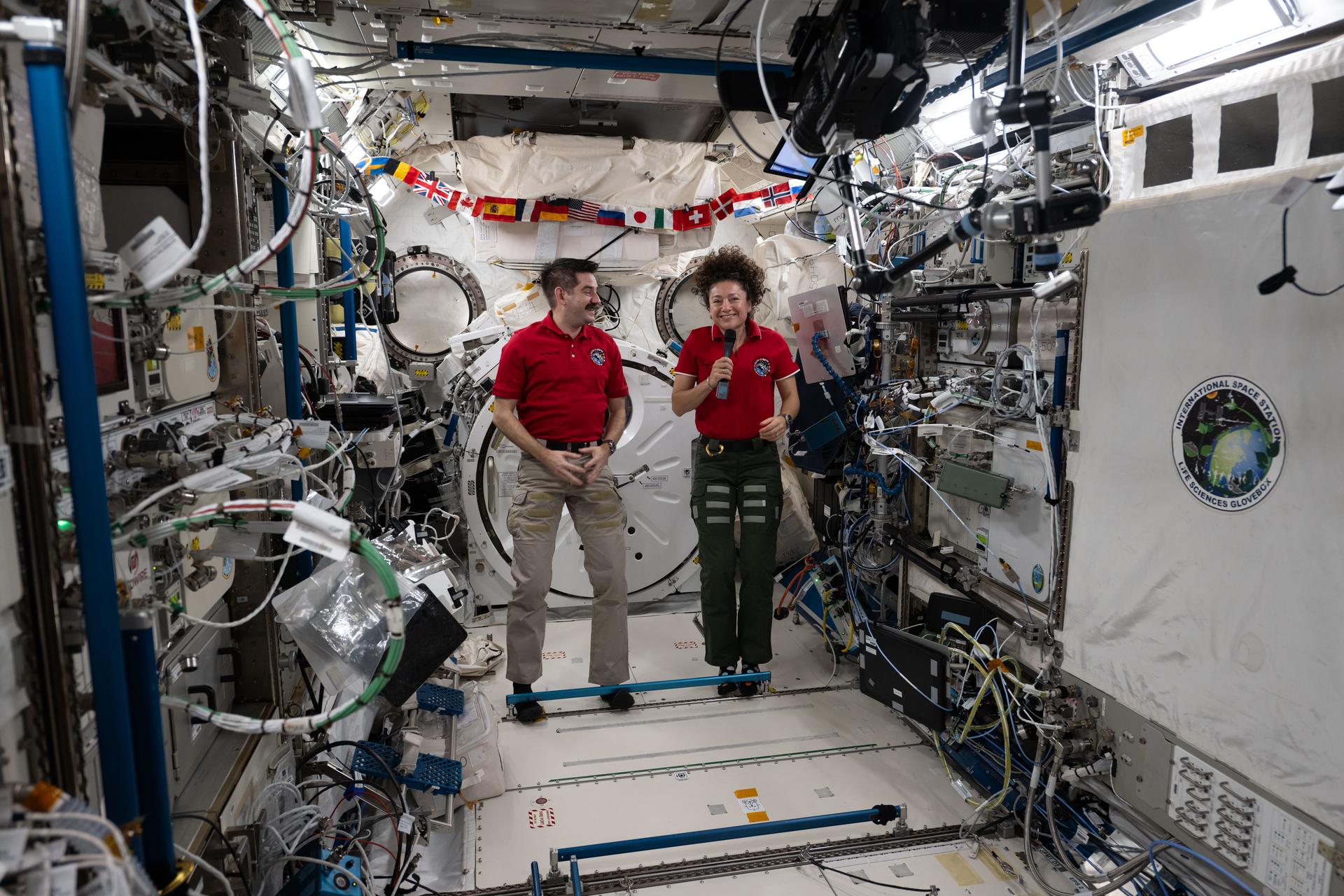
SpaceX CRS-34 is slated to launch on May 12 at 7:16 p.m. EDT, carrying about 6,500 pounds of science, supplies, and lab hardware to the International Space Station, with Dragon docking planned for May 14 at 9:50 a.m. The article details routine Expedition 74 crew operations, including microgravity research, lab maintenance, cargo unpacking, and spacewalk preparations. The update is operational and informational, with no material financial or market-moving development.
The near-term commercial read-through is not the cargo launch itself, but the cadence it validates: recurring ISS logistics support is increasingly a software-and-ops execution story rather than a hardware scarcity story. That favors the prime integrator with the deepest manifest and highest launch cadence, but the market already treats this as a steady-state annuity, so upside comes mainly from operational de-risking rather than new revenue. The second-order beneficiary is the broader in-space services ecosystem: every successful resupply/docking cycle reduces perceived execution risk for future cislunar logistics, in-space manufacturing, and crewed transport contracts.
The more interesting angle is competitive positioning versus non-U.S. launch and station-service providers. A clean cycle reinforces the perception that U.S. commercial logistics is the default backbone for LEO infrastructure, which modestly widens the moat for the incumbent prime on NASA-related work while pressuring smaller launch/logistics peers that need flawless performance to justify share. Any stumble would matter more than a win; the stock sensitivity is asymmetric because these missions are expected, so a mission delay or integration issue would hit confidence faster than a successful launch would boost estimates.
Risk/catalyst timing is short-dated: launch and docking over the next 48-72 hours, then a second verification point when time-sensitive samples are retrieved later in the week. Over a months-long horizon, the real catalyst is whether NASA keeps converting ISS support into follow-on contract scope for cargo, station maintenance, and spacewalking services. The contrarian view is that the market underestimates how much of the value here is already embedded in a stable backlog story; absent a pricing event or contract award, the news flow is likely more sentiment-neutral than earnings-accretive.
AI-powered research, real-time alerts, and portfolio analytics for institutional investors.
Request DemoOverall Sentiment
neutral
Sentiment Score
0.05
Ticker Sentiment
