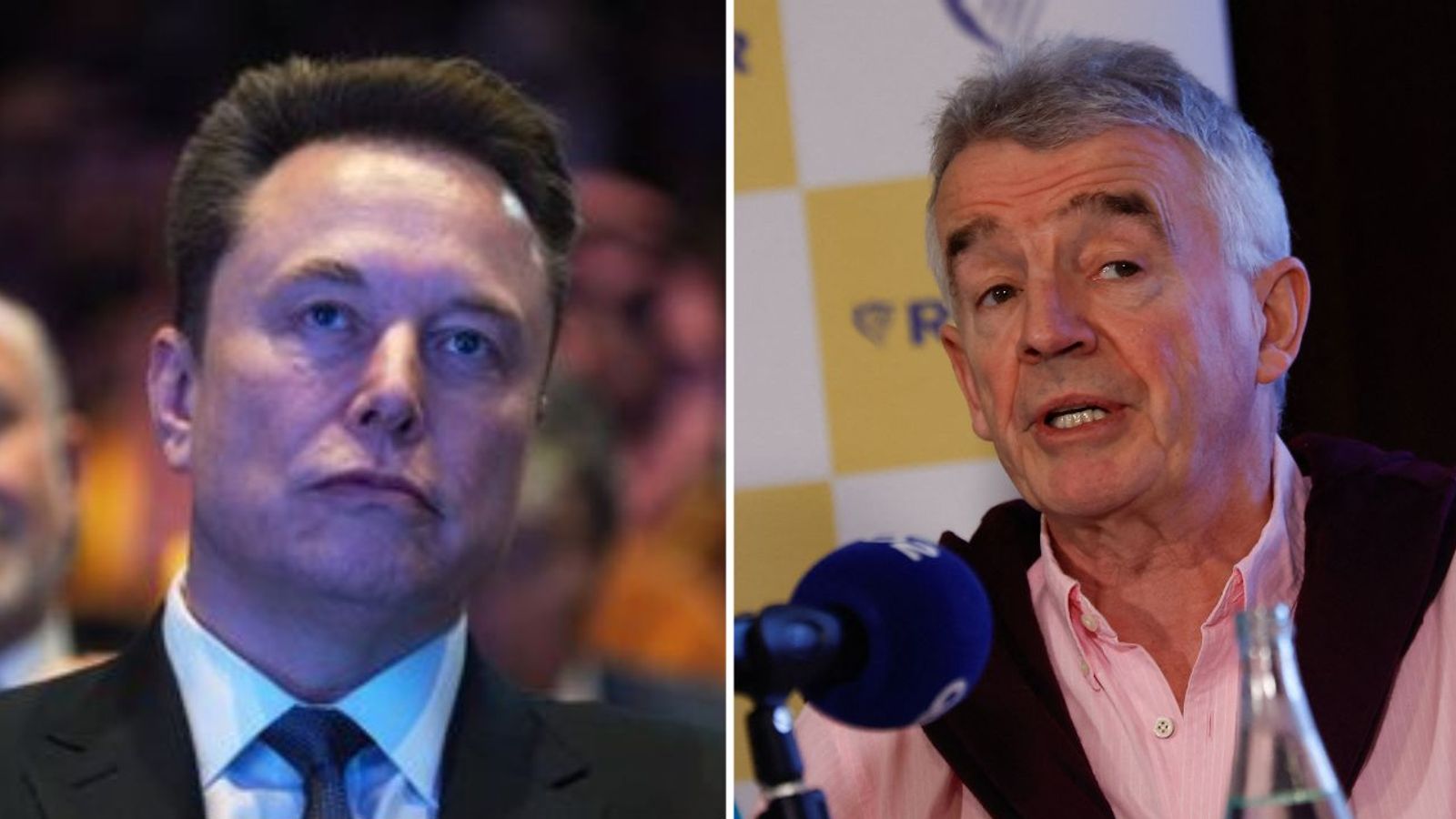
Elon Musk and Ryanair CEO Michael O'Leary have engaged in a public spat after O'Leary ruled out equipping Ryanair short‑haul jets with Musk's Starlink, citing an estimated €200–250m annual cost and a 1–2% fuel penalty from added aerials. Musk asked his X followers whether he should buy Ryanair and replace O'Leary, but EU ownership rules requiring majority EU/EEA ownership—Ryanair's market cap is roughly €30.4bn—would prevent Musk from taking outright control, though O'Leary said Musk could buy shares. The exchange has had limited commercial impact so far, with Ryanair launching a promotional 'big idiot seat sale' of 100,000 one‑way tickets at £16.99 as part of the publicity.
Market structure: The Musk–Ryanair spat is primarily a headline-driven event that benefits Ryanair with low-cost marketing lift (free global PR) and Starlink/SpaceX as potential upstream winners if airlines adopt satellite internet. The direct economic stake is modest: O'Leary's €200–250m/year estimate equals roughly 0.7%–0.8% of Ryanair's €30.4bn market cap, implying the feature is a margin tailwind/headwind rather than a capital-cycle shock. Competitive dynamics favour incumbents who can upsell connectivity on longer European legs (Lufthansa/SAS) while Ryanair's unit-cost model makes paid Wi‑Fi uptake unlikely without ancillary monetisation.
Risk assessment: Tail risks include an EU regulatory response (ownership or safety mandates), mandatory connectivity rules, or a mis-estimate of fuel/drag adding 1–2% to fuel burn and compressing margins. Time horizons: immediate (days) = PR-driven stock volatility ±2–6%; short-term (weeks–months) = signalling around connectivity adoption and investor activism; long-term (quarters–years) = structural ancillary revenue adoption or regulatory mandates. Hidden dependencies include passenger willingness-to-pay elasticity, fuel price shifts, and Starlink rollout timelines that could materially change ROI.
Trade implications: Tactical entry on headline-induced dislocations: a disciplined dip-buy on RYAAY for a 12‑month hold (target +10–20%) or hedged exposure via put spreads if IV spikes. Relative-value: long low-cost carrier exposure vs legacy carriers to capture durable unit-cost advantage. Cross-asset: expect minor credit-spread sensitivity in airline bonds (bps-level moves) and transient vol in options if activism/ownership rumours surface.
Contrarian angles: The market underestimates that EU rules block a full takeover but not a minority/activist stake—such a stake could force capital returns or governance changes and re-rate multiples by 5–15% if executed. The headline is underdone as a strategic catalyst: activist-style share accumulation or a commercial Starlink roll-out by Ryanair could meaningfully move shares; conversely, forced retrofits or regulatory limits on antennas are asymmetric downside risks.
AI-powered research, real-time alerts, and portfolio analytics for institutional investors.
Request DemoOverall Sentiment
neutral
Sentiment Score
0.00
Ticker Sentiment
