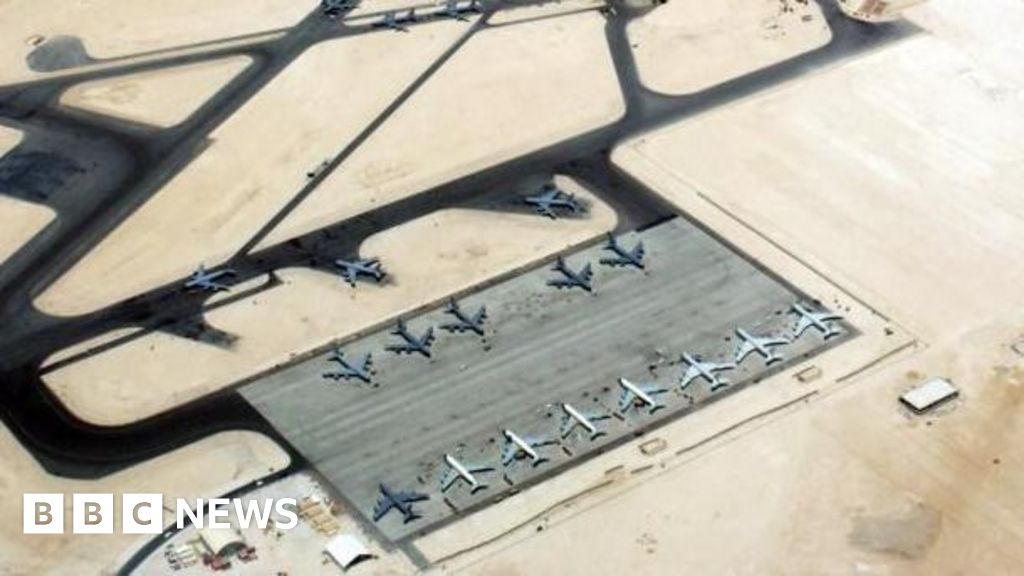
The US and UK are removing some personnel from Al‑Udeid air base in Qatar — which hosts roughly 10,000 US and about 100 UK personnel — as the US considers action against Iran following a violent crackdown that rights groups say has killed more than 2,400 protesters. The partial withdrawal, described as precautionary, plus travel advisories and Iranian warnings raise near‑term regional escalation risk with potential implications for energy markets, regional security and defense-sector equities, although Reuters and Qatari statements indicate no large‑scale evacuation has occurred to date.
Market structure: Near-term winners are US/UK defense primes (LMT, NOC, RTX) and liquid energy producers (XOM, CVX) as risk premia on Middle East conflict rise; losers are Gulf-linked EM assets (EEM, EWT), commercial airlines (AAL, IAG) and regional shipping/loss-making container names. A credible chokepoint risk through the Strait of Hormuz would remove ~3–4% of global seaborne oil flows, suggesting a plausible WTI shock of +5–20% within days if incidents escalate, with upward pressure on Brent particularly.
Risk assessment: Tail scenarios include direct US–Iran kinetic engagement or attacks on shipping/oil infrastructure (probability 10–25% over 30 days) producing >20% oil move and equity drawdowns >10%. Immediate window (0–7 days) should see volatility spikes and safe-haven flows; weeks–months (1–6 months) could re-rate defense capex and deleverage EM FX; long-term (6–24 months) structural rises in defense budgets and higher sovereign risk premia for Gulf states are possible. Hidden dependencies: insurance/premium spikes (war risk) can shut normal shipping routes faster than military moves.
Trade implications: Tactical portfolio: 1–3% overweight LMT/NOC (3–6 month hold) and 1–2% GLD exposure for inflation/flight-to-safety. Put on 0.5–1% portfolio tail hedge via SPY 3-month 5% OTM puts or buy VIX 1–2 month call structures if VIX <25. Short EEM or EM sovereign debt (e.g., -2% notional in EEM) as a relative short; add 1% USD via UUP if FX risk-off persists. Use triggers: add energy exposure if WTI > $85 or VIX >30; cut risk if oil reverses 15% from peak.
Contrarian angles: The market may be overpaying near-term defense rerates—histor parallels (2019 Gulf tensions) saw oil spikes fade in 4–8 weeks and cyclicals snap back; if no kinetic strike within 7–14 days expect mean reversion. Risk: buying long-duration bonds as a safety play is ambiguous—if oil-driven inflation expectations rise, long rates climb; cap long-duration exposure to <3% and prefer cash/short-dated Treasury ETF (SHY) as ballast. Monitor Lloyd’s war-risk indices, tanker rerouting costs and WTI/Brent spreads for decisive signals.
AI-powered research, real-time alerts, and portfolio analytics for institutional investors.
Request DemoOverall Sentiment
moderately negative
Sentiment Score
-0.50
