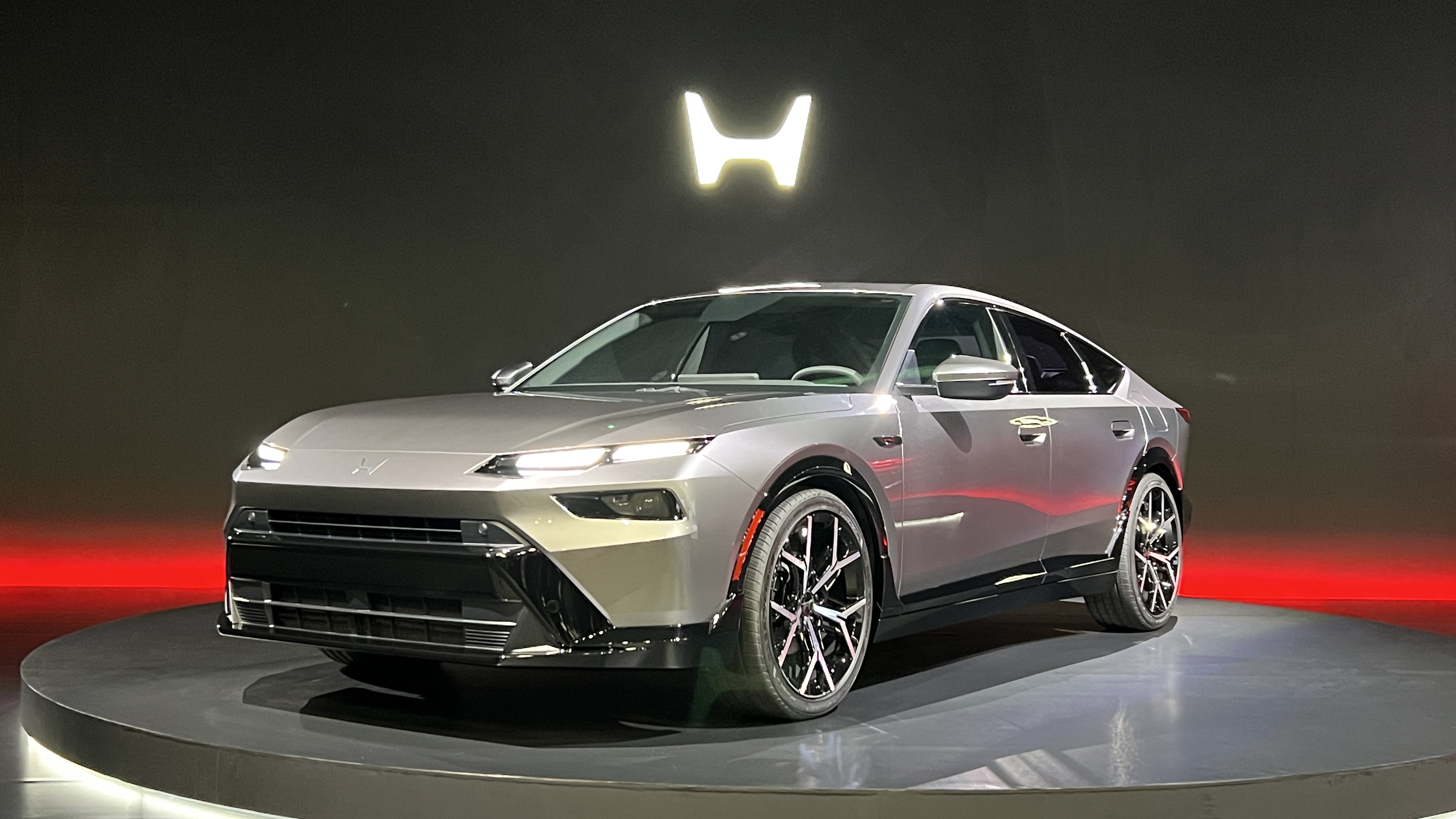
Honda reported its first-ever loss and CEO Toshihiro Mibe abandoned the company’s 2040 combustion-free goal, signaling a strategic retreat from a previously ambitious EV transition. Mibe said Honda will return to profitability this fiscal year and teased 15 new hybrids, underscoring a pivot toward hybrid models amid weaker fundamentals. The shift is negative for Honda’s long-term electrification narrative, but the immediate market impact is likely confined to the stock and auto sector peers.
This is a credibility reset, not just a strategy tweak. When a legacy OEM publicly abandons an end-state target after a loss, the market usually reprices two things at once: the probability of a slower EV capex burn and the probability that management is chasing near-term margin repair at the expense of long-duration competitiveness. The second-order winner is any supplier or competitor with cleaner execution on hybrids and software-defined vehicles, because dealer and consumer demand will likely migrate toward products that preserve familiar economics while still meeting emissions rules. The biggest near-term beneficiaries are likely Japanese and Korean peers with stronger hybrid architectures and more disciplined pricing, while the most exposed names are pure-play EV OEMs that were counting on incumbents to keep overinvesting in full-battery adoption. If Honda leans harder into hybrids, it could also create a component mix shift toward engines, transmissions, power electronics, and thermal systems rather than battery cells and charging hardware. That is bearish for parts of the EV supply chain over the next 6-18 months, but supportive for traditional drivetrain suppliers and certain semiconductor content tied to hybrid complexity. The risk case is that the pivot is happening late enough to improve 2026 profitability but not fast enough to close the strategic gap if EV adoption re-accelerates in 2027-2029. The key catalyst window is the next 1-2 earnings cycles: if margins stabilize before the hybrid rollout hits the market, investors may reward the reset; if not, the market will view this as a defensive retreat from a structurally weakening position. The contrarian view is that the market may be over-penalizing the combustion pivot because hybrids are still the highest-ROI bridge technology in a world of uneven charging infrastructure and softer EV elasticity outside premium segments.
AI-powered research, real-time alerts, and portfolio analytics for institutional investors.
Overall Sentiment
strongly negative
Sentiment Score
-0.55
