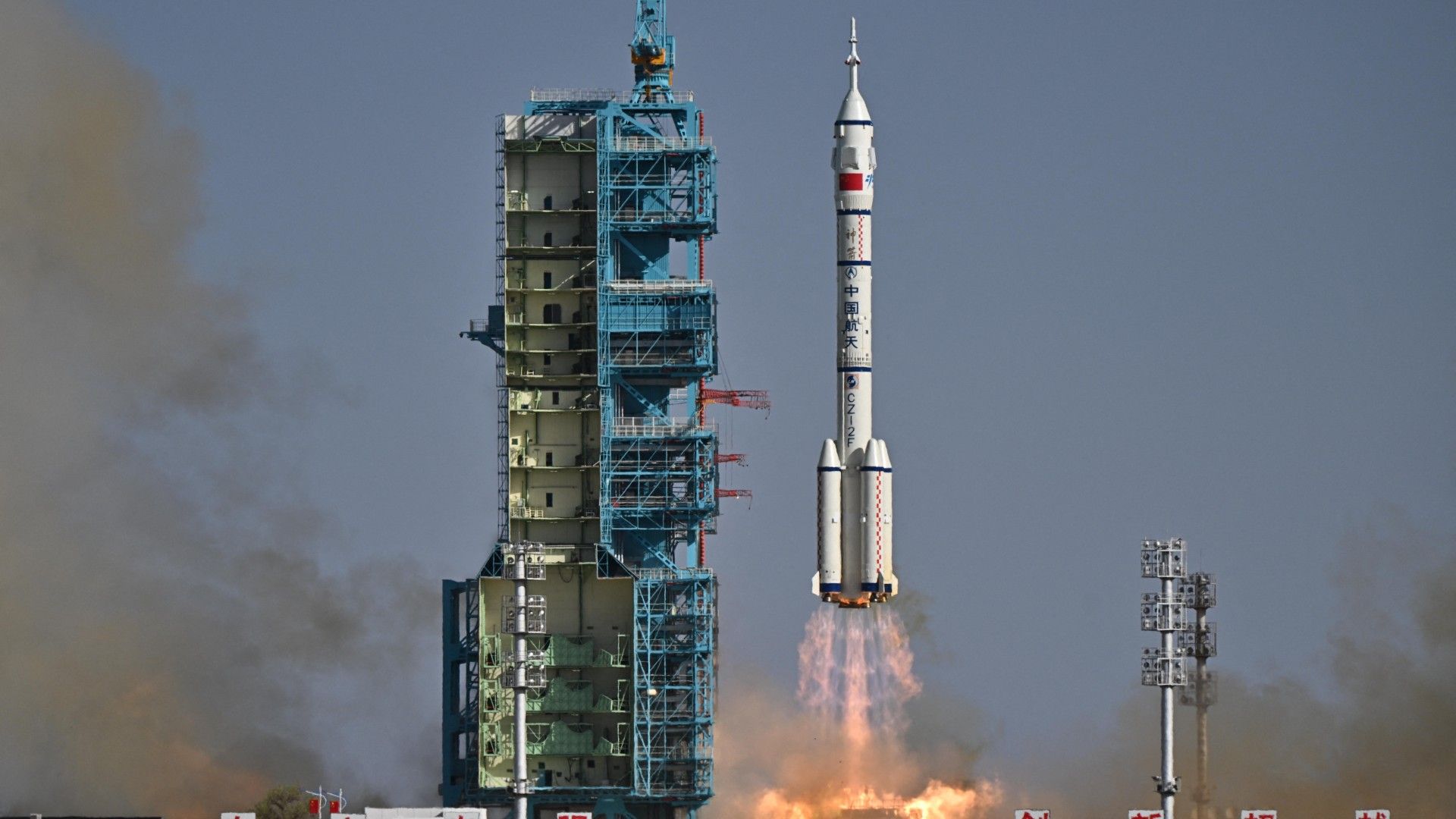
China has scheduled an uncrewed Shenzhou 22 launch from Jiuquan on Nov. 25 to replace the SZ-20 capsule that sustained an apparent debris strike and left the Shenzhou 21 crew—commander Zhang Lu, Zhang Hongzhang and Wu Fei—temporarily without a return vehicle aboard the Tiangong space station; the replacement craft will also deliver food and additional cargo to support their six-month mission that began Oct. 31. The flight was fast-tracked from an original April–May 2026 plan and leverages China’s on‑hand Long March 2F rocket and spare Shenzhou inventory, though orbital phasing constraints mean nearly three weeks will have passed since the damage was discovered. Coming after last year’s Starliner issues that similarly extended astronaut stays, the episode underscores operational vulnerabilities in crewed spaceflight and renewed discussion of dedicated rescue capabilities amid limits on U.S.–China cooperation.
China will fast-track an uncrewed Shenzhou 22 launch from Jiuquan on Nov. 25 to replace the SZ-20 capsule that sustained an apparent space-debris impact that cracked a window and left the Shenzhou 21 crew—commander Zhang Lu, Zhang Hongzhang and Wu Fei—temporarily without a dedicated return vehicle during a six-month mission that began Oct. 31. CMSA told state media the mission has been initiated and that the replacement spacecraft will also carry food and cargo after supplies likely tightened because the Shenzhou 20 crew remained on-station longer than planned.
Shenzhou 22 was accelerated from an original April–May 2026 slot; China’s inventory of a Long March 2F rocket and spare Shenzhou vehicles can be readied in as few as 8.5 days according to SpaceNews, but orbital phasing constraints mean close to three weeks will elapse from damage discovery to rendezvous. The operational timeline and on-orbit logistics therefore remain risk points for crew safety and station sustainment.
This episode, following the June 2024 Starliner reliability issues that extended two NASA astronauts’ ISS stays, highlights a pattern of operational vulnerability in crewed missions and has prompted discussion of dedicated rescue capabilities; U.S.–China cooperation is legally restricted. Market signals show mildly negative sentiment overall (-0.25) and notably negative sentiment for Boeing (BA: -0.5) while the market-impact score is modest (0.12), implying reputational and contractor-specific risk without broad systemic market disruption.
AI-powered research, real-time alerts, and portfolio analytics for institutional investors.
Request DemoOverall Sentiment
mildly negative
Sentiment Score
-0.25
Ticker Sentiment
