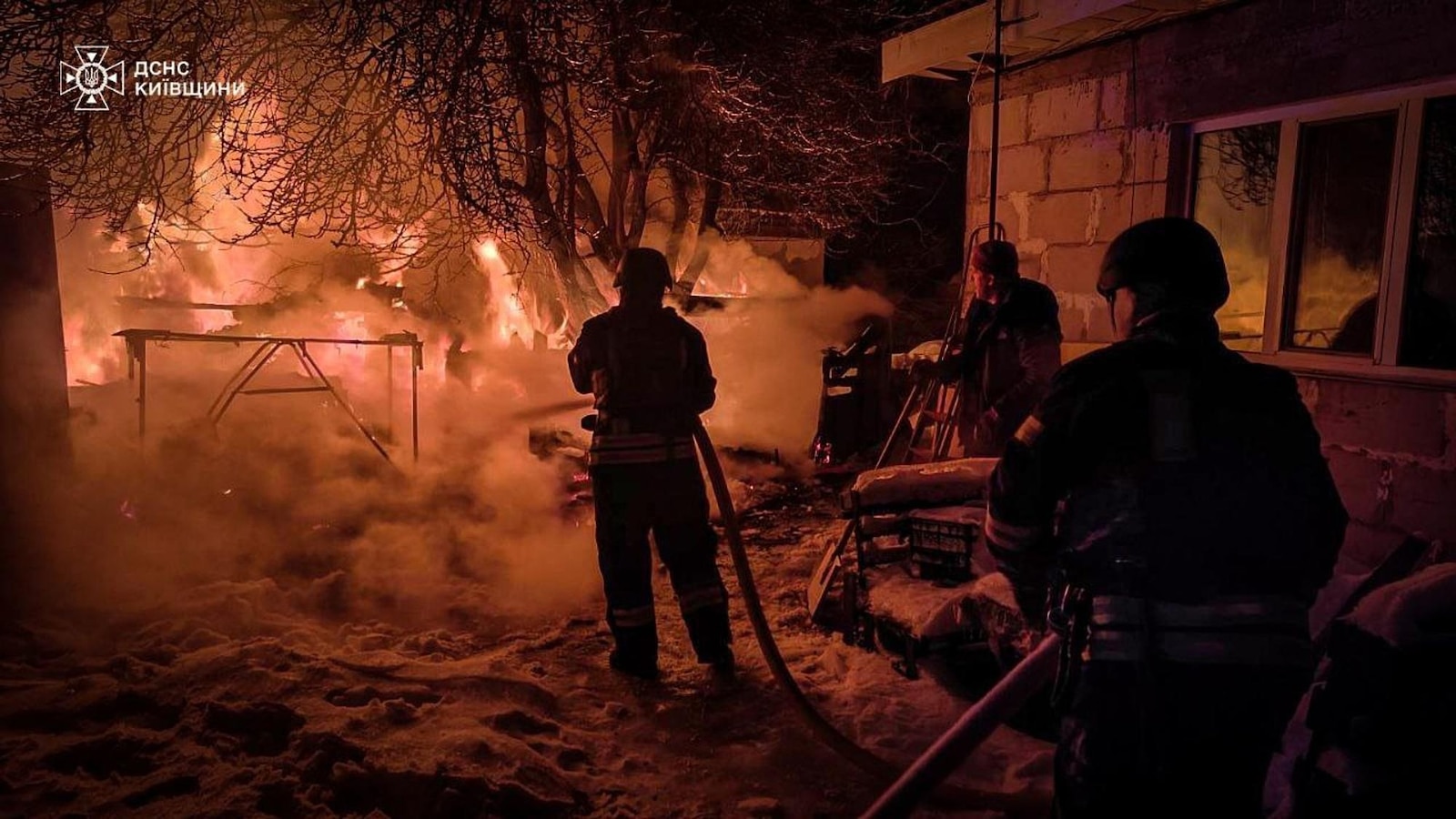
Russia launched a major overnight drone-and-missile barrage—nearly 300 drones, 18 ballistic missiles and seven cruise missiles—striking eight Ukrainian regions and targeting power infrastructure; one strike in Kharkiv killed four and Kyiv region reported several hundred thousand households without power. Attacks damaged energy facilities, a hospital, schools and residential buildings, while Ukraine reported counterstrikes against a drone plant in Taganrog; Kyiv is pressing for faster deliveries of Western air-defense systems. The escalation amid winter heating needs raises downside risks to Ukrainian economic activity, upward pressure on regional energy and defense risk premia, and potential volatility for European energy markets and defense-sector equities. Investors should price increased geopolitical risk, potential supply disruption to regional power markets, and a higher probability of further military escalation.
Market structure: Immediate winners are defense and air‑defense suppliers (Lockheed LMT, Raytheon RTX, Northrop NOC, Rheinmetall RHM.DE) and LNG/exporters (Cheniere LNG, Shell RDSA) as strikes raise European power/gas price tail risk; losers are grid‑exposed European utilities and insurers (select incumbents in ENEL/ENGI) and Ukrainian commercial assets. Attacks increase pricing power for AD systems and emergency generation/storage providers while compressing margins for utilities forced into emergency purchases; expect 5–20% short‑term repricing in defense and energy sectors if strikes persist.
Risk assessment: Tail risks include escalation to NATO supply/interdiction (low probability, high impact) or Russian restrictions on gas transit triggering TTF spikes >30%; immediate horizon (days) sees power outages and gas volatility, short (1–3 months) sees defense order acceleration, long (3–24 months) sees structural defense budget increases. Hidden dependencies: EU gas storage levels, US/EU delivery timelines for Patriot/SAMP/T systems, and a harsh winter (+/-2°C deviation) that would materially amplify commodity moves. Key catalysts are formal U.S./EU air‑defense delivery announcements (30–60 days) and OPEC+ supply decisions.
Trade implications: Tactical: establish 1–3% long positions in LMT and RTX with 6–12 month horizons, take profits at +20–30% or on confirmed NATO supply delivery; buy 1–2% exposure to LNG (LNG) and a 3‑month Brent $85/$100 call spread to express energy tail risk. Hedging: add 1–2% GLD and a 1% position in TLT as flight‑to‑quality hedge; consider 3‑6 month put spread protection on European utility holdings (e.g., ENEL/ENGI) sized to cover 30–50% of exposure.
Contrarian/risks: Consensus may overprice immediate defense winners — deliveries and integration take months so short‑term mean reversion risk exists; conversely energy spikes could be underpriced if Russia shifts tactics. Historical analogues (2014–15) show durable defense budget lift but transient commodity spikes; prefer defined‑risk option structures and pairs (long RTX vs short ENEL) to capture relative repricing while limiting downside.
AI-powered research, real-time alerts, and portfolio analytics for institutional investors.
Request DemoOverall Sentiment
strongly negative
Sentiment Score
-0.70
