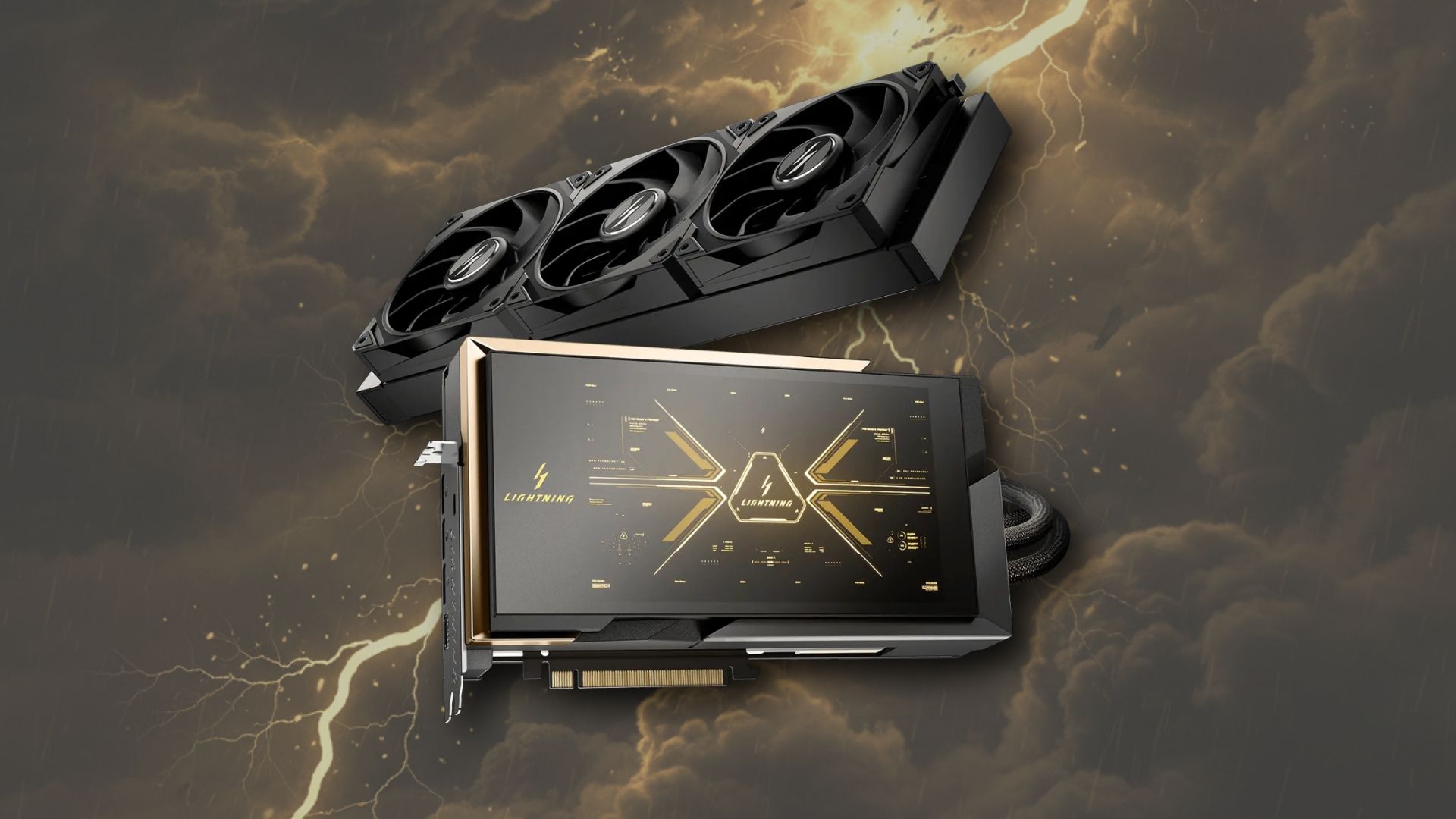
MSI announced a lottery in Taiwan for 10 buyers to purchase its limited-edition RTX 5090 Lightning GPU at NT$165,000 (~US$5,220), a high-end card designed for overclockers with dual 12V-2x6 connectors capable of delivering up to 1,600W and a capped production run of 1,300 units. The launch underscores a niche, high-price segment in the GPU market—competing premium models include Asus’s ROG Astral RTX 5090 (priced $6,700–$10,600 regionally) and the near-$4,000 ROG Matrix Platinum—suggesting collectibility and constrained supply rather than broad consumer demand, and limited near-term market impact on chipmakers or broader hardware equities.
Market structure: The RTX 5090 Lightning and similarly priced Asus/Gigabyte limited editions create a high-margin halo for AIB partners and indirectly lift NVIDIA (NVDA) ASPs for flagship dies; expect AIB gross-margin tailwinds of ~1–3% on quarterly accessory/limited runs if adoption continues, but volumes are tiny (1k–1.3k units) so revenue impact is concentrated and episodic. Luxury pricing signals inelastic demand among enthusiasts/collectors, increasing reseller spread and secondary-market liquidity, which benefits marketplaces (e.g., eBay) and niche component makers (high-wattage PSUs, connectors).
Risk assessment: Tail risks include product safety/regulatory action around unprecedented 1.6kW draw (retailer bans, insurance liabilities), large-scale QC recalls (seen with Asus Matrix), or a macro tech downturn reducing discretionary spend—each could compress AIB multiples by 10–25% in 3–12 months. Hidden dependencies: NVIDIA die allocation and TSMC capacity govern availability; a supply shift to data-center GPUs or a new NVDA architecture release within 6–12 months could reprice halo products quickly.
Trade implications: Direct exposure to NVDA captures semiconductor supply/ASP upside—consider structured option exposure rather than outright leverage given current premium; small- to mid-cap AIBs (MSI 2377.TW, ASUS 2357.TW, GIGABYTE 2376.TW) are higher beta plays on halo-product PR but carry QC and liquidity risk. Catalysts to trade: NVDA earnings, CES follow-ups, AIB quarterly reports and any regulator statements on consumer electronics power/specs within 30–90 days.
Contrarian angle: The market underestimates downstream aftermarket economics—limited editions can sustain higher ASPs and halo branding that lifts accessory/PSU vendors (CRSR) and secondary-market fees; conversely, consensus may be underpricing the regulatory/power-safety shock that could force design/spec changes and cap high-TDP products. Historical parallel: 3090 Ti extreme editions boosted brand but led to refunds/returns; expect similar bifurcated outcomes where winners gain margin, losers face reputational write-offs within 1–2 quarters.
AI-powered research, real-time alerts, and portfolio analytics for institutional investors.
Request DemoOverall Sentiment
neutral
Sentiment Score
0.00
