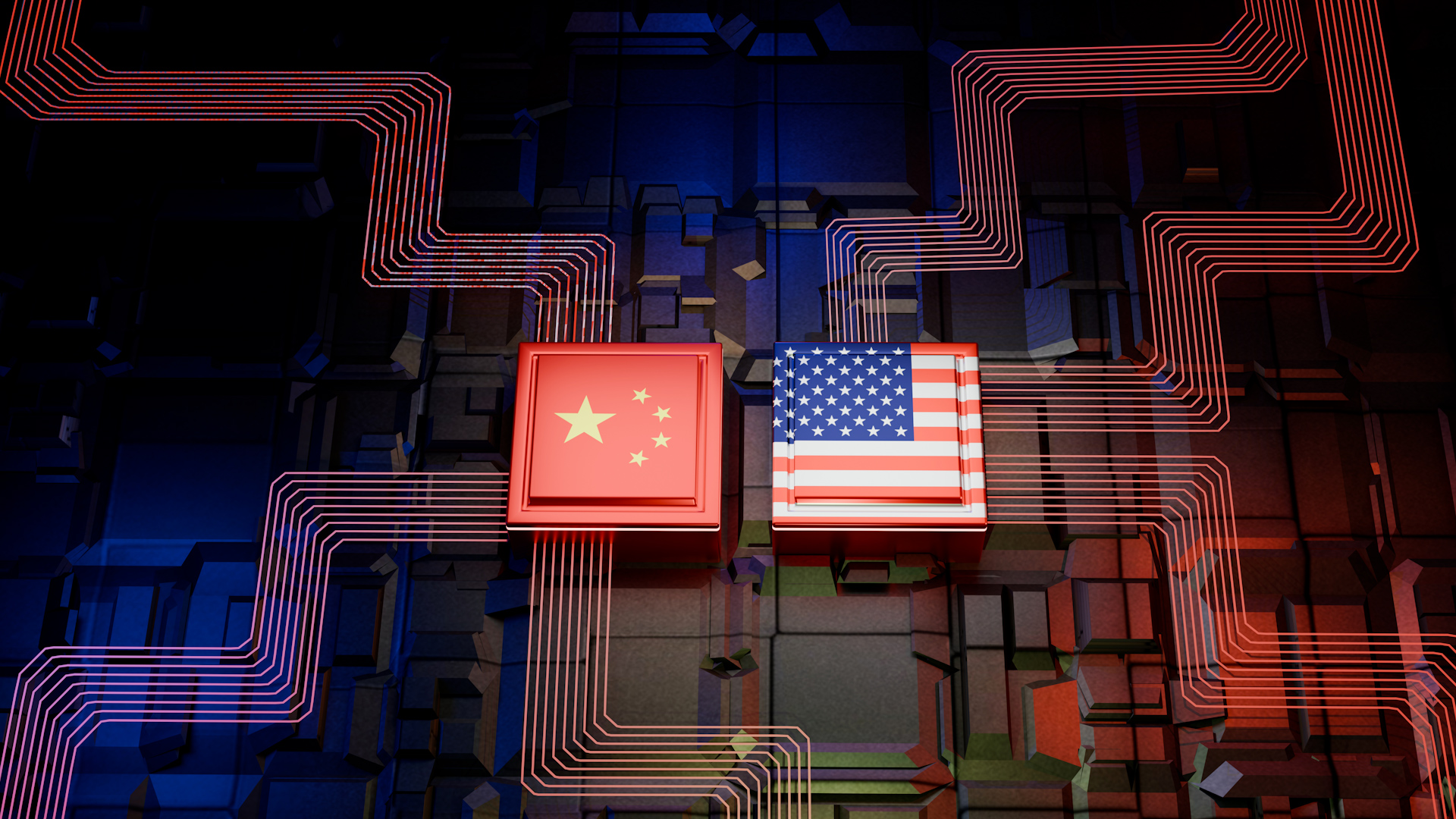
ASPI's Critical Technology Tracker (covering 74 critical technologies and a dataset of millions of publications) shows US–China research collaboration intensity has fallen to 2005 levels in 2024 after peaking in 2019; only about 25% of China's collaborations now involve US researchers, down from over half a decade ago. The report documents a shift toward partners such as Pakistan, Belarus, Saudi Arabia and Russia across sensitive areas (quantum, AI, space, nuclear, biomedical), raising national‑security concerns and increasing the likelihood of targeted export controls and research‑restriction policies that could influence defense and advanced‑tech supply chains and related equities.
Market Structure: Decoupling in research reduces the US–China coauthorship share from ~50% a decade ago to ~25% today, shifting procurement and R&D sourcing toward domestic and allied suppliers. Direct winners are US defense primes (LMT, NOC, RTX), semiconductor equipment makers (ASML, KLAC, LRCX, AMAT) and enterprise cybersecurity firms (PANW, CRWD) that capture reshored demand; losers are China-exposed research services, select CRO/CDMO players with heavy China footprints, and China-first AI/data startups. Expect a 5–10% revenue tailwind for non-Chinese equipment/CRO incumbents over 12–36 months if policy-driven reshoring accelerates.
Risk Assessment: Tail risks include abrupt export-control escalations or Chinese retaliation (20–30% probability over 12 months) that could freeze cross-border sales and inventory flows, causing >20% revenue hits for China-dependent vendors. Immediate (days) volatility will follow headlines; short-term (weeks–months) risks center on policy rollouts and funding redirects; long-term (2–5 years) is structural decoupling that changes patent pipelines and talent flows. Hidden dependency: academic coauthorship feeds patents and hiring—reduced collaboration will blunt innovation velocity for multinationals in 18–36 months.
Trade Implications: Tactical plays: overweight US defense and semiconductor-equipment equities for 6–24 months; hedge China-tech exposure via 3–9 month puts or selling futures on China-tech ETFs (KWEB/FXI). Use 6–12 month bull-call spreads on LMT/NOC to gain defense upside with limited premium; buy 3–6 month protective puts on BABA/TCEHY to cap tail risk while trimming absolute China-tech weight by 30–50% over 30 days. Rotate 5–10% of EM/China tech allocations into ASML/KLAC/AMAT and PANW for 6–18 months.
Contrarian Angles: Consensus assumes permanent bifurcation; what’s missed is that biomedical trials and unique Chinese datasets remain difficult to replace—CROs with global footprints (TMO, IQV) may be underpriced and can win reallocated Western spend. The market may over-penalize all China tech: selective Chinese domestic suppliers could become near-term beneficiaries of policy (raising pricing power for equipment sellers). Historical parallel: 1980s US–Japan tech tensions created domestic champions—expect similar concentration, not uniform decline. Monitor policy windows (congressional bills, DoC export updates) in the next 30–90 days as potential accelerants or reversals.
AI-powered research, real-time alerts, and portfolio analytics for institutional investors.
Request DemoOverall Sentiment
mildly negative
Sentiment Score
-0.25
