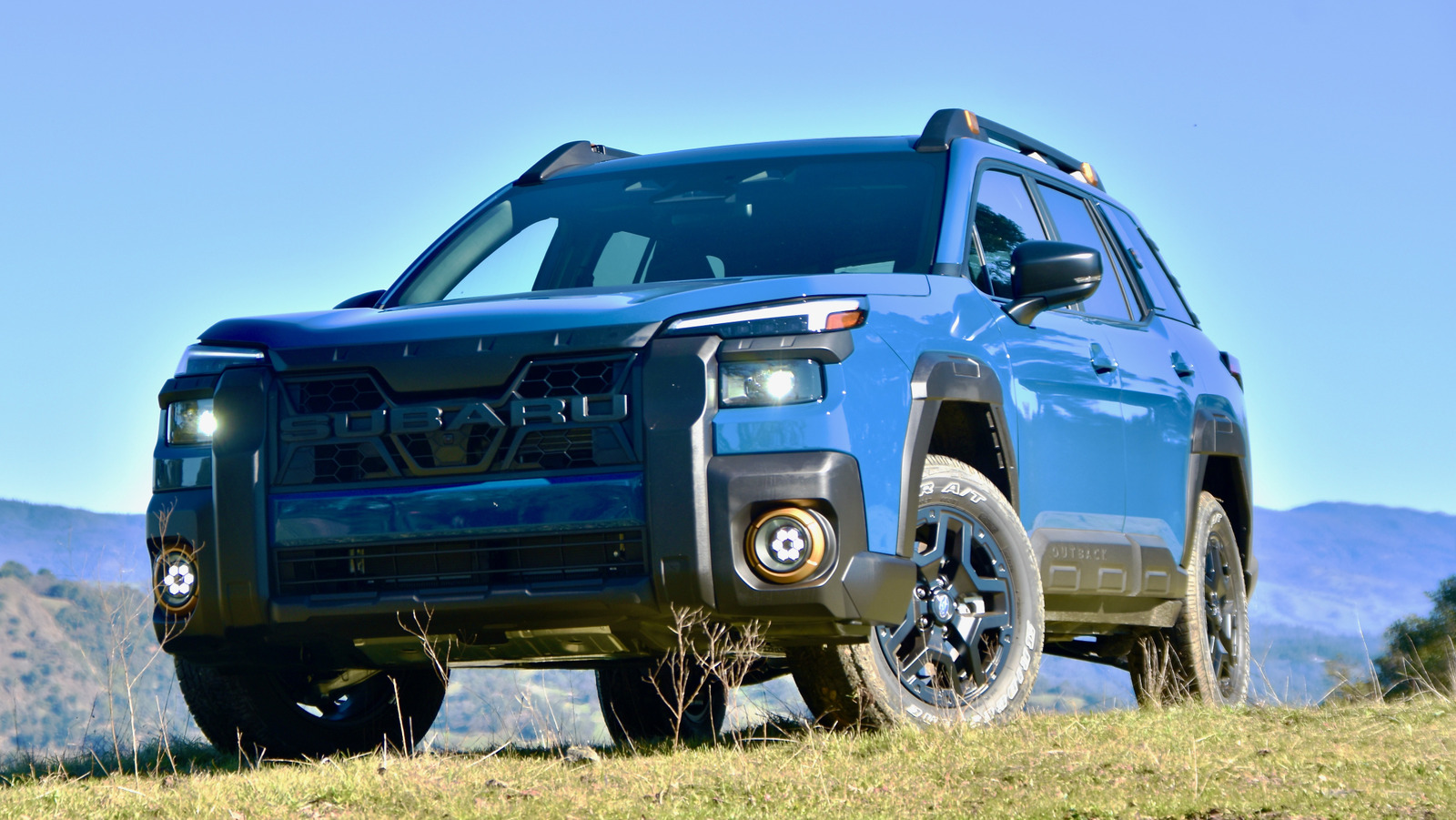
Subaru’s 2026 Outback Wilderness debuts with SUV-like styling and modest functional upgrades — a turbocharged 2.4L boxer-four (260 hp, 277 lb-ft) mated to a CVT, 9.5 inches of ground clearance (up from 8.7), improved approach/breakover/departure angles, adaptive dampers and standard Bridgestone Dueler all-terrain tires. Pricing starts at $46,445 (a $3,315 increase from 2025) with two option packages ($2,045 and $4,090) yielding an example price of $50,535; EPA fuel economy is 23 mpg combined (21/27). While the Wilderness adds some capability and tech (360° camera, larger displays), the review argues its styling, limited off-road gains versus the well-equipped base Outback, and higher price make it a marginal differentiator for buyers and a muted catalyst for investors.
Market structure: The Wilderness launch is unlikely to move volumes materially but redistributes margin and share within the compact/midsize crossover segment—premium SUV incumbents (Toyota RAV4, Honda CR-V/Passport) gain relative pricing power while Subaru risks cannibalizing its own base Outback given only modest capability delta. Equipment winners include OE and aftermarket accessory and tire suppliers (Bridgestone, aftermarket racks/lighting), while smaller niche wagon specialists and used-Car-Remarketers could see softer demand. Cross-asset: expect negligible sovereign/bond moves; modest lift to oil demand (micro, <0.1% national demand) and steel/aluminum usage; auto ABS spreads unaffected absent a broader sales shock.
Risk assessment: Short-term (days-weeks) risk centers on dealer incentives and initial sales datapoints (monthly retail SAAR, incentive rate changes within 30–90 days) that can mask demand; medium-term (3–12 months) tail risks include safety recalls, supply-chain shocks (semiconductors, tire shortages) or weaker consumer financing causing a >150–200 bps rise in delinquencies. Hidden dependencies include Subaru’s strong residual values and brand loyalty which could blunt share loss; catalysts to watch: monthly CVNA/TrueCar data, J.D. Power initial quality, and U.S. fuel price moves above +15% driving efficiency sensitivity.
Trade implications: Tactical capital: favor large global OEMs and aftermarket parts over niche premium trims—establish 2–3% long positions in TM and HMC (3–12 month horizon) and 1–2% long in LKQ or ORLY to capture accessory/service upside. Pair trade: long TM (2%) / short small-cap specialist crossover OEMs or Subaru exposure (if held) (1–1.5%) to exploit likely share reallocation; options: buy 6–9 month TM call spreads (buy 10% OTM / sell 25% OTM) sizing for 1% portfolio risk to limit premium. Rotate out of small/mid consumer discretionary auto-accessory names if spring retail data underwhelms (reallocate within 2–8 weeks).
Contrarian angles: The market underappreciates aftermarket and service revenue lift—higher-trim Wilderness buyers spend 10–20% more on accessories and dealer-installed options, which benefits parts retailers and service-oriented names disproportionately. The negative press on styling may be overdone: past Subaru refreshes have sustained ASP rises and resilient residuals; if incentives remain restrained, ATV-style trims can raise OEM ASPs by $500–1,500, supporting margins. Watch for unintended consequence: heavier trim mix raising fleet fuel costs that could re-accelerate electrification capex in 12–36 months, creating longer-term winners in EV powertrain/supplier chains.
AI-powered research, real-time alerts, and portfolio analytics for institutional investors.
Request DemoOverall Sentiment
moderately negative
Sentiment Score
-0.35
Ticker Sentiment
